Oolina
No picture of Oolina was found. Wikipedia, Wikidata and iDigBio were searched and had none. Smithsonian Open Access did not answer, so this is what the others held rather than everything there is. GBIF was asked, and what came back is not recorded: nothing, or a picture this site could not tie to Oolina, or no answer at all. This entry cannot say which.
On record
Recorded, not inferred- Sits inside
- OolininaePBDB
- Diet
- deposit feederPBDB, for Lagenina
- Life habit
- infaunalPBDB, for Lagenina
- Motility
- stationaryPBDB, for Foraminifera
Time the record covers
At least 239 million years on record.
The record covers at least 239.48 Mya to 11.7 ka. No occurrence read is dated outside 241.464 Mya to 0 Mya.
217 occurrences of Oolina on record, most of them in the Pleistocene. The Paleobiology Database records this as a living group. Bar height is expected occurrences, not a count: each fossil is spread across the span it is dated to, so a tall narrow bar means tight dating and a low wide one means loose.
When
217 occurrences- Middle Triassicunder 1%
- Early Cretaceousunder 1%
- Late Cretaceous12%
- Paleoceneunder 1%
- Eocene3%
- Oligoceneunder 1%
- Miocene8%
- Pliocene11%
- Pleistocene57%
- Holocene5%
These are dates about fossils, not the animal: the record can only begin after it arose and end before it died out, so either end may reach further. Shares are expected occurrences: a fossil dated to a span is counted partly in each period it straddles. More on what this infers.
Found in
9 formations
- El Haria Formation19
- Bakhtiari Formation2
- Chenaibo Formation · Middle Yezo Group1
- Kahuitara Tuff Formation · Pitt Island Group1
- South Bight II Formation1
- Ferriby Formation1
Loading coastlines…
The named rock units Oolina has been recovered from, largest first. Drawn where the rock is now, not where it formed. 189 occurrences have no formation on record, which is common for older literature.
Oolina and its relatives
PleistoceneWhere Oolina and its relatives were recorded in the Pleistocene.
Found in the same rock
500 taxa- Pullenia87 sites
- Cibicidoides72 sites
- Cibicides71 sites
- Melonis71 sites
- Uvigerina69 sites
- Gyroidinoides65 sites
- Oridorsalis64 sites
- Globocassidulina62 sites
- Lenticulina62 sites
- Cassidulina59 sites
- Planulina56 sites
- Pyrgo56 sites
- Quinqueloculina52 sites
- Lagena51 sites
- Nonionella50 sites
- Bolivina49 sites
- Fissurina49 sites
- Bulimina47 sites
- Gyroidina47 sites
- Dentalina46 sites
- Elphidium39 sites
- Melonis barleeanum39 sites
- Epistominella38 sites
- Brizalina32 sites
The Paleobiology Database records 198 sites for Oolina, and this reads all of them. The number is how many of those sites it was catalogued from too. The 24 sharing the most are listed.
This is not a list of everything alive at the time. It is only what has come out of the same ground as this animal and been written down.
Entered from
46 references- Site U151720
- The Late Campian and Maastrichtian in northwestern Tunisia: palaeoenvironmental inferences from lithology, macrofauna and benthic formainifera19
- Site U141718
- Site U138712
- Site U139112
- Upper slope Site U141311
- Site U146110
- Site U142710
- Site U141810
- Input Site U14148
- Site U13867
- Frontal prism Site U14127
Each of the 217 occurrences read was entered from one of these publications, ordered by how many each accounts for. This is not a search for papers mentioning the name. 34 further references are not listed. Each entry links to doi.org. Relayed as the Paleobiology Database holds them, not checked against what they resolve to.
Media and terms
Media content1
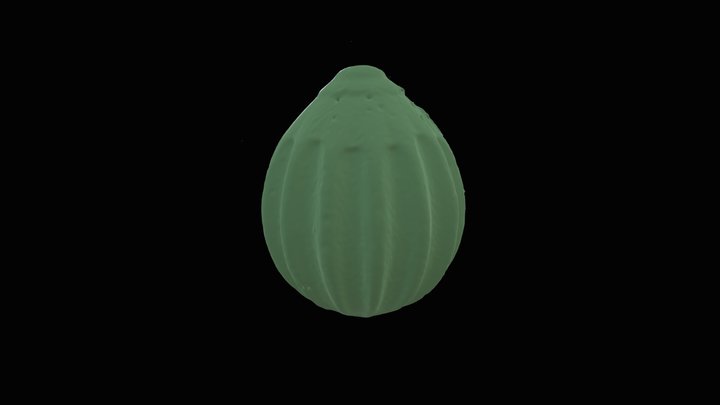
3D model
- Source
- Sketchfab
- Credit
- BelangerForamLab
- Licence
- CC Attribution
- Commercial use
- cannot be read from the licence given — check the record
No picture of Oolina was found. Wikipedia, Wikidata and iDigBio were searched and had none.
Smithsonian Open Access did not answer, so this is what the others held rather than everything there is.
GBIF was asked, and what came back is not recorded: nothing, or a picture this site could not tie to Oolina, or no answer at all. This entry cannot say which.
Smithsonian Open Access and MorphoSource were not reached for this taxon, so this list is what the others held rather than everything there is.
This is what the site found, which is not the same as what exists.
Keep going
What may have been alongside itOolininae through timeFormations of the PleistoceneThe world it lived on
Occurrence data from the Paleobiology Database, CC BY 4.0. d'Orbigny 1839