Oculina
Oculina is a genus of colonial stony coral in the family Oculinidae. These corals are mostly found in the Caribbean Sea, the Gulf of Mexico and Bermuda but some species occur in the eastern Pacific Ocean. They occur at depths down to 1000 metres.

Uncredited · Public Domain · via Wikipedia/Commons. May be a photograph of a specimen, or an artist’s reconstruction — an interpretation of a skeleton, since colour and soft tissue are almost never preserved.
On record
Recorded, not inferred- Sits inside
- OculinidaePBDB
- Diet
- suspension feederPBDB
- Life habit
- colonial, clonalPBDB, for Faviina
- Motility
- stationary, attachedPBDB, for Oculinidae
- Vision
- blindPBDB, for Anthozoa
- Environment
- marinePBDB, for Scleractinia
Time the record covers
At least 113 million years on record.
The record covers at least 113.2 Mya to 11.7 ka. No occurrence read is dated outside 121.4 Mya to 0 Mya.
96 occurrences of Oculina on record, most of them in the Paleocene. The Paleobiology Database records this as a living group. Bar height is expected occurrences, not a count: each fossil is spread across the span it is dated to, so a tall narrow bar means tight dating and a low wide one means loose.
When
96 occurrences- Early Cretaceous3%
- Late Cretaceous3%
- Paleocene39%
- Eocene7%
- Oligocene9%
- Miocene19%
- Pliocene7%
- Pleistocene10%
- Holocene3%
These are dates about fossils, not the animal: the record can only begin after it arose and end before it died out, so either end may reach further. Shares are expected occurrences: a fossil dated to a span is counted partly in each period it straddles. More on what this infers.
Found in
36 formations
- Agatdal Formation4
- Trstelj Formation · Kras Group4
- Tuscahoma Formation · Wilcox Group3
- Porters Creek Formation · Midway Group2
- Clacare di Mendicino Formation2
- Moneague Formation · White Limestone Group2
Loading coastlines…
The named rock units Oculina has been recovered from, largest first. Drawn where the rock is now, not where it formed. 12 further formations hold fewer occurrences each and are not listed. 44 occurrences have no formation on record, which is common for older literature.
Oculina and its relatives
PaleoceneWhere Oculina and its relatives were recorded in the Paleocene.
Found in the same rock
863 taxa- Turritella7 sites
- Dendrophyllia candelabrum6 sites
- Flabellum anderssoni6 sites
- Athleta (Volutocorbis)5 sites
- Caryophyllia5 sites
- Dendrophyllia5 sites
- Ostrea5 sites
- Polinices5 sites
- Pseudoliva5 sites
- Caryophyllia konincki4 sites
- Dentalium4 sites
- Echinoidea4 sites
- Faksephyllia faxoensis4 sites
- Hemisurcula4 sites
- Manicina areolata4 sites
- Mesalia4 sites
- Turricula4 sites
- Amaurellina3 sites
- Boltenella3 sites
- Bryozoa3 sites
- Calyptraea3 sites
- Chlamys3 sites
- Colpophyllia natans3 sites
- Columnotheca3 sites
The Paleobiology Database records 44 sites for Oculina, and this reads all of them. The number is how many of those sites it was catalogued from too. The 24 sharing the most are listed.
This is not a list of everything alive at the time. It is only what has come out of the same ground as this animal and been written down.
Entered from
44 references- The Cretaceous and Tertiary corals of New Zealand12
- The Danian (Paleocene) coral limestone of Fakse, Denmark: a model for ancient aphotic, azooxanthellate coral mounds8
- Lower Miocene corals from the Waitakere Ranges, North Auckland, New Zealand6
- Scleractinian corals from the Upper Cretaceous and Lower Tertiary of Nugssuaq, West Greenland6
- The Eocene and lower Oligocene coral faunas of the United States with descriptions of a few doubtfully Cretaceous species6
- The first microbialite-coral mounds in the Cenozoic (Uppermost Paleocene) from the Northern Tethys (Slovenia): Environmentally-triggered phase shifts preceding the PETM?4
- Stratigraphic Distribution of Paleocene and Eocene Fossils in the Eastern Gulf Coast Region4
- Coral fauna across the Cretaceous– Paleogene boundary at Zagros and Sistan Suture zones and Yazd Block of Iran3
- Late Cenozoic corals of south Florida3
- Corals from the Chipola and Jackson Bluff Formations of Florida3
- Coral growth rates from the Holocene Canada Honda fossil reef, southwestern Dominican Republic: comparisons with modern counterparts in high sedimentation settings2
- Reef corals of the White Limestone Group of Jamaica2
Each of the 96 occurrences read was entered from one of these publications, ordered by how many each accounts for. This is not a search for papers mentioning the name. 32 further references are not listed. Entries link to doi.org where the Paleobiology Database holds an identifier, and to its own record where it does not. Relayed as the Paleobiology Database holds them, not checked against what they resolve to.
Media and terms
Media content2

Picture of Oculina
- Source
- Wikipedia/Commons
- Credit
- nobody named on the record
- Licence
- Public Domain
- Commercial use
- the licence allows it
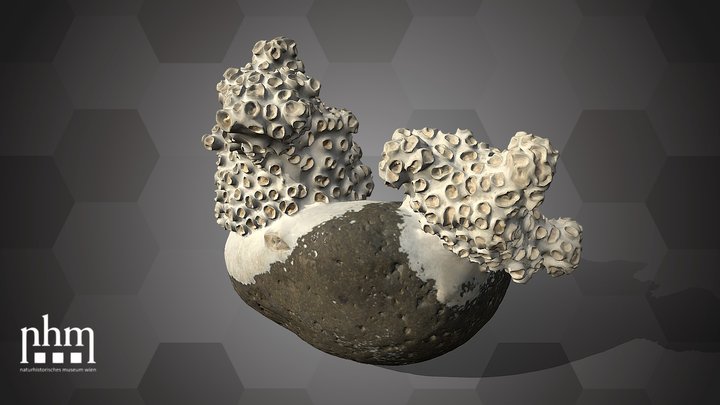
3D model
- Source
- Sketchfab
- Licence
- CC Attribution-NonCommercial
- Commercial use
- the licence does not allow it
Smithsonian Open Access was not reached for this taxon, so this list is what the others held rather than everything there is.
The description on this site
- Source
- Wikipedia, “Oculina”
- Licence
- CC BY-SA 4.0
This is what the site found, which is not the same as what exists.
Keep going
What may have been alongside itOculinidae through timeFormations of the PaleoceneThe world it lived on
Occurrence data from the Paleobiology Database, CC BY 4.0. Gray 1847