Lytoceras fimbriatum
Lytoceras fimbriatum is an ammonite species belonging to the family Lytoceratidae. These cephalopods were fast-moving nektonic carnivores. They lived in the Jurassic period.

Hectonichus · CC BY-SA 3.0 · via Wikipedia/Commons. May be a photograph of a specimen, or an artist’s reconstruction — an interpretation of a skeleton, since colour and soft tissue are almost never preserved.
On record
Recorded, not inferred- Sits inside
- LytocerasPBDB
- Diet
- carnivorePBDB, for Ammonoidea
- Life habit
- nektonicPBDB, for Ammonoidea
- Motility
- fast-movingPBDB, for Ammonoidea
- Vision
- well-developedPBDB, for Cephalopoda
- Environment
- marinePBDB, for Cephalopoda
Time the record covers
At least 9.5 million years on record.
The record covers at least 184.2 Mya to 174.7 Mya. No occurrence read is dated outside 199.5 Mya to 170.9 Mya.
201 occurrences of Lytoceras fimbriatum on record, most of them in the Early Jurassic. Bar height is expected occurrences, not a count: each fossil is spread across the span it is dated to, so a tall narrow bar means tight dating and a low wide one means loose.
When
201 occurrences- Early Jurassic100%
- Middle Jurassicunder 1%
These are dates about fossils, not the animal: the record can only begin after it arose and end before it died out, so either end may reach further. Shares are expected occurrences: a fossil dated to a span is counted partly in each period it straddles. More on what this infers.
Found in
11 formations
- Tűzkövesárok Limestone Formation5
- Isztimér Formation5
- Belemnite Marls Formation3
- Somssichhegy Formation2
- Charmouth Mudstone Formation · Lias Group2
- Adnet Formation2
Loading coastlines…
The named rock units Lytoceras fimbriatum has been recovered from, largest first. Drawn where the rock is now, not where it formed. 177 occurrences have no formation on record, which is common for older literature.
Lytoceras fimbriatum and its relatives
Early JurassicWhere Lytoceras fimbriatum and its relatives were recorded in the Early Jurassic.
Found in the same rock
248 taxa- Juraphyllites20 sites
- Amaltheus stokesi19 sites
- Calliphylloceras bicicolae19 sites
- Liparoceras (Becheiceras) gallicum19 sites
- Aegoceras (Beaniceras) luridum17 sites
- Juraphyllites libertus17 sites
- Partschiceras striatocostatum16 sites
- Aegoceras maculatum15 sites
- Tragophylloceras loscombi15 sites
- Derolytoceras tortum14 sites
- Liparoceras14 sites
- Acanthopleuroceras lepidum13 sites
- Phylloceras hebertinum13 sites
- Androgynoceras capricornus12 sites
- Zetoceras zetes12 sites
- Juraphyllites (Harpophylloceras) eximius11 sites
- Phylloceratoidea11 sites
- Protogrammoceras (Matteiceras) diornatum11 sites
- Androgynoceras hybrida10 sites
- Phylloceras10 sites
- Harpoceratinae9 sites
- Liparoceras kilsbiense9 sites
- Prodactylioceras davoei9 sites
- Protogrammoceras9 sites
The Paleobiology Database records 195 sites for Lytoceras fimbriatum, and this reads all of them. The number is how many of those sites it was catalogued from too. The 24 sharing the most are listed.
This is not a list of everything alive at the time. It is only what has come out of the same ground as this animal and been written down.
Entered from
20 references- Les ammonites du Carixien des Causses (France)146
- Les ammonites du Domérien de la montagne du Bakony (Hongrie)13
- Les ammonites du Sinémurien et du Pliensbachien inférieur de la montagne du Bakony (Hongrie)7
- Liassic ammonites from the central and eastern Pontides (Ankara and Kelkit areas, Turkey)6
- The Belemnite marls of Charmouth, a series in the Lias of the Dorset Coast5
- Lower Pliensbachian ammonites from the Folded Middle Atlas, south of Taza (Morocco)4
- Les ammonites du Pliensbachien du jebel Bou Rharraf (Haut Atlas oriental, Maroc)3
- Austroalpine Liassic ammonites from Vorarlberg (Austria, Northern Calcareous Alps)3
- Le Pliensbachien de Jebel Zaghouan (Tunisie). Nouvelles données fauniques. Implications biostratigraphiques et paléobiogéographiques2
- Lower Pliensbachian ammmonites of Villány (Hungary)2
- Carbon-isotope events during the Pliensbachian (Lower Jurassic) on the African and European margins of the NW Tethyan Realm1
- The bipolar bivalve Oxytoma (Palmoxytoma) cygnipes (Young and Bird, 1822) in the Upper Pliensbachian of Germany1
Each of the 201 occurrences read was entered from one of these publications, ordered by how many each accounts for. This is not a search for papers mentioning the name. 8 further references are not listed. Entries link to doi.org where the Paleobiology Database holds an identifier, and to its own record where it does not. Relayed as the Paleobiology Database holds them, not checked against what they resolve to.
Media and terms
Media content2

Picture of Lytoceras fimbriatum
- Source
- Wikipedia/Commons
- Credit
- Hectonichus
- Licence
- CC BY-SA 3.0
- Commercial use
- the licence allows it
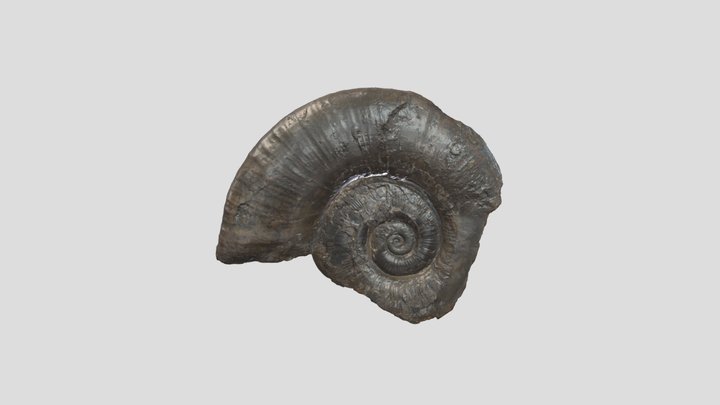
3D model
- Source
- Sketchfab
- Credit
- Andrew R Cuff
- Licence
- CC Attribution
- Commercial use
- cannot be read from the licence given — check the record
Smithsonian Open Access was not reached for this taxon, so this list is what the others held rather than everything there is.
The description on this site
- Licence
- CC BY-SA 4.0
This is what the site found, which is not the same as what exists.
Keep going
What may have been alongside itLytoceras through timeFormations of the Early JurassicThe world it lived on
Occurrence data from the Paleobiology Database, CC BY 4.0. (Sowerby 1817)