Lewesiceras
Lewesiceras is a genus of large ammonites belonging to the order Ammonitida and the family Pachydiscidae.

Hectonichus · CC BY-SA 3.0 · via Wikipedia/Commons. May be a photograph of a specimen, or an artist’s reconstruction — an interpretation of a skeleton, since colour and soft tissue are almost never preserved.
On record
Recorded, not inferred- Sits inside
- PachydiscidaePBDB
- Diet
- carnivorePBDB, for Ammonoidea
- Life habit
- nektonicPBDB, for Ammonoidea
- Motility
- fast-movingPBDB, for Ammonoidea
- Vision
- well-developedPBDB, for Cephalopoda
- Environment
- marinePBDB, for Cephalopoda
Time the record covers
At least 4.1 million years on record.
The record covers at least 93.9 Mya to 89.8 Mya. No occurrence read is dated outside 100.5 Mya to 66 Mya.
38 occurrences of Lewesiceras on record, most of them in the Late Cretaceous. Bar height is expected occurrences, not a count: each fossil is spread across the span it is dated to, so a tall narrow bar means tight dating and a low wide one means loose.
When
38 occurrences- Late Cretaceous100%
These are dates about fossils, not the animal: the record can only begin after it arose and end before it died out, so either end may reach further. Shares are expected occurrences: a fossil dated to a span is counted partly in each period it straddles. More on what this infers.
Found in
13 formations
- Lewes Nodular Chalk Formation · Chalk Group7
- Brießnitz Formation6
- Senneville Formation3
- Teplice Formation2
- La Frontera Formation2
- Buda Limestone Formation1
Loading coastlines…
The named rock units Lewesiceras has been recovered from, largest first. Drawn where the rock is now, not where it formed. 10 occurrences have no formation on record, which is common for older literature.
Lewesiceras and its relatives
Late CretaceousWhere Lewesiceras and its relatives were recorded in the Late Cretaceous.
Found in the same rock
161 taxa- Scaphites geinitzii8 sites
- Sciponoceras bohemicum8 sites
- Nostoceras (Eubostrychoceras) saxonicum7 sites
- Hyphantoceras (Hyphantoceras) reussianum5 sites
- Subprionocyclus neptuni5 sites
- Allocrioceras angustum4 sites
- Allocrioceras billinghursti4 sites
- Inoceramus4 sites
- Inoceramus striatoconcentricus carpathicus4 sites
- Mammites nodosoides4 sites
- Subprionocyclus branneri4 sites
- Terebratulida4 sites
- Inoceramus costellatus costellatus3 sites
- Micraster leskei3 sites
- Spathites (Jeanrogericeras) reveliereanus3 sites
- Sternotaxis planus3 sites
- Stramentum pulchellum3 sites
- Subprionocyclus hitchinensis3 sites
- Allocrioceras nodiger2 sites
- Baculites undulatus2 sites
- Collignoniceras2 sites
- Collignoniceras woollgari2 sites
- Echinocorys gravesi2 sites
- Inoceramus costellatus longealatus2 sites
The Paleobiology Database records 36 sites for Lewesiceras, and this reads all of them. The number is how many of those sites it was catalogued from too. The 24 sharing the most are listed.
This is not a list of everything alive at the time. It is only what has come out of the same ground as this animal and been written down.
Entered from
16 references- The ammonites of the English Chalk Rock (Upper Turonian)10
- Upper Cenomanian-Lower Turonian ammonoids from the Saxonian Cretaceous (lower Elbtal Group, Saxony, Germany)6
- Die Oberkreide der Sack-Mulde bei Alfeld (Cenoman-Unter-Coniac) Lithologie, Biostratigraphie und Inoceramen5
- Late Turonian ammonites from Haute-Normandie, France3
- Algunos ammonites nuevos o poco conocidos del Turoniano de Colombia y Venezuela2
- Die Crustaceen der böhmischen Kreideformation2
- Dimorphism in Late Cretaceous ammonites - evidence from early Turonian ammonite faunas of the Brießnitz Formation in Saxony, Germany1
- Inoceramids and associated ammonite faunas from the uppermost Turonian-lower Coniacian (Upper Cretaceous) of the Anaipadi–Saradamangalam region of the Cauvery Basin, south-east India1
- Turonian cephalopods (ammonoids and a nautiloid) from the Wadi Daya Formation of the Talerzha Basin (South Riffian Ridges Domain, northern Morocco)1
- A North American ammonite fauna from the late Middle Turonian of Vaucluse and Gard, southern France: the Romaniceras mexicanum, Prionocyclus hyatti and Coilopoceras cf. springeri association1
- Origin and phylogeny of the Cretaceous thoracican cirripede family Stramentidae1
- Kreide-Fossilien in Sachsen, Teil 1, 7. Ammoniten1
Each of the 38 occurrences read was entered from one of these publications, ordered by how many each accounts for. This is not a search for papers mentioning the name. 4 further references are not listed. Entries link to doi.org where the Paleobiology Database holds an identifier, and to its own record where it does not. Relayed as the Paleobiology Database holds them, not checked against what they resolve to.
Media and terms
Media content2

Picture of Lewesiceras
- Source
- Wikipedia/Commons
- Credit
- Hectonichus
- Licence
- CC BY-SA 3.0
- Commercial use
- the licence allows it
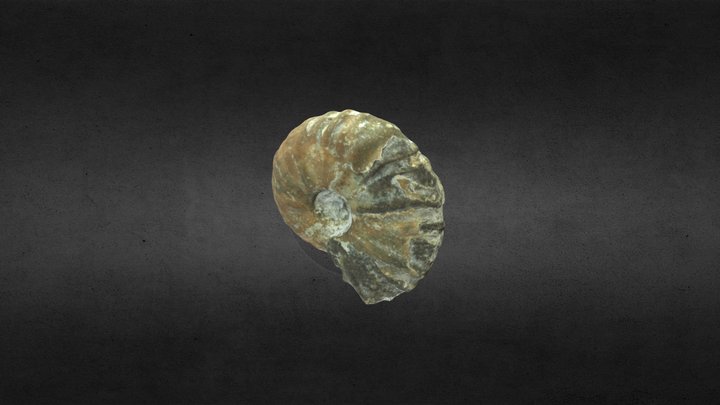
3D model
- Source
- Sketchfab
- Credit
- Shellie Luallin
- Licence
- CC Attribution
- Commercial use
- cannot be read from the licence given — check the record
Smithsonian Open Access and MorphoSource were not reached for this taxon, so this list is what the others held rather than everything there is.
The description on this site
- Source
- Wikipedia, “Lewesiceras”
- Licence
- CC BY-SA 4.0
This is what the site found, which is not the same as what exists.
Keep going
What may have been alongside itPachydiscidae through timeFormations of the Late CretaceousThe world it lived on
Occurrence data from the Paleobiology Database, CC BY 4.0. Spath 1939