Leptosalenia

Ecphora · CC BY-SA 3.0 · via Wikidata/Commons. May be a photograph of a specimen, or an artist’s reconstruction — an interpretation of a skeleton, since colour and soft tissue are almost never preserved.
On record
Recorded, not inferred- Sits inside
- SaleniiniPBDB
- Diet
- omnivorePBDB, for Salenioida
- Life habit
- low-level epifaunalPBDB, for Salenioida
- Motility
- slow-movingPBDB, for Salenioida
- Vision
- limitedPBDB, for Echinoidea
- Environment
- marinePBDB, for Echinodermata
Time the record covers
At least 35 million years on record.
The record covers at least 121.4 Mya to 85.7 Mya. No occurrence read is dated outside 125.77 Mya to 83.6 Mya.
17 occurrences of Leptosalenia on record, most of them in the Early Cretaceous. Bar height is expected occurrences, not a count: each fossil is spread across the span it is dated to, so a tall narrow bar means tight dating and a low wide one means loose.
When
17 occurrencesThese are dates about fossils, not the animal: the record can only begin after it arose and end before it died out, so either end may reach further. Shares are expected occurrences: a fossil dated to a span is counted partly in each period it straddles. More on what this infers.
Found in
7 formations
- Risan Aneiza Formation4
- Qishn Formation2
- Riacheulo Formation2
- Matulla Formation2
- Cotinguiba Formation2
- Halal Formation1
Loading coastlines…
The named rock units Leptosalenia has been recovered from, largest first. Drawn where the rock is now, not where it formed. 3 occurrences have no formation on record, which is common for older literature.
Leptosalenia and its relatives
Early CretaceousWhere Leptosalenia and its relatives were recorded in the Early Cretaceous.
Found in the same rock
179 taxa- Orthopsis miliaris3 sites
- Pseudholaster tricarinatus3 sites
- Cidaris2 sites
- Coenholectypus neocomiensis2 sites
- Knemiceras spathi2 sites
- Pedinopsis humilis2 sites
- Phalacrocidaris branneri2 sites
- Phymosoma binexilis2 sites
- Pinna robinaldina2 sites
- Temnocidaris (Stereocidaris) proxima2 sites
- Tetragramma2 sites
- Tetragramma variolare2 sites
- Toxaster2 sites
- ? Actinoseris sp.1 site
- Acriaster sergipensis1 site
- Actaeon lenzi1 site
- Acteonella1 site
- Allomma1 site
- Amphidonte1 site
- Amphidonte (Ceratostreon) reticulata1 site
- Ampullina1 site
- Ampullospira bulbiformis1 site
- Anatina putatoria1 site
- Anorthopygus orbicularis1 site
The Paleobiology Database records 14 sites for Leptosalenia, and this reads all of them. The number is how many of those sites it was catalogued from too. The 24 sharing the most are listed.
This is not a list of everything alive at the time. It is only what has come out of the same ground as this animal and been written down.
Entered from
9 references- Aptian-Cenomanian echinoids from northern Sinai, Egypt4
- Late Cretaceous macrofossils from Sinai, Egypt2
- The Jurassic and Lower Cretaceous of Wadi Hajar, southern Yemen2
- Cretaceous echinoids from north-eastern Brazil2
- Maury, 19362
- Matériaux pour l'étude stratigraphique et paléontologique de la province d'Angola2
- Decapod assemblages from the Aptian-Albian transition of the eastern Maestrat Basin (Iberian Chain)1
- Aptian-Cenomanian Echinoids from Egypt1
- Albian fauna of Gabal Manzour, Maghara area, north Sinai, Egypt1
Each of the 17 occurrences read was entered from one of these publications, ordered by how many each accounts for. This is not a search for papers mentioning the name. Entries link to doi.org where the Paleobiology Database holds an identifier, and to its own record where it does not. Relayed as the Paleobiology Database holds them, not checked against what they resolve to.
Media and terms
Media content2
Picture of Leptosalenia
- Source
- Wikidata/Commons
- Credit
- Ecphora
- Licence
- CC BY-SA 3.0
- Commercial use
- the licence allows it
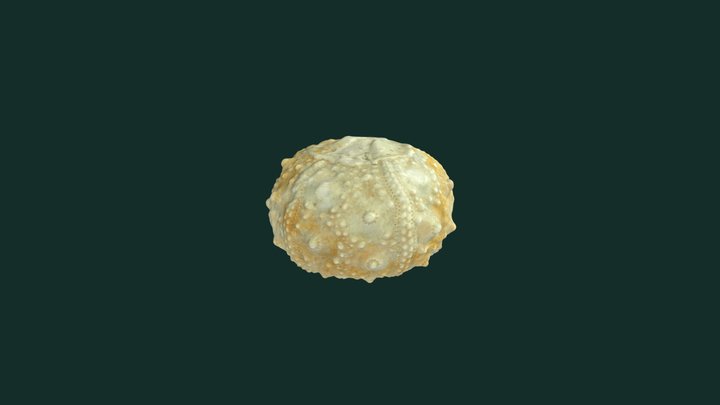
3D model
- Source
- Sketchfab
- Credit
- Shellie Luallin
- Licence
- CC Attribution
- Commercial use
- cannot be read from the licence given — check the record
Smithsonian Open Access was not reached for this taxon, so this list is what the others held rather than everything there is.
This is what the site found, which is not the same as what exists.
Keep going
What may have been alongside itSaleniini through timeFormations of the Early CretaceousThe world it lived on
Occurrence data from the Paleobiology Database, CC BY 4.0. Smith and Wright 1990