Isocardia

Emőke Dénes · CC BY-SA 4.0 · via Wikidata/Commons. May be a photograph of a specimen, or an artist’s reconstruction — an interpretation of a skeleton, since colour and soft tissue are almost never preserved.
On record
Recorded, not inferred- Sits inside
- GlossidaePBDB
- Diet
- suspension feederPBDB, for Glossidae
- Life habit
- infaunalPBDB, for Glossidae
- Motility
- facultatively mobilePBDB, for Glossidae
- Vision
- blindPBDB, for Bivalvia
Time the record covers
At least 419 million years on record.
The record covers at least 419.62 Mya to 11.7 ka. No occurrence read is dated outside 426.7 Mya to 0 Mya.
96 occurrences of Isocardia on record, most of them in the Early Cretaceous. The Paleobiology Database records this as a living group. Bar height is expected occurrences, not a count: each fossil is spread across the span it is dated to, so a tall narrow bar means tight dating and a low wide one means loose.
When
96 occurrences- Silurian1%
- Late Triassic4%
- Early Jurassic11%
- Middle Jurassic3%
- Late Jurassic5%
- Early Cretaceous29%
- Late Cretaceous29%
- Paleocene3%
- Oligocene6%
- Miocene2%
- Pliocene4%
- Holocene1%
These are dates about fossils, not the animal: the record can only begin after it arose and end before it died out, so either end may reach further. Shares are expected occurrences: a fossil dated to a span is counted partly in each period it straddles. More on what this infers.
Found in
36 formations
- Ladd Formation19
- Rio Tascadero Formation4
- Coralline Crag Formation3
- Vuache Formation2
- Upper Cyrena Formation2
- Grès verts helvétiques Formation2
Loading coastlines…
The named rock units Isocardia has been recovered from, largest first. Drawn where the rock is now, not where it formed. 12 further formations hold fewer occurrences each and are not listed. 30 occurrences have no formation on record, which is common for older literature.
Isocardia and its relatives
Early CretaceousWhere Isocardia and its relatives were recorded in the Early Cretaceous.
Found in the same rock
2,006 taxa- Ostrea20 sites
- Cardium17 sites
- Pholadomya17 sites
- Panopea16 sites
- Lima (Acesta) beta13 sites
- Serpula13 sites
- Pterotrigonia klamathonia12 sites
- Trigonarca californica12 sites
- Arca11 sites
- Astarte11 sites
- Exogyra11 sites
- Gryphaea11 sites
- Lima11 sites
- Nucula11 sites
- Plagiostoma11 sites
- Trigonia11 sites
- Arctica10 sites
- Callistalox arata10 sites
- Cucullaea10 sites
- Glycymeris pacifica10 sites
- Natica10 sites
- Pleurotomaria10 sites
- Ampullina pseudoalveata9 sites
- Clisocolus corrugatus9 sites
The Paleobiology Database records 86 sites for Isocardia, and this reads all of them. The number is how many of those sites it was catalogued from too. The 24 sharing the most are listed.
This is not a list of everything alive at the time. It is only what has come out of the same ground as this animal and been written down.
Entered from
43 references- Upper Cretaceous formations and faunas of southern California11
- Maury, 19367
- Jura Vaudois et Neuchatelois7
- Palokologie und zeitliche Verbreitung benthischer Faunengemeinschaften im Unterjura von Chile6
- Geología del Área Monte Patria-El Maqui, Región de Coquimbo4
- Hettangian through Aalenian (Jurassic) guide fossils and biostratigraphy, Northern Yukon and adjacent Northwest Territories4
- Water depth indications from Late Cretaceous mollusks, Santa Ana Mountains, California4
- Mollusc fauna of the Hungarian Upper Oligocene (Egerian)4
- Wood, 18504
- Les grès verts helvétiques (Aptien moyen-Albien supérieur) de Haute-Savoie, Valais et Vaud (Alpes occidentales franco-suisses)3
- Facies analysis of the Lo Valdés Formation (Tithonian-Hauterivian) of the High Cordillera of Central Chile, and the palaeogeographic evolution of the Andean Basin3
- The Cretaceous formations3
Each of the 96 occurrences read was entered from one of these publications, ordered by how many each accounts for. This is not a search for papers mentioning the name. 31 further references are not listed. Entries link to doi.org where the Paleobiology Database holds an identifier, and to its own record where it does not. Relayed as the Paleobiology Database holds them, not checked against what they resolve to.
Media and terms
Media content2
Picture of Isocardia
- Source
- Wikidata/Commons
- Credit
- Emőke Dénes
- Licence
- CC BY-SA 4.0
- Commercial use
- the licence allows it
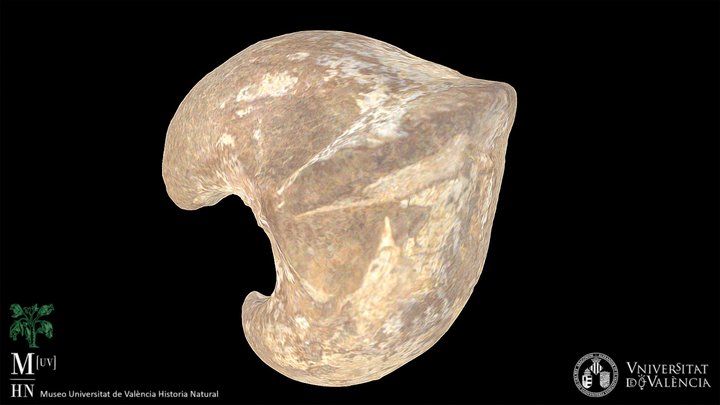
3D model
- Source
- Sketchfab
- Licence
- CC Attribution
- Commercial use
- cannot be read from the licence given — check the record
Smithsonian Open Access was not reached for this taxon, so this list is what the others held rather than everything there is.
This is what the site found, which is not the same as what exists.
Keep going
What may have been alongside itGlossidae through timeFormations of the Early CretaceousThe world it lived on
Occurrence data from the Paleobiology Database, CC BY 4.0. Lamarck 1799