Hoploparia
Hoploparia is a genus of fossil lobster belonging to the family Nephropidae. The type species of this genus is Hoploparia longimana.

Stickpen · Public Domain · via Wikipedia/Commons. May be a photograph of a specimen, or an artist’s reconstruction — an interpretation of a skeleton, since colour and soft tissue are almost never preserved.
On record
Recorded, not inferred- Sits inside
- NephropidaePBDB
- Diet
- carnivorePBDB, for Decapoda
- Life habit
- infaunalPBDB, for Nephropoidea
- Motility
- actively mobilePBDB, for Malacostraca
- Vision
- well-developedPBDB, for Malacostraca
Time the record covers
At least 98 million years on record.
The record covers at least 132.6 Mya to 33.9 Mya. No occurrence read is dated outside 143.1 Mya to 23.04 Mya.
219 occurrences of Hoploparia on record, most of them in the Late Cretaceous. Bar height is expected occurrences, not a count: each fossil is spread across the span it is dated to, so a tall narrow bar means tight dating and a low wide one means loose.
When
219 occurrences- Early Cretaceous41%
- Late Cretaceous46%
- Paleocene6%
- Eocene6%
- Oligoceneunder 1%
These are dates about fossils, not the animal: the record can only begin after it arose and end before it died out, so either end may reach further. Shares are expected occurrences: a fossil dated to a span is counted partly in each period it straddles. More on what this infers.
Found in
59 formations
- Calcaire à Spatangues Formation18
- London Clay Formation10
- Lopez de Bertodano Formation9
- Merchantville Formation · Matawan Group8
- Atherfield Clay Formation · Lower Greensand Group6
- Days Creek Formation6
Loading coastlines…
The named rock units Hoploparia has been recovered from, largest first. Drawn where the rock is now, not where it formed. 35 further formations hold fewer occurrences each and are not listed. 72 occurrences have no formation on record, which is common for older literature.
Hoploparia and its relatives
Late CretaceousWhere Hoploparia and its relatives were recorded in the Late Cretaceous.
Found in the same rock
2,080 taxa- Panopea17 sites
- Ostrea11 sites
- Turritella9 sites
- Glycymeris8 sites
- Nucula8 sites
- Pinna8 sites
- Dentalium7 sites
- Ischyrhiza mira7 sites
- Protocallianassa mortoni7 sites
- Rotularia7 sites
- Acesta6 sites
- Cerithium6 sites
- Cucullaea6 sites
- Hadrosauridae6 sites
- Perissoptera6 sites
- Pholadomya6 sites
- Serpula6 sites
- Squalicorax pristodontus6 sites
- Anomia5 sites
- Anomia laevigata5 sites
- Atherfieldastacus magnus5 sites
- Callianassa5 sites
- Callianassa mortoni5 sites
- Cucullaea antarctica5 sites
The Paleobiology Database records 169 sites for Hoploparia, and this reads all of them. The number is how many of those sites it was catalogued from too. The 24 sharing the most are listed.
This is not a list of everything alive at the time. It is only what has come out of the same ground as this animal and been written down.
Entered from
85 references- Crustacés décapodes nouveaux ou peu connus de l'époque Crétacique28
- Mémoire sur les Crustacés du terrain néocomien de St. Sauveur-en-Puisaye18
- Fossil Crustacea of the Atlantic and Gulf Coastal Plain13
- The Cretaceous decapod Crustacea of Argentina and the Antarctic Pensinsula11
- On the classification of some British fossil Crustacea with notices of new forms in the university collection at Cambridge8
- Hoploparia riddlensis, a new species of lobster (Decapoda: Nephropidae) from the Days Creek Formation (Hauterivian, Lower Cretaceous) of Oregon6
- Hoploparia albertaensis, a new species of clawed lobster (Nephropidae) from the Late Coniacian, shallow-marine Bad Heart Formation of northwestern Alberta, Canada5
- Late Cretaceous and Paleocene decapod crustaceans from James Ross Basin, Antarctic Peninsula5
- The stratigraphy of the Atherfield Clay Formation (Lower Aptian, Lower Cretaceous) at the type and other localities in southern England5
- New and previously known decapod crustaceans from the Late Cretaceous of New Jersey and Delaware, USA4
- A redescription of a Maastrichtian lobster Hoploparia antarctica Wilckens, 1907 (Crustacea: Decapoda), from Chubut, Argentina4
- Latest Cretaceous/Earliest Tertiary Transition on Seymour Island, Antarctica4
Each of the 219 occurrences read was entered from one of these publications, ordered by how many each accounts for. This is not a search for papers mentioning the name. 73 further references are not listed. Entries link to doi.org where the Paleobiology Database holds an identifier, and to its own record where it does not. Relayed as the Paleobiology Database holds them, not checked against what they resolve to.
Media and terms
Media content2

Picture of Hoploparia
- Source
- Wikipedia/Commons
- Credit
- Stickpen
- Licence
- Public Domain
- Commercial use
- the licence allows it
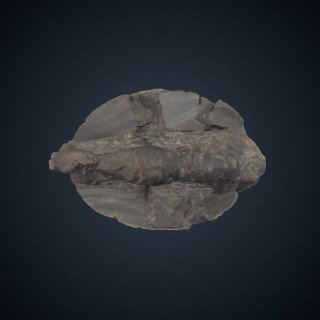
3D scan
- Source
- Smithsonian
- Licence
- CC0 — this site’s default, not the record’s
- Commercial use
- the licence allows it
- Specimen
- Hoploparia bearpawensis Feldmann
The description on this site
- Source
- Wikipedia, “Hoploparia”
- Licence
- CC BY-SA 4.0
This is what the site found, which is not the same as what exists.
Keep going
What may have been alongside itNephropidae through timeFormations of the Late CretaceousThe world it lived on
Occurrence data from the Paleobiology Database, CC BY 4.0. M'Coy 1849