Helicoprion
Helicoprion is an extinct genus of large shark-like cartilaginous fish that lived from the Early to the Middle Permian, about 290-270 million years ago. Helicoprion is a member of the Eugeneodontiformes, an extinct order of cartilaginous fish within the clade Holocephali, a group today represented only by chimaeras. It is also the type genus of the Helicoprionidae, a family of eugeneodonts characterised by distinctive tooth structures called tooth whorls. Helicoprion was first named in 1899 by Alexander Karpinsky on the basis of fossils discovered in Russia and Australia, the generic name meaning "spiral saw". Although numerous species were subsequently assigned to the genus, only H. bessonowi, H. davisii, and H. ergassaminon are recognized following a 2013 revision. The three species are distinguished by the shape and spacing of their tooth crowns.

James St. John · CC BY 2.0 · via Wikipedia/Commons. May be a photograph of a specimen, or an artist’s reconstruction — an interpretation of a skeleton, since colour and soft tissue are almost never preserved.
On record
Recorded, not inferred- Sits inside
- HelicoprionidaePBDB
- Diet
- carnivorePBDB, for Eugeneodontiformes
- Life habit
- nektonicPBDB, for Eugeneodontiformes
- Motility
- actively mobilePBDB, for Eugeneodontiformes
- Length
- 10 mWikidata
Time the record covers
At least 30 million years on record.
The record covers at least 290.1 Mya to 259.857 Mya. No occurrence read is dated outside 298.9 Mya to 251.902 Mya.
35 occurrences of Helicoprion on record, most of them in the Permian. Bar height is expected occurrences, not a count: each fossil is spread across the span it is dated to, so a tall narrow bar means tight dating and a low wide one means loose.
When
35 occurrences- Permian100%
These are dates about fossils, not the animal: the record can only begin after it arose and end before it died out, so either end may reach further. Shares are expected occurrences: a fossil dated to a span is counted partly in each period it straddles. More on what this infers.
Found in
15 formations
- Phosphoria Formation17
- Assistance Formation1
- Bone Spring Formation1
- Patlanoaya Formation1
- Ranger Canyon Formation1
- Wandagee Formation1
Loading coastlines…
The named rock units Helicoprion has been recovered from, largest first. Drawn where the rock is now, not where it formed. 4 occurrences have no formation on record, which is common for older literature.
Helicoprion and its relatives
PermianWhere Helicoprion and its relatives were recorded in the Permian.
Found in the same rock
88 taxa- Orbiculoidea4 sites
- Osteichthyes4 sites
- Polidevcia obesa4 sites
- Anidanthus3 sites
- Babylonites3 sites
- Belemnitida3 sites
- Cancrinella3 sites
- Cancrinella phosphatica3 sites
- Chonetes3 sites
- Crurithyris3 sites
- Komiella ostiolata3 sites
- Leiorhynchus3 sites
- Lingula3 sites
- Nuculopsis3 sites
- Polidevcia3 sites
- Streblopteria montpelierensis3 sites
- Aviculopecten2 sites
- Babylonites conoideus2 sites
- Conulariida2 sites
- Edmondia2 sites
- Girtypecten2 sites
- Lingula carbonaria2 sites
- Nuculopsis poposiensis2 sites
- Orbiculoidea missouriensis2 sites
The Paleobiology Database records 32 sites for Helicoprion, and this reads all of them. The number is how many of those sites it was catalogued from too. The 24 sharing the most are listed.
This is not a list of everything alive at the time. It is only what has come out of the same ground as this animal and been written down.
Entered from
18 references- Unraveling species concepts for the Helicoprion tooth whorl11
- Biostratigraphy of the Phosphoria, Park City, and Shedhorn Formations; Geology of Permian Rocks in the Western Phosphate Field4
- New investigations on Helicoprion from the Phosphoria Formation of South-east Idaho, USA4
- Helicoprion in the Anthracolithic (Late Paleozoic) of Nevada and California, and its stratigraphic significance2
- Systematics and occurrences of Edestus (Chondrichthyes) worldwide and new occurrences from Colorado and Texas1
- A new specimen of Helicoprion Karpinsky, 1899 from Kazakhstanian Cisurals and a new reconstruction of its tooth whorl position and function1
- The first record of Helicoprion Karpinsky (Helicoprionidae) from China1
- Helicoprion nevadensis (Wheeler, 1939) from the Pennsylvanian-Permian Antler Peak Limestone, Lander County, Nevada (Pisces: Selachii: Helicoprionidae)1
- Discovery of Helicoprion, a Chondrichthyes from Kesennuma City, Miyagi Prefecture, Japan1
- Helicoprion (Edestidae) in the Permian of West Texas1
- Carboniferous and Permian stratigraphy of northeastern British Columbia1
- Biostratigraphy and faunas of the Permian Ishbel Group, Canadian Rocky Mountains1
Each of the 35 occurrences read was entered from one of these publications, ordered by how many each accounts for. This is not a search for papers mentioning the name. 6 further references are not listed. Entries link to doi.org where the Paleobiology Database holds an identifier, and to its own record where it does not. Relayed as the Paleobiology Database holds them, not checked against what they resolve to.
Media and terms
Media content2

Picture of Helicoprion
- Source
- Wikipedia/Commons
- Credit
- James St. John
- Licence
- CC BY 2.0
- Commercial use
- the licence allows it
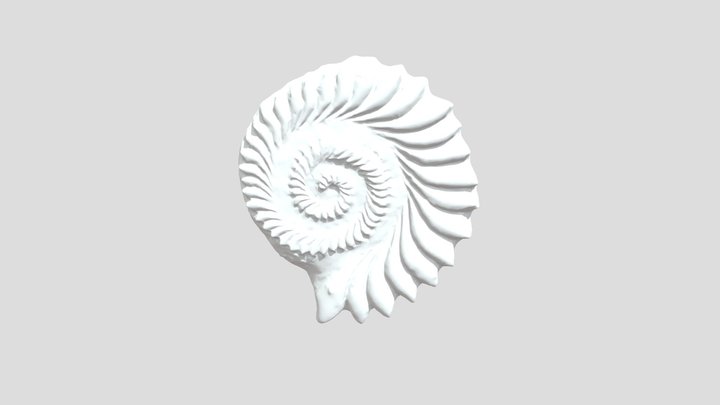
3D model
- Source
- Sketchfab
- Licence
- CC Attribution-ShareAlike
- Commercial use
- cannot be read from the licence given — check the record
The description on this site
- Source
- Wikipedia, “Helicoprion”
- Licence
- CC BY-SA 4.0
This is what the site found, which is not the same as what exists.
Keep going
What may have been alongside itHelicoprionidae through timeFormations of the PermianThe world it lived on
Occurrence data from the Paleobiology Database, CC BY 4.0. Karpinsky 1899