Flabellum cuneiforme
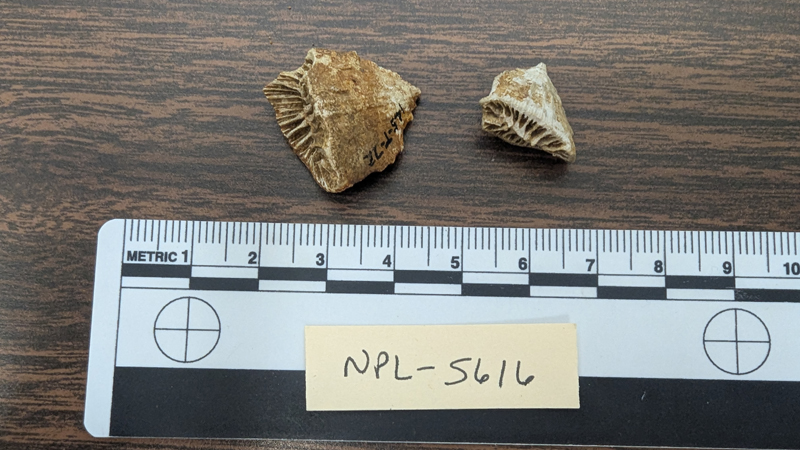
via GBIF · CC0 · via GBIF. May be a photograph of a specimen, or an artist’s reconstruction — an interpretation of a skeleton, since colour and soft tissue are almost never preserved.
On record
Recorded, not inferred- Sits inside
- FlabellumPBDB
- Diet
- suspension feederPBDB, for Flabellum
- Life habit
- epifaunalPBDB, for Flabellum
- Motility
- stationaryPBDB, for Flabellum
- Vision
- blindPBDB, for Anthozoa
- Environment
- marinePBDB, for Flabellidae
Time the record covers
At least 20 million years on record.
The record covers at least 61.66 Mya to 41.03 Mya. No occurrence read is dated outside 66 Mya to 33.9 Mya.
66 occurrences of Flabellum cuneiforme on record, most of them in the Eocene. Bar height is expected occurrences, not a count: each fossil is spread across the span it is dated to, so a tall narrow bar means tight dating and a low wide one means loose.
When
66 occurrencesThese are dates about fossils, not the animal: the record can only begin after it arose and end before it died out, so either end may reach further. Shares are expected occurrences: a fossil dated to a span is counted partly in each period it straddles. More on what this infers.
Found in
12 formations
- Cook Mountain Formation · Claiborne Group20
- Lisbon Formation · Claiborne Group10
- Martinez Formation10
- Moodys Branch Formation9
- Santa Susana Formation5
- Lodo Formation2
Loading coastlines…
The named rock units Flabellum cuneiforme has been recovered from, largest first. Drawn where the rock is now, not where it formed. 2 occurrences have no formation on record, which is common for older literature.
Flabellum cuneiforme and its relatives
EoceneWhere Flabellum cuneiforme and its relatives were recorded in the Eocene.
Found in the same rock
685 taxa- Discotrochus21 sites
- Endopachys maclurii19 sites
- Turritella19 sites
- Calyptraea (Trochita) aperta17 sites
- Hipponix16 sites
- Athleta petrosa15 sites
- Ficus15 sites
- Gastropoda15 sites
- Cubitostrea sellaeformis14 sites
- Cucullaea mathewsonii14 sites
- Levifusus mortoniopsis14 sites
- Dentalium cooperi13 sites
- Pseudoliva vetusta13 sites
- Venericardia (Rotundicardia) rotunda13 sites
- Latirus moorei12 sites
- Retusa galba12 sites
- Amauropsis martinezensis11 sites
- Architectonica11 sites
- Bivalvia11 sites
- Cadulus11 sites
- Eburneopecten scintillatus11 sites
- Nemocardium (Nemocardium) linteum11 sites
- Turritella infragranulata pachecoensis11 sites
- Architectonica (Stellaxis) elaborata10 sites
The Paleobiology Database records 53 sites for Flabellum cuneiforme, and this reads all of them. The number is how many of those sites it was catalogued from too. The 24 sharing the most are listed.
This is not a list of everything alive at the time. It is only what has come out of the same ground as this animal and been written down.
Entered from
15 references- Invertebrate Macropaleontolgy of the Clarke County Mississippi Area11
- Faunal stability and environmental change in the middle Eocene Gulf Coastal Plain (PhD Thesis, Harvard University)10
- Fossil assemblages of a marine transgressive sand, Moody''s Branch Formation (Upper Eocene), Louisiana and Mississippi10
- Stratigraphic Distribution of Paleocene and Eocene Fossils in the Eastern Gulf Coast Region9
- Fauna of the Martinez Eocene of California9
- Marine Macro-Invertebrate Paleoenvirionmental Interpretation of the Harvey Site (Cook Mountain, Eocene) in North-Central Louisiana3
- A contribution to the paleontology of the Martinez Eocene of California3
- Stratigraphy and Sedimentology of the San Francisquito Formation, Transverse Ranges, California2
- Geology of the coast ranges immediately north of the San Francisco Bay region, California2
- The Eocene and lower Oligocene coral faunas of the United States with descriptions of a few doubtfully Cretaceous species2
- A new species of Fulgoraria (Mollusca: Gastropoda) from the Paleocene of southern California1
- Age, Correlation and Possible Tethyan Affinities of Mollusks from the Lodo Formation of Fresno County, California1
Each of the 66 occurrences read was entered from one of these publications, ordered by how many each accounts for. This is not a search for papers mentioning the name. 3 further references are not listed. Entries link to doi.org where the Paleobiology Database holds an identifier, and to its own record where it does not. Relayed as the Paleobiology Database holds them, not checked against what they resolve to.
Media and terms
Media content2
Picture of Flabellum cuneiforme
- Source
- GBIF
- Credit
- via GBIF
- Licence
- CC0
- Commercial use
- the licence allows it
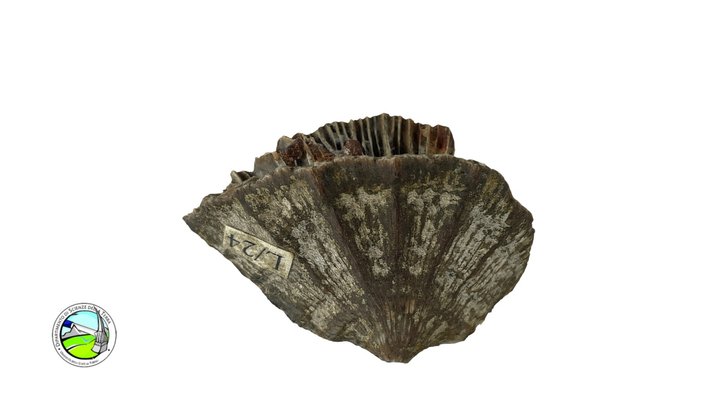
3D model
- Source
- Sketchfab
- Licence
- CC Attribution
- Commercial use
- cannot be read from the licence given — check the record
Smithsonian Open Access and MorphoSource were not reached for this taxon, so this list is what the others held rather than everything there is.
This is what the site found, which is not the same as what exists.
Keep going
What may have been alongside itFlabellum through timeFormations of the EoceneThe world it lived on
Occurrence data from the Paleobiology Database, CC BY 4.0. Lonsdale 1845