Eryma
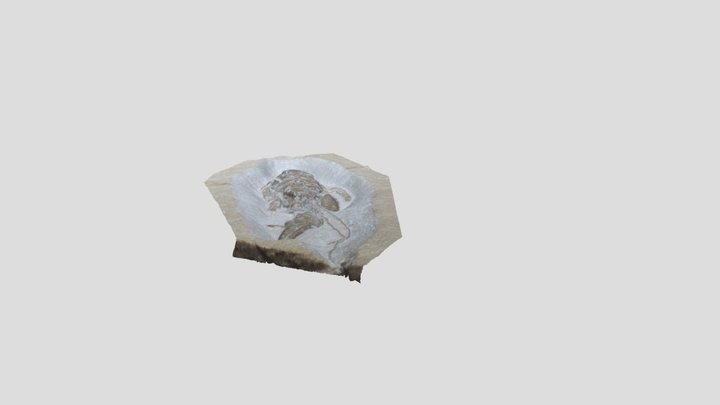
Eryma is a genus of fossil lobster-like crustaceans, containing 44 species. The oldest known species was discovered in non-marine deposits from the late Triassic Chinle Formation located in the Petrified Forest National Park, Arizona. Two other species were discovered in the Solnhofen Limestone in Germany.

Ra'ike (see also: de:Benutzer:Ra'ike ) · CC BY-SA 3.0 · via Wikipedia/Commons. May be a photograph of a specimen, or an artist’s reconstruction — an interpretation of a skeleton, since colour and soft tissue are almost never preserved.
On record
Recorded, not inferred- Sits inside
- EryminaePBDB
- Diet
- carnivorePBDB, for Decapoda
- Life habit
- infaunalPBDB, for Erymidae
- Motility
- actively mobilePBDB, for Malacostraca
- Vision
- well-developedPBDB, for Malacostraca
Time the record covers
At least 181 million years on record.
The record covers at least 254.14 Mya to 72.2 Mya. No occurrence read is dated outside 259.857 Mya to 66 Mya.
99 occurrences of Eryma on record, most of them in the Late Jurassic. Bar height is expected occurrences, not a count: each fossil is spread across the span it is dated to, so a tall narrow bar means tight dating and a low wide one means loose.
When
99 occurrencesThese are dates about fossils, not the animal: the record can only begin after it arose and end before it died out, so either end may reach further. Shares are expected occurrences: a fossil dated to a span is counted partly in each period it straddles. More on what this infers.
Found in
26 formations
- Oxford Clay Formation · Ancholme Group12
- Liegende Bankkalk Formation4
- Solnhofen Formation4
- Effinger Schichten Formation3
- Terrain à Chailles Formation3
- Opalinuston Formation2
Loading coastlines…
The named rock units Eryma has been recovered from, largest first. Drawn where the rock is now, not where it formed. 2 further formations hold fewer occurrences each and are not listed. 47 occurrences have no formation on record, which is common for older literature.
Eryma and its relatives
Late JurassicWhere Eryma and its relatives were recorded in the Late Jurassic.
Found in the same rock
498 taxa- Glyphea regleyana6 sites
- Eumorphia socialis4 sites
- Goniochirus cristatus4 sites
- Grammatodon concinnus4 sites
- Bositra buchi3 sites
- Glyphea muensteri3 sites
- Gryphaea (Bilobissa) sublobata3 sites
- Lima (Mantellum) duplicata3 sites
- Lithophaga (Lithophaga)3 sites
- Lobothyris punctata3 sites
- Pecten (Pecten) dentatus3 sites
- Protocardia striatula3 sites
- Trachysoma rostrata3 sites
- Acanthochirana cordata2 sites
- Aeger spinipes2 sites
- Aeger tipularius2 sites
- Antrimpos speciosus2 sites
- Astarte2 sites
- Brachyphyllum2 sites
- Choffatia2 sites
- Cosmetodon2 sites
- Entolium (Entolium) corneolum2 sites
- Glyphea2 sites
- Glyphea dressieri2 sites
The Paleobiology Database records 62 sites for Eryma, and this reads all of them. The number is how many of those sites it was catalogued from too. The 24 sharing the most are listed.
This is not a list of everything alive at the time. It is only what has come out of the same ground as this animal and been written down.
Entered from
44 references- Notes sur les Crustaces Jurassiques du Bassin Du Jura12
- On the decapod crustaceans of the Oxford Clay11
- Description des crustacés fossiles de la Haute-Saône et du Haut-Jura8
- New findings of Decapoda (Crustacea) in the Callovian of the Ryazan region (Central European Russia)6
- Im Reich der Meerengel. Der Nusplinger Plattenkalk und seine Fossilien4
- Crustacés décapodes du Kimméridgien de Bure (Lorraine, France)4
- Palökologie benthischer Faunen aus dem Unter-Toarc SW-Europas4
- Palökologie und Sedimentologie der Echinodermenlagerstätte Schofgraben (mittleres Oxfordian, Weissenstein, Kt. Solothurn)3
- Fossil Decapod Crustaceans of Canada3
- Middle Jurassic lobsters (Crustacea, Decapoda) from Normandy, France2
- On unreported historical specimens of marine arthropods from the Solnhofen and Nusplingen Lithographic Limestones (Late Jurassic, Germany) housed at the Muséum national d’Histoire naturelle, Paris2
- The Upper Jurassic Solnhofen decapod crustacean fauna review of the types from old descriptions Part I. Infraorders Astacidea, Thalassinidea, and Palinura2
Each of the 99 occurrences read was entered from one of these publications, ordered by how many each accounts for. This is not a search for papers mentioning the name. 32 further references are not listed. Entries link to doi.org where the Paleobiology Database holds an identifier, and to its own record where it does not. Relayed as the Paleobiology Database holds them, not checked against what they resolve to.
Media and terms
Media content2

Picture of Eryma
- Source
- Wikipedia/Commons
- Credit
- Ra'ike (see also: de:Benutzer:Ra'ike )
- Licence
- CC BY-SA 3.0
- Commercial use
- the licence allows it
Smithsonian Open Access was not reached for this taxon, so this list is what the others held rather than everything there is.
The description on this site
- Source
- Wikipedia, “Eryma”
- Licence
- CC BY-SA 4.0
This is what the site found, which is not the same as what exists.
Keep going
What may have been alongside itEryminae through timeFormations of the Late JurassicThe world it lived on
Occurrence data from the Paleobiology Database, CC BY 4.0. Von Meyer 1840