Brachyphyllum

the paleobear from Lontananza, Loreto, Peru · CC BY 2.0 · via Wikidata/Commons. May be a photograph of a specimen, or an artist’s reconstruction — an interpretation of a skeleton, since colour and soft tissue are almost never preserved.
On record
Recorded, not inferred- Sits inside
- AraucariaceaePBDB
- Diet
- "photoautotroph"PBDB, for Streptophyta
Time the record covers
At least 280 million years on record.
The record covers at least 283.3 Mya to 2.58 Mya. No occurrence read is dated outside 358.86 Mya to 11.7 ka.
420 occurrences of Brachyphyllum on record, most of them in the Late Jurassic. Bar height is expected occurrences, not a count: each fossil is spread across the span it is dated to, so a tall narrow bar means tight dating and a low wide one means loose.
When
420 occurrences- Carboniferousunder 1%
- Permian2%
- Early Triassicunder 1%
- Middle Triassicunder 1%
- Late Triassic3%
- Early Jurassic8%
- Middle Jurassic34%
- Late Jurassic36%
- Early Cretaceous11%
- Late Cretaceous5%
- Pleistoceneunder 1%
These are dates about fossils, not the animal: the record can only begin after it arose and end before it died out, so either end may reach further. Shares are expected occurrences: a fossil dated to a span is counted partly in each period it straddles. More on what this infers.
Found in
147 formations
- Saltwick Formation · Ravenscar Group25
- Bearreraig Sandstone Formation16
- Jabalpur Formation10
- Cloughton Formation · Ravenscar Group8
- Rajmahal Formation7
- Morrison Formation5
Loading coastlines…
The named rock units Brachyphyllum has been recovered from, largest first. Drawn where the rock is now, not where it formed. 123 further formations hold fewer occurrences each and are not listed. 144 occurrences have no formation on record, which is common for older literature.
Brachyphyllum and its relatives
Late JurassicWhere Brachyphyllum and its relatives were recorded in the Late Jurassic.
Found in the same rock
875 taxa- Cladophlebis115 sites
- Otozamites94 sites
- Pagiophyllum91 sites
- Nilsonia83 sites
- Coniopteris80 sites
- Ptilophyllum77 sites
- Elatocladus71 sites
- Sphenopteris69 sites
- Equisetites63 sites
- Zamites63 sites
- Pterophyllum55 sites
- Phlebopteris54 sites
- Podozamites54 sites
- Elatides52 sites
- Sagenopteris52 sites
- Ginkgo45 sites
- Taeniopteris45 sites
- Czekanowskia44 sites
- Araucarites43 sites
- Pachypteris43 sites
- Pityophyllum40 sites
- Pseudoctenis40 sites
- Sphenobaiera39 sites
- Ctenis38 sites
The Paleobiology Database records 307 sites for Brachyphyllum, and this reads 240 of them. The number is how many of those sites it was catalogued from too. The 24 sharing the most are listed.
This is not a list of everything alive at the time. It is only what has come out of the same ground as this animal and been written down.
Entered from
158 references- La paleoflore Jurassique du Jura Francais: Etude systematique, aspects stratigraphiques et paleoecologiques45
- A Catalogue of Fossil Plants from India Part 2: Palaeozoic and Mesozoic Megafossils26
- The Yorkshire Jurassic Flora V. Coniferales21
- A Catalogue of Indian Fossil Plants20
- Principal Components and Correspondence Analyses of Quantitative Data from a Jurassic Plant Bed18
- Early Middle Jurassic plant communities in Northwest Scotland: Paleoecological and paleoclimatic significance16
- Middle Bathonian floras and phytocoenoses of France.9
- The Stratigraphic Tables of Fujian9
- About subdivisions of the Lower Jurassic of Tadzhikistan based on paleobotanic data7
- The Stratigraphic Tables of Heilongjiang7
- The Stratigraphic Tables of Zhejiang7
- New data on the Upper Jurassic flora of Georgia7
Each of the 420 occurrences read was entered from one of these publications, ordered by how many each accounts for. This is not a search for papers mentioning the name. 146 further references are not listed. Entries link to doi.org where the Paleobiology Database holds an identifier, and to its own record where it does not. Relayed as the Paleobiology Database holds them, not checked against what they resolve to.
Media and terms
Media content2
Picture of Brachyphyllum
- Source
- Wikidata/Commons
- Credit
- the paleobear from Lontananza, Loreto, Peru
- Licence
- CC BY 2.0
- Commercial use
- the licence allows it
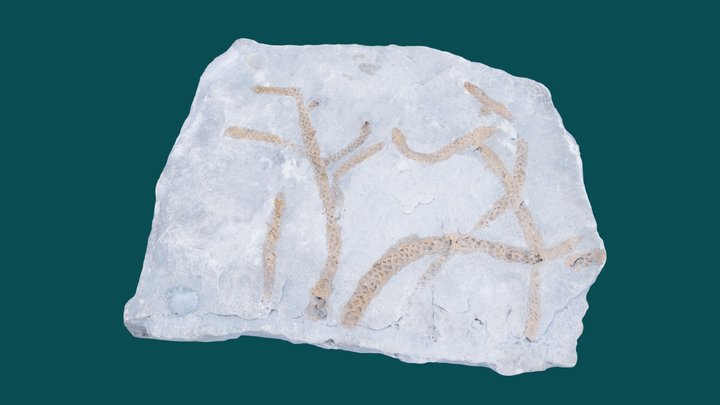
3D model
- Source
- Sketchfab
- Licence
- CC Attribution-NonCommercial-ShareAlike
- Commercial use
- the licence does not allow it
Smithsonian Open Access was not reached for this taxon, so this list is what the others held rather than everything there is.
This is what the site found, which is not the same as what exists.
Keep going
What may have been alongside itAraucariaceae through timeFormations of the Late JurassicThe world it lived on
Occurrence data from the Paleobiology Database, CC BY 4.0. Brongniart 1828