Cypriniformes
Cypriniformes is an order of ray-finned fish which contains many sister families and genera of cypriniform fish split into several suborders, including the barbs, loaches, botias, carps, danionins, and minnows, amongst others. Cypriniformes is an "order-within-an-order", placed under the superorder Ostariophysi—which is also made up of cyprinid, ostariophysin fishes. The order contains 11–12 families, over 400 genera, and more than 4,250 named species; new species are regularly described, and new genera are recognized frequently. Cyprinids are most diverse in South and Southeast Asia and are entirely absent from Australia and South America. At 112 years old, the longest-lived cypriniform fish documented is the bigmouth buffalo.

Franky44 at Dutch Wikipedia · CC BY-SA 3.0 · via Wikipedia/Commons. May be a photograph of a specimen, or an artist’s reconstruction — an interpretation of a skeleton, since colour and soft tissue are almost never preserved.
On record
Recorded, not inferred- Also called
- carp-like fishPBDB
- Sits inside
- OtophysaPBDB
- Diet
- omnivorePBDB
- Life habit
- nektonicPBDB
- Motility
- actively mobilePBDB
- Environment
- freshwaterPBDB
Time the record covers
At least 143 million years on record.
The record covers at least 143.1 Mya to 11.7 ka. No occurrence read is dated outside 149.2 Mya to 0 Mya.
400 occurrences of Cypriniformes on record, most of them in the Miocene. The Paleobiology Database records this as a living group. Bar height is expected occurrences, not a count: each fossil is spread across the span it is dated to, so a tall narrow bar means tight dating and a low wide one means loose.
When
400 occurrences- Late Jurassicunder 1%
- Early Cretaceousunder 1%
- Late Cretaceous2%
- Paleoceneunder 1%
- Eocene7%
- Oligocene8%
- Miocene28%
- Pliocene22%
- Pleistocene28%
- Holocene4%
These are dates about fossils, not the animal: the record can only begin after it arose and end before it died out, so either end may reach further. Shares are expected occurrences: a fossil dated to a span is counted partly in each period it straddles. More on what this infers.
Found in
83 formations
- Koobi Fora Formation18
- Upper Freshwater Molasse Formation · Molasse Group14
- Alturas Formation10
- Nachukui Formation · Omo Group6
- Cromer Forest Bed Formation5
- Rhin Chua Formation5
Loading coastlines…
The named rock units Cypriniformes has been recovered from, largest first. Drawn where the rock is now, not where it formed. 59 further formations hold fewer occurrences each and are not listed. 211 occurrences have no formation on record, which is common for older literature.
Cypriniformes and its relatives
MioceneWhere Cypriniformes and its relatives were recorded in the Miocene.
Found in the same rock
3,191 taxa- Cyprinidae68 sites
- Barbus56 sites
- Leuciscus34 sites
- Equus32 sites
- Synodontis32 sites
- Hydrocynus27 sites
- Rana26 sites
- Aves24 sites
- Trionyx22 sites
- Hipparion21 sites
- Polypterus21 sites
- Sindacharax sp.21 sites
- Clarias20 sites
- Labeo sp.20 sites
- Colubridae19 sites
- Gymnarchus19 sites
- Hominidae19 sites
- Ophisaurus19 sites
- Mimomys18 sites
- Rhinocerotidae18 sites
- Soricidae18 sites
- Anura17 sites
- Bovidae17 sites
- Testudo17 sites
The Paleobiology Database records 254 sites for Cypriniformes, and this reads 240 of them. The number is how many of those sites it was catalogued from too. The 24 sharing the most are listed.
This is not a list of everything alive at the time. It is only what has come out of the same ground as this animal and been written down.
Entered from
170 references- Biogeography of the Pliocene and Pleistocene vertebrate faunas of Northeastern California and their temporal significance to the development of the Modoc Plateau and Klamath Mountain Region18
- Two Pliocene (Blancan) vertebrate faunas from Douglas County, Nevada16
- Nota sobre la ictiofauna continental de los yacimientos de la cuenca de Guadix-Baza (Granada)13
- Koobi Fora Research Project The Fossil Ungulates: Proboscidea, Perissodactyla, Suidae8
- Orthodon (Actinopterygii, Cyprinidae) from the Pliocene and Pleistocene of California8
- Ectothermic vertebrates (Teleostei, Allocaudata, Urodela, Anura, Testudines, Choristodera, Crocodylia, Squamata) from the Upper Oligocene of Oberleichtersbach (Northern Bavaria, Germany)7
- Paleoecology of Late Cenozoic Fishes from the Turkana Basin, Northern Kenya7
- Na Duong (northern Vietnam) – an exceptional window into Eocene ecosystems from Southeast Asia6
- Lothagam: the dawn of humanity in eastern Africa6
- A catalogue of late Quaternary vertebrates from California: Part One, nonmarine lower vertebrate and avian taxa6
- The Early Middle Pleistocene vertebrate fauna from Little Oakley, Essex6
- Pleistocene vertebrate faunas of Hungary6
Each of the 400 occurrences read was entered from one of these publications, ordered by how many each accounts for. This is not a search for papers mentioning the name. 158 further references are not listed. Entries link to doi.org where the Paleobiology Database holds an identifier, and to its own record where it does not. Relayed as the Paleobiology Database holds them, not checked against what they resolve to.
Media and terms
Media content3

Picture of Cypriniformes
- Source
- Wikipedia/Commons
- Credit
- Franky44 at Dutch Wikipedia
- Licence
- CC BY-SA 3.0
- Commercial use
- the licence allows it
Synchrotron Imaging scan
- Source
- MorphoSource
- Licence
- not stated by the source
- Commercial use
- cannot be read from the licence given — check the record
- Specimen
- Cypriniformes indet. · UAM:ES:52353
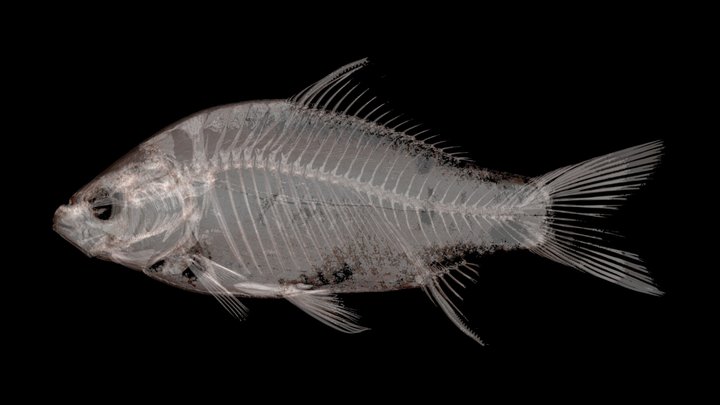
3D model
- Source
- Sketchfab
- Licence
- CC Attribution-NonCommercial-ShareAlike
- Commercial use
- the licence does not allow it
The description on this site
- Licence
- CC BY-SA 4.0
This is what the site found, which is not the same as what exists.
Keep going
What may have been alongside itOtophysa through timeFormations of the MioceneThe world it lived on
Occurrence data from the Paleobiology Database, CC BY 4.0. Bleeker 1859