Cteniogenys
Cteniogenys is a genus of choristodere, a morphologically diverse group of aquatic reptiles. It is part of the monotypic family Cteniogenidae. The type and only named species, C. antiquus, was named in 1928 by Charles W. Gilmore. The holotype, VP.001088, was collected in the Morrison Formation, Wyoming in 1881 by William H. Reed. More specimens have been discovered since then, including specimens from the Late Jurassic of Portugal and Middle Jurassic of Britain, which have not been assigned to species.

Yale Peabody Museum · CC BY-SA 4.0 · via Wikipedia/Commons. May be a photograph of a specimen, or an artist’s reconstruction — an interpretation of a skeleton, since colour and soft tissue are almost never preserved.
On record
Recorded, not inferred- Sits inside
- CteniogenyidaePBDB
- Motility
- actively mobilePBDB, for Osteichthyes
- Environment
- terrestrialPBDB, for Amniota
Time the record covers
At least 81 million years on record.
The record covers at least 165.3 Mya to 83.6 Mya. No occurrence read is dated outside 168.2 Mya to 72.2 Mya.
25 occurrences of Cteniogenys on record, most of them in the Late Jurassic. Bar height is expected occurrences, not a count: each fossil is spread across the span it is dated to, so a tall narrow bar means tight dating and a low wide one means loose.
When
25 occurrencesThese are dates about fossils, not the animal: the record can only begin after it arose and end before it died out, so either end may reach further. Shares are expected occurrences: a fossil dated to a span is counted partly in each period it straddles. More on what this infers.
Found in
8 formations
- Morrison Formation12
- Forest Marble Formation · Great Oolite Group5
- Chipping Norton Limestone Formation · Great Oolite Group1
- Moskovoretskaya Formation1
- Alcobaça Formation1
- Oldman Formation · Belly River Group1
Loading coastlines…
The named rock units Cteniogenys has been recovered from, largest first. Drawn where the rock is now, not where it formed. 2 occurrences have no formation on record, which is common for older literature.
Cteniogenys and its relatives
Late JurassicWhere Cteniogenys and its relatives were recorded in the Late Jurassic.
Found in the same rock
452 taxa- Caudata15 sites
- Mammalia15 sites
- Testudines11 sites
- Anura10 sites
- Crocodylia9 sites
- Goniopholis9 sites
- Theropoda9 sites
- Goniopholididae8 sites
- Allosaurus7 sites
- Glyptops7 sites
- Pterosauria7 sites
- Actinopterygii6 sites
- Albanerpetontidae6 sites
- Camarasaurus6 sites
- Dryolestidae6 sites
- Lepidosauromorpha6 sites
- Lepidotes6 sites
- Ornithischia6 sites
- Ornithopoda6 sites
- Squamata6 sites
- Tritylodontidae6 sites
- Ceratodus5 sites
- Choristodera5 sites
- Docodon victor5 sites
The Paleobiology Database records 25 sites for Cteniogenys, and this reads all of them. The number is how many of those sites it was catalogued from too. The 24 sharing the most are listed.
This is not a list of everything alive at the time. It is only what has come out of the same ground as this animal and been written down.
Entered from
17 references- Paleoecological analysis of the vertebrate fauna of the Morrison Formation (Upper Jurassic), Rocky Mountain region, U.S.A.3
- New occurrences of Cteniogenys (Reptilia, Choristodera) in the Late Jurassic of Wyoming and South Dakota3
- Middle Jurassic microvertebrate assemblages from the British Isles3
- New Jurassic mammals from Como Bluff, Wyoming, and the interrelationships of non-tribosphenic Theria3
- Vertebrate paleobiodiversity of the Early Cretaceous (Berriasian) Angeac-Charente Lagerstätte (southwestern France): implications for continental faunal turnover at the J/K boundary1
- On the Finding of Neosuchians (Neosuchia, Crocodyliformes) in the Middle Jurassic (Bathonian) Deposits of the Moscow Region1
- Palaeontology of the Purbeck-type (Tithonian, Late Jurassic) bonebeds of Chassiron (Oléron Island, western France)1
- Ichthyoliths and other microvertebrate remains from the Morrison Formation (Upper Jurassic) of northeastern Wyoming: A screen-washed sample indicates a significant aquatic component to the fauna1
- The Middle Jurassic vertebrate assemblage of Skye, Scotland1
- A new occurrence of Cteniogenys, with comments on its distribution and abundance1
- New choristoderes (Reptilia: Diapsida) from the Upper Cretaceous and Palaeocene, Alberta and Saskatchewan, Canada, a phylogenetic relationships of Choristodera1
- A new Bathonian microvertebrate locality in the English Midlands1
Each of the 25 occurrences read was entered from one of these publications, ordered by how many each accounts for. This is not a search for papers mentioning the name. 5 further references are not listed. Entries link to doi.org where the Paleobiology Database holds an identifier, and to its own record where it does not. Relayed as the Paleobiology Database holds them, not checked against what they resolve to.
Media and terms
Media content2

Picture of Cteniogenys
- Source
- Wikipedia/Commons
- Credit
- Yale Peabody Museum
- Licence
- CC BY-SA 4.0
- Commercial use
- the licence allows it
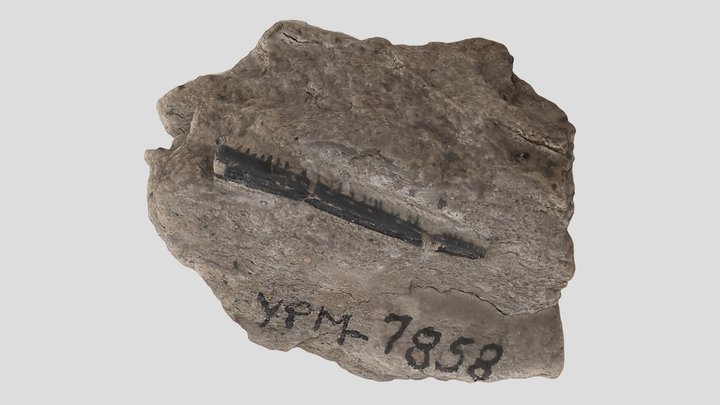
3D model
- Source
- Sketchfab
- Credit
- Yale Peabody Museum
- Licence
- CC Attribution
- Commercial use
- cannot be read from the licence given — check the record
Smithsonian Open Access and MorphoSource were not reached for this taxon, so this list is what the others held rather than everything there is.
The description on this site
- Source
- Wikipedia, “Cteniogenys”
- Licence
- CC BY-SA 4.0
This is what the site found, which is not the same as what exists.
Keep going
What may have been alongside itCteniogenyidae through timeFormations of the Late JurassicThe world it lived on
Occurrence data from the Paleobiology Database, CC BY 4.0. Gilmore 1928