Cornuta
Cornuta is an extinct order of echinoderms. Along with the mitrates, they form the Stylophora.

Haplochromis · CC BY-SA 3.0 · via Wikipedia/Commons. May be a photograph of a specimen, or an artist’s reconstruction — an interpretation of a skeleton, since colour and soft tissue are almost never preserved.
On record
Recorded, not inferred- Sits inside
- StylophoraPBDB
- Diet
- suspension feederPBDB
- Life habit
- epifaunalPBDB
- Motility
- facultatively mobilePBDB
- Vision
- blindPBDB, for Stylophora
- Environment
- marinePBDB, for Echinodermata
Time the record covers
At least 186 million years on record.
The record covers at least 505.3 Mya to 318.7 Mya. No occurrence read is dated outside 509.7 Mya to 316.9 Mya.
68 occurrences of Cornuta on record, most of them in the Cambrian. Bar height is expected occurrences, not a count: each fossil is spread across the span it is dated to, so a tall narrow bar means tight dating and a low wide one means loose.
When
68 occurrences- Cambrian62%
- Ordovician35%
- Carboniferous3%
These are dates about fossils, not the animal: the record can only begin after it arose and end before it died out, so either end may reach further. Shares are expected occurrences: a fossil dated to a span is counted partly in each period it straddles. More on what this infers.
Found in
30 formations
- Jince Formation10
- Saint-Chinian Formation6
- Pontyfenni Formation4
- Whipple Cave Formation4
- Upper Fezouata Formation4
- Murero Formation · Mesones Group4
Loading coastlines…
The named rock units Cornuta has been recovered from, largest first. Drawn where the rock is now, not where it formed. 6 further formations hold fewer occurrences each and are not listed. 1 occurrence has no formation on record, which is common for older literature.
Cornuta and its relatives
CambrianWhere Cornuta and its relatives were recorded in the Cambrian.
Found in the same rock
781 taxa- Ceratocystis10 sites
- Ceratocystis perneri10 sites
- Anatifopsis9 sites
- Ctenocephalus7 sites
- Conocoryphe6 sites
- Hyolithes6 sites
- Paradoxides (Eccaparadoxides)6 sites
- Paradoxides (Eccaparadoxides) pusillus6 sites
- Asaphellus5 sites
- Balantiocystis5 sites
- Ellipsocephalus5 sites
- Etoctenocystis5 sites
- Peronopsis5 sites
- Skreiaspis spinosus5 sites
- Solenopleurina tyrovicensis5 sites
- Bohemiacinctus havliceki4 sites
- Chauvelicystis4 sites
- Colpocoryphe4 sites
- Conulariida4 sites
- Cothurnocystis4 sites
- Gyrocystis platessa4 sites
- Lobocephalina emmrichi4 sites
- Phalagnostus4 sites
- Stromatocystites4 sites
The Paleobiology Database records 55 sites for Cornuta, and this reads all of them. The number is how many of those sites it was catalogued from too. The 24 sharing the most are listed.
This is not a list of everything alive at the time. It is only what has come out of the same ground as this animal and been written down.
Entered from
41 references- Contribution à l'étude de l'Ordovicien inférieur de la Montagne Noire : biostratigraphie et révision des Agnostida6
- Evolutionary implications of a new transitional blastozoan echinoderm from the middle Cambrian of the Czech Republic4
- Systematics and paleoecology of Late Cambrian echinoderms from the western United States4
- Early Ordovician (Arenig) stratigraphy and faunas of the Carmarthen District, southwest Wales4
- The oldest isorophid edrioasteroid (Echinodermata) and the evolution of attachment strategies in Cambrian edrioasteroids3
- Latest Cambrian Cornutes (Echinodermata: Stylophora) From the Taebaeksan Basin, Korea3
- Equinodermos del Cámbrico medio de las Cadenas Ibéricas y de la zona Cantábrica (Norte de España)2
- Asturicystis havliceki sp. nov. (Echinodermata, Homostelea) from the Middle Cambrian of Bohemia (Barrandian area, Czech Republic)2
- A new mitrate (Echinodermata, Stylophora) from the Tremadoc of Shropshire (England) and the origin of the Mitrocystitida2
- Ponticulocarpus, a new cornute-grade stylophoran from the Middle Cambrian Spence Shale of Utah2
- Révision biostratigraphique du Cambrien moyen du versant méridional de la Montagne Noire (Languedoc, France)2
- New fossils sites in the Jince Formation (Middle Cambrian, Bohemia)2
Each of the 68 occurrences read was entered from one of these publications, ordered by how many each accounts for. This is not a search for papers mentioning the name. 29 further references are not listed. Entries link to doi.org where the Paleobiology Database holds an identifier, and to its own record where it does not. Relayed as the Paleobiology Database holds them, not checked against what they resolve to.
Media and terms
Media content3
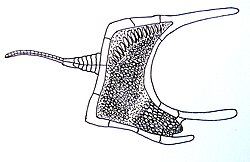
Picture of Cornuta
- Source
- Wikipedia/Commons
- Credit
- Haplochromis
- Licence
- CC BY-SA 3.0
- Commercial use
- the licence allows it
CT scan
- Source
- MorphoSource
- Licence
- In Copyright
- Commercial use
- cannot be read from the licence given — check the record
- Specimen
- Anoplogaster cornuta · SIO:Marine Vertebrates:52-404
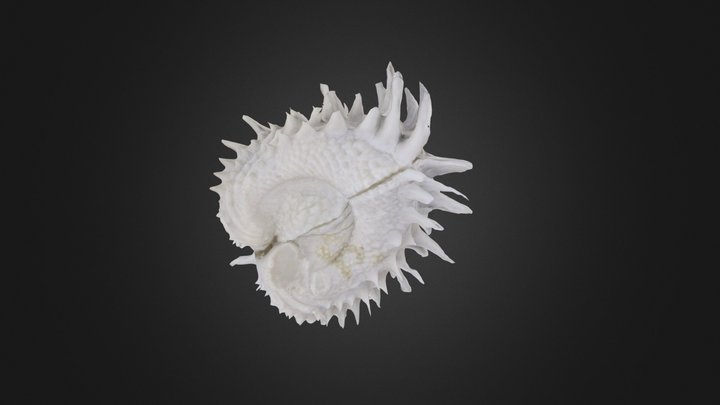
3D model
- Source
- Sketchfab
- Licence
- CC0 Public Domain
- Commercial use
- the licence allows it
Smithsonian Open Access was not reached for this taxon, so this list is what the others held rather than everything there is.
The description on this site
- Source
- Wikipedia, “Cornuta”
- Licence
- CC BY-SA 4.0
This is what the site found, which is not the same as what exists.
Keep going
What may have been alongside itStylophora through timeFormations of the CambrianThe world it lived on
Occurrence data from the Paleobiology Database, CC BY 4.0. Jaekel 1901