Asaphellus
Asaphellus is an extinct genus of trilobites reported from the Ordovician. It is seen in Argentina, Bolivia, Mexico, America, Algeria, Iran, Spain, Portugal, France, Great Britain, Czech Republic, Norway, Sweden and China.

Amir Ali Iranshahi 3 · CC0 · via Wikipedia/Commons. May be a photograph of a specimen, or an artist’s reconstruction — an interpretation of a skeleton, since colour and soft tissue are almost never preserved.
On record
Recorded, not inferred- Sits inside
- AsaphidaePBDB
- Diet
- carnivorePBDB, for Trilobita
- Life habit
- low-level epifaunalPBDB, for Asaphida
- Motility
- fast-movingPBDB, for Asaphida
- Vision
- well-developedPBDB, for Asaphidae
- Environment
- marinePBDB, for Trilobita
Time the record covers
At least 30 million years on record.
The record covers at least 488.3 Mya to 458.2 Mya. No occurrence read is dated outside 497 Mya to 449 Mya.
337 occurrences of Asaphellus on record, most of them in the Ordovician. Bar height is expected occurrences, not a count: each fossil is spread across the span it is dated to, so a tall narrow bar means tight dating and a low wide one means loose.
When
337 occurrences- Cambrian3%
- Ordovician97%
These are dates about fossils, not the animal: the record can only begin after it arose and end before it died out, so either end may reach further. Shares are expected occurrences: a fossil dated to a span is counted partly in each period it straddles. More on what this infers.
Found in
75 formations
- Santa Rosita Formation · Santa Victoria Group76
- Tinu Formation19
- Yeli Formation12
- Yehli Formation12
- Upper Fezouata Formation11
- Nantsinkwan Formation8
Loading coastlines…
The named rock units Asaphellus has been recovered from, largest first. Drawn where the rock is now, not where it formed. 51 further formations hold fewer occurrences each and are not listed. 58 occurrences have no formation on record, which is common for older literature.
Asaphellus and its relatives
OrdovicianWhere Asaphellus and its relatives were recorded in the Ordovician.
Found in the same rock
920 taxa- Geragnostus33 sites
- Angelina hyeronimi25 sites
- Kainella meridionalis21 sites
- Leptoplastides marianus20 sites
- Leptoplastides19 sites
- Shumardia17 sites
- Dictyonema16 sites
- Notopeltis orthometopa16 sites
- Parabolinella argentinensis16 sites
- Apatokephalus serratus15 sites
- Micragnostus pehuenchensis15 sites
- Apatokephalus14 sites
- Parabolinella14 sites
- Dactylocephalus13 sites
- Didymograptus13 sites
- Ampyx12 sites
- Mekynophrys nanna12 sites
- Nanorthis12 sites
- Pseudocalymene12 sites
- Symphysurus12 sites
- Euloma11 sites
- Pseudokainella lata11 sites
- Rossaspis rossi11 sites
- Lingulella10 sites
The Paleobiology Database records 310 sites for Asaphellus, and this reads 240 of them. The number is how many of those sites it was catalogued from too. The 24 sharing the most are listed.
This is not a list of everything alive at the time. It is only what has come out of the same ground as this animal and been written down.
Entered from
82 references- Ordovician trilobites of Argentina83
- Early Ordovician trilobites from the Iruya area (Cordillera Oriental, northwestern Argentina) and their stratigraphic significance23
- Tremadocian trilobites from the Nochixtlan Region, Oaxaca, Mexico19
- Early Ordovician trilobites from the Nazareno area, northwestern Argentina15
- Ordovician trilobites from north and northeastern China12
- Diversification of Asaphellus Callaway, 1877 (Asaphidae: Trilobita) during the Tremadocian in South West Gondwana (Cordillera Oriental, Argentina)9
- Morphometric analysis of Tremadocian (earliest Ordovician) kirkocystid mitrates (Echinodermata, Stylophora) from the Taebaeksan Basin, Korea8
- Tremadoc stratigraphy and trilobite faunas of northwestern Hunan. 1: Trilobites from the Nantsinkwan Formation of the Yangtze Platform8
- Regional Stratigraphic Table of North China8
- Ordovician Brachiopods, Trilobites, and Stratigraphy in Eastern and Central Nevada8
- On the Early Ordovician of Sweden stratigraphy and fauna8
- Lower Ordovician trilobites from western Utah and eastern Nevadea8
Each of the 337 occurrences read was entered from one of these publications, ordered by how many each accounts for. This is not a search for papers mentioning the name. 70 further references are not listed. Entries link to doi.org where the Paleobiology Database holds an identifier, and to its own record where it does not. Relayed as the Paleobiology Database holds them, not checked against what they resolve to.
Media and terms
Media content2

Picture of Asaphellus
- Source
- Wikipedia/Commons
- Credit
- Amir Ali Iranshahi 3
- Licence
- CC0
- Commercial use
- the licence allows it
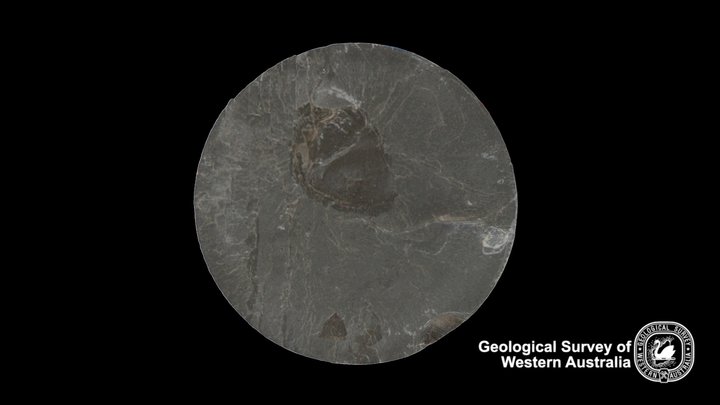
3D model
- Source
- Sketchfab
- Licence
- CC Attribution
- Commercial use
- cannot be read from the licence given — check the record
The description on this site
- Source
- Wikipedia, “Asaphellus”
- Licence
- CC BY-SA 4.0
This is what the site found, which is not the same as what exists.
Keep going
What may have been alongside itAsaphidae through timeFormations of the OrdovicianThe world it lived on
Occurrence data from the Paleobiology Database, CC BY 4.0. Callaway 1877