Didymograptus
Didymograptus is an extinct genus of graptolites with two rows of cups. They lived during the Middle Ordovician, to Late Ordovician.

kevinzim / Kevin Walsh , retouched by Verisimilus · CC BY 2.0 · via Wikipedia/Commons. May be a photograph of a specimen, or an artist’s reconstruction — an interpretation of a skeleton, since colour and soft tissue are almost never preserved.
On record
Recorded, not inferred- Sits inside
- DichograptidaePBDB
- Diet
- suspension feederPBDB, for Graptoloidea
- Life habit
- planktonicPBDB, for Graptoloidea
- Motility
- passively mobilePBDB, for Graptoloidea
- Vision
- blindPBDB, for Graptolithina
Time the record covers
At least 27 million years on record.
The record covers at least 477.1 Mya to 449.6 Mya. No occurrence read is dated outside 488.9 Mya to 443.1 Mya.
433 occurrences of Didymograptus on record, most of them in the Ordovician. Bar height is expected occurrences, not a count: each fossil is spread across the span it is dated to, so a tall narrow bar means tight dating and a low wide one means loose.
When
433 occurrences- Cambrianunder 1%
- Ordovician100%
These are dates about fossils, not the animal: the record can only begin after it arose and end before it died out, so either end may reach further. Shares are expected occurrences: a fossil dated to a span is counted partly in each period it straddles. More on what this infers.
Found in
127 formations
- Meitan Formation27
- Acoite Formation · Santa Victoria Group27
- Lower Road River Formation · Road River Group27
- Aorangi Mine Formation23
- Ningguo Formation18
- Rollston Range Formation17
Loading coastlines…
The named rock units Didymograptus has been recovered from, largest first. Drawn where the rock is now, not where it formed. 103 further formations hold fewer occurrences each and are not listed. 32 occurrences have no formation on record, which is common for older literature.
Didymograptus and its relatives
OrdovicianWhere Didymograptus and its relatives were recorded in the Ordovician.
Found in the same rock
853 taxa- Glyptograptus61 sites
- Phyllograptus55 sites
- Tetragraptus53 sites
- Climacograptus48 sites
- Amplexograptus43 sites
- Glossograptus38 sites
- Taihungshania32 sites
- Pseudoclimacograptus29 sites
- Megalaspides28 sites
- Neseuretus28 sites
- Azygograptus26 sites
- Sinorthis25 sites
- Dicellograptus24 sites
- Isograptus23 sites
- Dichograptus22 sites
- Orthis21 sites
- Cryptograptus20 sites
- Diplograptus17 sites
- Colpocoryphe16 sites
- Geragnostus16 sites
- Graptolithina16 sites
- Dicranograptus15 sites
- Cardiograptus14 sites
- Clonograptus14 sites
The Paleobiology Database records 349 sites for Didymograptus, and this reads 240 of them. The number is how many of those sites it was catalogued from too. The 24 sharing the most are listed.
This is not a list of everything alive at the time. It is only what has come out of the same ground as this animal and been written down.
Entered from
110 references- Stratigraphic Summary of the Southwestern Region of China42
- The sequence and correlation of Early Ordovician (Arenig) graptolite faunas in the Richardson Trough and Misty Creek Embayment, Yukon Territory and District of Mackenzie, Canada24
- Ordovician Geology and Graptolite faunas of the Aorangi Mine area, North-west Nelson, New Zealand24
- La fauna de graptolitos de la Formación Acoite, en el borde occidental de la Cordillera Oriental Argentina. Análisis bioestratigráfico17
- Early Ordovician faunas from the Mount Windsor Subrovince, northeastern Queensland17
- Regional stratigraphic table of Eastern China, Zhejiang Province17
- Graptolites of Cobb River-Mount Arthur Area, North-West Nelson, New Zealand16
- The Hunneberg Stage (Ordovician) in the area east of St. Petersburg, north-western Russia14
- Ordovician, Silurian, and Devonian biostratigraphy of east-central Alaska11
- Regional stratigraphic tables of the north western China region: Volume of NinXia Province10
- Regional stratigraphic table of the southwestern region of China, Sichuan part9
- Regional stratigraphic table of Eastern China, Jiangxi Province9
Each of the 433 occurrences read was entered from one of these publications, ordered by how many each accounts for. This is not a search for papers mentioning the name. 98 further references are not listed. Entries link to doi.org where the Paleobiology Database holds an identifier, and to its own record where it does not. Relayed as the Paleobiology Database holds them, not checked against what they resolve to.
Media and terms
Media content3

Picture of Didymograptus
- Source
- Wikipedia/Commons
- Credit
- kevinzim / Kevin Walsh , retouched by Verisimilus
- Licence
- CC BY 2.0
- Commercial use
- the licence allows it
Photogrammetry
- Source
- MorphoSource
- Licence
- not stated by the source
- Commercial use
- cannot be read from the licence given — check the record
- Specimen
- didymograptus sp. · MST:PALEO:MST-SP-6736
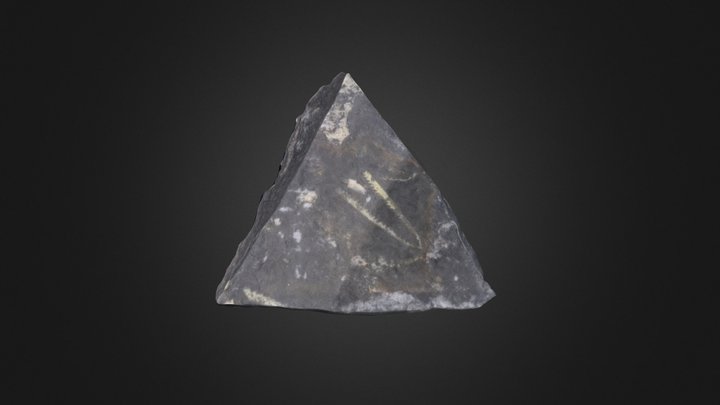
3D model
- Source
- Sketchfab
- Licence
- CC0 Public Domain
- Commercial use
- the licence allows it
The description on this site
- Licence
- CC BY-SA 4.0
This is what the site found, which is not the same as what exists.
Keep going
What may have been alongside itDichograptidae through timeFormations of the OrdovicianThe world it lived on
Occurrence data from the Paleobiology Database, CC BY 4.0. McCoy 1851