Chrysolina
Searched as Chrysolina brunnicornis bermani. The Paleobiology Database treats Chrysolina as the accepted name.
Chrysolina is a large genus of leaf beetles in the subfamily Chrysomelinae. Most species are distributed in Europe, Asia and Africa with a small number of species inhabiting North America and introduced species in Australia.

Uncredited · Attribution · via Wikipedia/Commons. May be a photograph of a specimen, or an artist’s reconstruction — an interpretation of a skeleton, since colour and soft tissue are almost never preserved.
On record
Recorded, not inferred- Sits inside
- ChrysomeliniPBDB
- Motility
- actively mobilePBDB, for Arthropoda
- Environment
- terrestrialPBDB, for Insecta
Time the record covers
At most 118 thousand years on record.
Every occurrence read is dated to somewhere between 129 ka and 11.7 ka, and nothing in the dating separates them, so that window is what the record shows rather than a span.
6 occurrences of Chrysolina on record, most of them in the Pleistocene. The Paleobiology Database records this as a living group. Bar height is expected occurrences, not a count: each fossil is spread across the span it is dated to, so a tall narrow bar means tight dating and a low wide one means loose.
When
6 occurrences- Pleistocene100%
These are dates about fossils, not the animal: the record can only begin after it arose and end before it died out, so either end may reach further. Shares are expected occurrences: a fossil dated to a span is counted partly in each period it straddles. More on what this infers.
Chrysolina and its relatives
PleistoceneWhere Chrysolina and its relatives were recorded in the Pleistocene.
Found in the same rock
719 taxa- Morychus viridis32 sites
- Pterostichus (Cryobius)30 sites
- Curtonotus alpinus29 sites
- Phyllobius29 sites
- Stephanocleonus eruditus27 sites
- Poecilus nearcticus26 sites
- Aphodius22 sites
- Hypera ornata18 sites
- Bembidion17 sites
- Stephanocleonus foveifrons17 sites
- Cholevinus sibiricus16 sites
- Troglocollops arcticus16 sites
- Stephanocleonus fossulatus13 sites
- Lepyrus nordenskioldi12 sites
- Coniocleonus ferrugineus11 sites
- Hydroporus11 sites
- Agabus10 sites
- Tachinus arcticus10 sites
- Harpalus amputatus amputatoides9 sites
- Harpalus vittatus kiselevi8 sites
- Helophorus splendidus8 sites
- Amara7 sites
- Coniocleonus7 sites
- Loborhynchapion amethystinum7 sites
The Paleobiology Database records 41 sites for Chrysolina, and this reads all of them. The number is how many of those sites it was catalogued from too. The 24 sharing the most are listed.
This is not a list of everything alive at the time. It is only what has come out of the same ground as this animal and been written down.
Entered from
1 referenceEach of the 6 occurrences read was entered from one of these publications, ordered by how many each accounts for. This is not a search for papers mentioning the name. Each entry links to doi.org. Relayed as the Paleobiology Database holds them, not checked against what they resolve to.
Media and terms
Media content2

Picture of Chrysolina
- Source
- Wikipedia/Commons
- Credit
- nobody named on the record
- Licence
- Attribution
- Commercial use
- cannot be read from the licence given — check the record
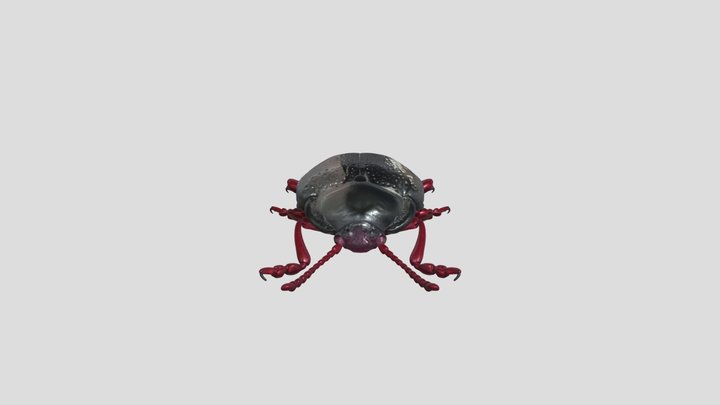
3D model
- Source
- Sketchfab
- Credit
- Insectari3D
- Licence
- CC Attribution
- Commercial use
- cannot be read from the licence given — check the record
The description on this site
- Source
- Wikipedia, “Chrysolina”
- Licence
- CC BY-SA 4.0
This is what the site found, which is not the same as what exists.
Keep going
What may have been alongside itChrysomelini through timeFormations of the PleistoceneThe world it lived on
Occurrence data from the Paleobiology Database, CC BY 4.0. Moltschulsky 1860