Chordata
A chordate is a bilaterian animal belonging to the phylum Chordata. All chordates possess, at some point during their larval or adult stages, five distinctive physical characteristics (synapomorphies) that distinguish them from other taxa: a notochord, a hollow dorsal nerve cord, an endostyle or thyroid, pharyngeal slits, and a post-anal tail.

User:Biopics User:Nhobgood User:Albert kok User:Fir0002 · CC BY-SA 4.0 · via Wikipedia/Commons. May be a photograph of a specimen, or an artist’s reconstruction — an interpretation of a skeleton, since colour and soft tissue are almost never preserved.
On record
Recorded, not inferred- Sits inside
- DeuterostomiaPBDB
- Motility
- actively mobilePBDB
Time the record covers
At least 515 million years on record.
The record covers at least 516 Mya to 11.7 ka. No occurrence read is dated outside 525.5 Mya to 0 Mya.
12,000+ occurrences of Chordata on record. The Paleobiology Database records this as a living group. Bar height is expected occurrences, not a count: each fossil is spread across the span it is dated to, so a tall narrow bar means tight dating and a low wide one means loose.
When
12,000 occurrences read- Cambrianunder 1%
- Ordovician6%
- Silurian5%
- Devonian15%
- Carboniferous5%
- Permianunder 1%
- Early Triassicunder 1%
- Middle Triassicunder 1%
- Late Triassicunder 1%
- Early Jurassicunder 1%
- Late Jurassicunder 1%
- Early Cretaceous1%
- Late Cretaceous15%
- Paleocene35%
- Eocene11%
- Oligoceneunder 1%
- Miocene3%
- Plioceneunder 1%
- Pleistoceneunder 1%
- Holoceneunder 1%
These are dates about fossils, not the animal: the record can only begin after it arose and end before it died out, so either end may reach further. Shares are expected occurrences: a fossil dated to a span is counted partly in each period it straddles. The read hit its cap, so every figure above is a floor and the shares are of the occurrences read. More on what this infers.
Found in
at least 475 formations
- Fort Union Formation965
- DeBeque Formation744
- Hell Creek Formation · Montana Group635
- Wuzhishan Formation507
- Nacimiento Formation474
- Paskapoo Formation293
Loading coastlines…
The named rock units Chordata has been recovered from, largest first. Drawn where the rock is now, not where it formed. The read hit its cap, so each count is a floor. 451 further formations hold fewer occurrences each and are not listed. 1,766 occurrences have no formation on record, which is common for older literature.
Found in the same rock
1,608 taxa- Panderodus unicostatus65 sites
- Wurmiella excavata49 sites
- Vertebrata40 sites
- Pseudooneotodus bicornis35 sites
- Gastropoda30 sites
- Crinoidea27 sites
- Bivalvia26 sites
- Eburneopecten scintillatus25 sites
- Myrtaea (Myrtaea) curta25 sites
- Ozarkodina sagitta25 sites
- Actinopterygii24 sites
- Bryozoa24 sites
- Caestocorbula wailesiana24 sites
- Corbula densata24 sites
- Venericardia (Rotundicardia) diversidentata24 sites
- Tellinidae23 sites
- Walliserodus sancticlairi23 sites
- Kapalmerella alveata22 sites
- Nucula (Nucula) sphenopsis22 sites
- Spisula jacksonensis22 sites
- Callista annexa21 sites
- Alveinus minutus20 sites
- Bathytormus flexurus20 sites
- Crassinella pygmaea20 sites
The Paleobiology Database records at least 713 sites for Chordata, and this reads 240 of them. The number is how many of those sites it was catalogued from too. The 24 sharing the most are listed.
This is not a list of everything alive at the time. It is only what has come out of the same ground as this animal and been written down.
Entered from
at least 848 references- The Lali Section: An Excellent Reference Section for Upper Devonian in South China924
- Synonymies and reidentifications of North American fossil mammals740
- The Clarkforkian Land-Mammal Age and Mammalian Faunal Composition Across the Paleocene-Eocene Boundary664
- Early Eocene Mammalian Fauna of the Piceance Creek Basin. Northwestern Colorado487
- Biostratigraphy of the Yangtze Gorge Area. Part (2) Early Paleozoic Era302
- The Bug Creek problem and the Cretaceous-Tertiary transition at McGuire Creek, Montana277
- Paleocene vertebrate paleontology of the San Juan Basin, New Mexico206
- Conodont biostratigraphy of the upper part of the Clinton Group and the Lockport Group (Silurian) in the Niagara Gorge region, New York and Ontario205
- Devonian Transgressive-Regressive Cycles and Biostratigraphy, Northern Antelope Range, Nevada: Establishment of Reference Horizons for Global Cycles200
- Wenlockian (Silurian) conodont biostratigraphy, depositional environments, and depositional history along the eastern flank of the Cincinnati Arch in southern Ohio164
- Late Cretaceous and Paleocene mammal localities of southern Alberta158
- The succession of Paleocene mammals in western Canada151
Each of the 12,000 occurrences read was entered from one of these publications, ordered by how many each accounts for. This is not a search for papers mentioning the name. That read hit its cap, so each count is a floor. 836 further references are not listed. Entries link to doi.org where the Paleobiology Database holds an identifier, and to its own record where it does not. Relayed as the Paleobiology Database holds them, not checked against what they resolve to.
Media and terms
Media content2

Picture of Chordata
- Source
- Wikipedia/Commons
- Credit
- User:Biopics User:Nhobgood User:Albert kok User:Fir0002
- Licence
- CC BY-SA 4.0
- Commercial use
- the licence allows it
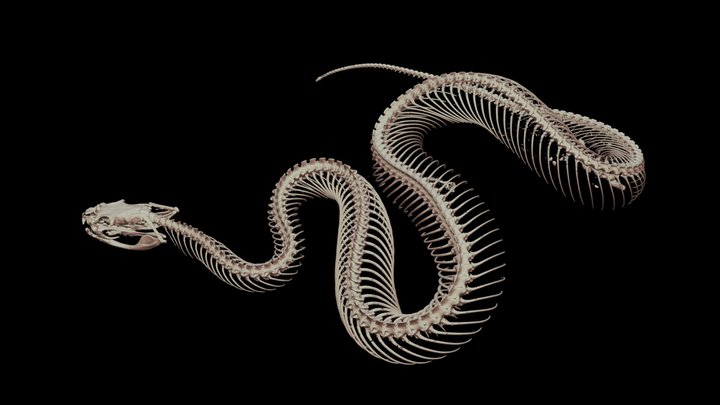
3D model
- Source
- Sketchfab
- Licence
- CC Attribution-NonCommercial-ShareAlike
- Commercial use
- the licence does not allow it
Smithsonian Open Access and MorphoSource were not reached for this taxon, so this list is what the others held rather than everything there is.
The description on this site
- Source
- Wikipedia, “Chordate”
- Licence
- CC BY-SA 4.0
This is what the site found, which is not the same as what exists.
Keep going
What may have been alongside itDeuterostomia through timeThe world it lived on
Occurrence data from the Paleobiology Database, CC BY 4.0. (Haeckel 1874)