Metaxytherium
Searched as Chirotherium. The Paleobiology Database treats Metaxytherium as the accepted name.
Chirotherium, also known as Cheirotherium (‘hand-beast’), is a Triassic trace fossil consisting of five-fingered (pentadactyle) footprints and whole tracks. These look, by coincidence, remarkably like the hands of apes and bears, with the outermost toe having evolved to extend out to the side like a thumb, although probably only functioning to provide a firmer grip in mud. Chirotherium tracks were first found in 1834 in Lower Triassic sandstone (Buntsandstein) in Thuringia, Germany, dating from about 243 million years ago (mya).

Ballista at English Wikipedia · CC BY-SA 3.0 · via Wikipedia/Commons. May be a photograph of a specimen, or an artist’s reconstruction — an interpretation of a skeleton, since colour and soft tissue are almost never preserved.
On record
Recorded, not inferred- Sits inside
- HalitheriinaePBDB
- Diet
- herbivorePBDB, for Dugongidae
- Life habit
- aquaticPBDB, for Sirenia
- Motility
- actively mobilePBDB, for Osteichthyes
- Environment
- marinePBDB, for Sirenia
Time the record covers
At least 256 million years on record.
The record covers at least 259.857 Mya to 3.6 Mya. No occurrence read is dated outside 290.1 Mya to 2.58 Mya.
381 occurrences of Metaxytherium on record, most of them in the Miocene. Bar height is expected occurrences, not a count: each fossil is spread across the span it is dated to, so a tall narrow bar means tight dating and a low wide one means loose.
When
381 occurrences- Permian2%
- Early Triassic7%
- Middle Triassic22%
- Late Triassic5%
- Early Jurassicunder 1%
- Late Cretaceousunder 1%
- Oligocene2%
- Miocene54%
- Pliocene8%
These are dates about fossils, not the animal: the record can only begin after it arose and end before it died out, so either end may reach further. Shares are expected occurrences: a fossil dated to a span is counted partly in each period it straddles. More on what this infers.
Found in
93 formations
- Burgeschleinitz Formation16
- Grès d'Antully Formation13
- Moenkopi Formation13
- Calvert Formation · Chesapeake Group12
- Sahabi Formation10
- Chirotheriensandstein Formation · Buntsandstein Group9
Loading coastlines…
The named rock units Metaxytherium has been recovered from, largest first. Drawn where the rock is now, not where it formed. 69 further formations hold fewer occurrences each and are not listed. 155 occurrences have no formation on record, which is common for older literature.
Metaxytherium and its relatives
MioceneWhere Metaxytherium and its relatives were recorded in the Miocene.
Found in the same rock
1,372 taxa- Odontoceti21 sites
- Hemipristis serra16 sites
- Otodus megalodon15 sites
- Carcharhinus13 sites
- Sirenia12 sites
- Galeocerdo aduncus11 sites
- Phocidae11 sites
- Carcharodon hastalis10 sites
- Cetacea9 sites
- Aetobatus8 sites
- Mysticeti8 sites
- Schizodelphis sulcatus8 sites
- Isurus7 sites
- Orycterocetus crocodilinus7 sites
- Rhinocerotidae7 sites
- Xiphiacetus bossi7 sites
- Acrodelphinidae6 sites
- Anchitherium aurelianense6 sites
- Delphinidae6 sites
- Myliobatis6 sites
- Squalodon6 sites
- Aureliachoerus aurelianensis5 sites
- Brachyodus5 sites
- Cheloniidae5 sites
The Paleobiology Database records 225 sites for Metaxytherium, and this reads all of them. The number is how many of those sites it was catalogued from too. The 24 sharing the most are listed.
This is not a list of everything alive at the time. It is only what has come out of the same ground as this animal and been written down.
Entered from
173 references- Metaxytherium serresii (Mammalia: Sirenia) from the early Pliocene of Libya and France: A Reevaluation of its morphology, phyletic position, and biostratigraphic and paleoecological significance19
- The osteology and relationships of Metaxytherium krahuletzi Deperet, 1895 (Mammalia, Sirenia)15
- The sirenian Metaxytherium (Mammalia: Dugongidae) in the Badenian (Middle Miocene) of Central Europe14
- New sirenian findings from Crete Island14
- A Revised Systematic Ichnotaxonomy and Review of the Vertebrate Footprint Ichnofamily Chirotheriidae from the British Triassic14
- Metaxytherium serresii (Mammalia: Sirenia): new pre-Pliocene record, and implicaitons for Mediterranean paleoecology before and after the Messinian Salinity Crisis10
- Lang and Huene, 19529
- Metaxytherium subapenninum (Bruno, 1839) (Mammalia, Dugongidae), the latest sirenian of the Mediterranean Basin8
- Fossil Sirenia of the West Atlantic and Caribbean region. I. Metaxytherium floridanum Hay, 19228
- Deciphering "temperature" and "salinity" from biogenic phosphates: the 6180 of coexisting fishes and mammals of the Middle Miocene sea of western France7
- Pilleri, 19877
- Pilleri et al., 19896
Each of the 381 occurrences read was entered from one of these publications, ordered by how many each accounts for. This is not a search for papers mentioning the name. 161 further references are not listed. Entries link to doi.org where the Paleobiology Database holds an identifier, and to its own record where it does not. Relayed as the Paleobiology Database holds them, not checked against what they resolve to.
Media and terms
Media content2

Picture of Metaxytherium
- Source
- Wikipedia/Commons
- Credit
- Ballista at English Wikipedia
- Licence
- CC BY-SA 3.0
- Commercial use
- the licence allows it
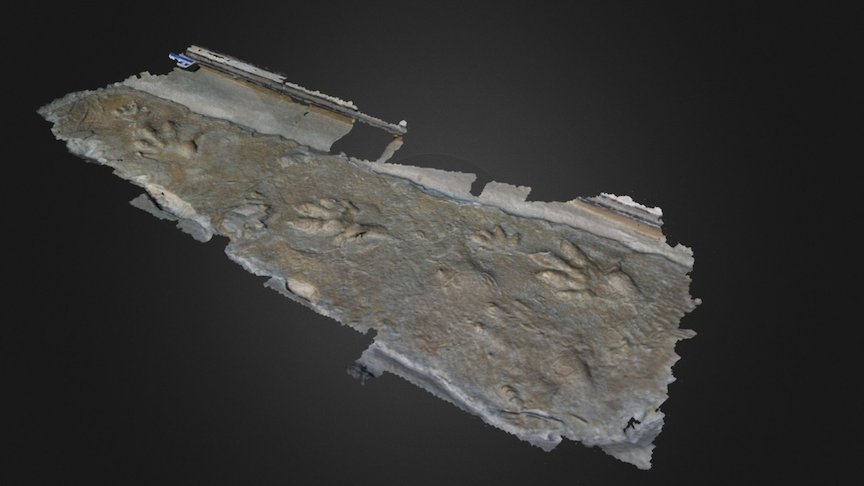
3D model
- Source
- Sketchfab
- Credit
- PeterFalkingham
- Licence
- CC Attribution
- Commercial use
- cannot be read from the licence given — check the record
Smithsonian Open Access and MorphoSource were not reached for this taxon, so this list is what the others held rather than everything there is.
The description on this site
- Licence
- CC BY-SA 4.0
This is what the site found, which is not the same as what exists.
Keep going
What may have been alongside itHalitheriinae through timeFormations of the MioceneThe world it lived on
Occurrence data from the Paleobiology Database, CC BY 4.0. Bruno 1839