Carinatus
No picture of Carinatus was found. Wikidata and iDigBio were searched and had none. Wikipedia has a picture filed under this name, but nothing tied it to Carinatus itself, so it was not used. Smithsonian Open Access did not answer, so this is what the others held rather than everything there is. GBIF was asked, and what came back is not recorded: nothing, or a picture this site could not tie to Carinatus, or no answer at all. This entry cannot say which.
On record
Recorded, not inferred- Sits inside
- SymethinaePBDB
- Diet
- carnivorePBDB, for Decapoda
- Life habit
- semi-infaunalPBDB, for Raninoidia
- Motility
- actively mobilePBDB, for Malacostraca
- Vision
- well-developedPBDB, for Malacostraca
Time the record covers
At least 50 million years on record.
The record covers at least 66 Mya to 15.98 Mya. No occurrence read is dated outside 72.2 Mya to 11.63 Mya.
5 occurrences of Carinatus on record. Bar height is expected occurrences, not a count: each fossil is spread across the span it is dated to, so a tall narrow bar means tight dating and a low wide one means loose.
When
5 occurrences- Late Cretaceous80%
- Miocene20%
These are dates about fossils, not the animal: the record can only begin after it arose and end before it died out, so either end may reach further. Shares are expected occurrences: a fossil dated to a span is counted partly in each period it straddles. More on what this infers.
Found in
3 formations
Loading coastlines…
The named rock units Carinatus has been recovered from, largest first. Drawn where the rock is now, not where it formed.
Found in the same rock
199 taxa- Linthia variabilis3 sites
- Pseudolimea reticulata3 sites
- Botula2 sites
- Exogyra (Exogyra) costata2 sites
- Hamulus2 sites
- Hemiaster wetherbyi2 sites
- Idonearca capax2 sites
- Lima acutilineata2 sites
- Linearis2 sites
- Nemodon eufaulensis2 sites
- Nucula percrassa2 sites
- Pinna laqueata2 sites
- Scambula perplana2 sites
- Turritella vertebroides2 sites
- Veniella conradi2 sites
- Aceratherium1 site
- Acteon1 site
- Acutostrea plumosa1 site
- Aenona eufaulensis1 site
- Afrochoerodon kisumuensis1 site
- Amphicyonidae1 site
- Anatimya1 site
- Anatimya anteradiata1 site
- Anatina1 site
The Paleobiology Database records 5 sites for Carinatus, and this reads all of them. The number is how many of those sites it was catalogued from too. The 24 sharing the most are listed.
This is not a list of everything alive at the time. It is only what has come out of the same ground as this animal and been written down.
Entered from
2 references- A new genus and species of raninoid crab from the Upper Cretaceous of Mississippi4
- Evolution and sedimentary character of lake deltas fed by ephemeral rivers in the Turkana Basin, southern Kenya1
Each of the 5 occurrences read was entered from one of these publications, ordered by how many each accounts for. This is not a search for papers mentioning the name. Each entry links to doi.org. Relayed as the Paleobiology Database holds them, not checked against what they resolve to.
Media and terms
Media content2
CT scan
- Source
- MorphoSource
- Licence
- In Copyright
- Commercial use
- cannot be read from the licence given — check the record
- Specimen
- Sceloporus carinatus · UTA:UTA-R:41453
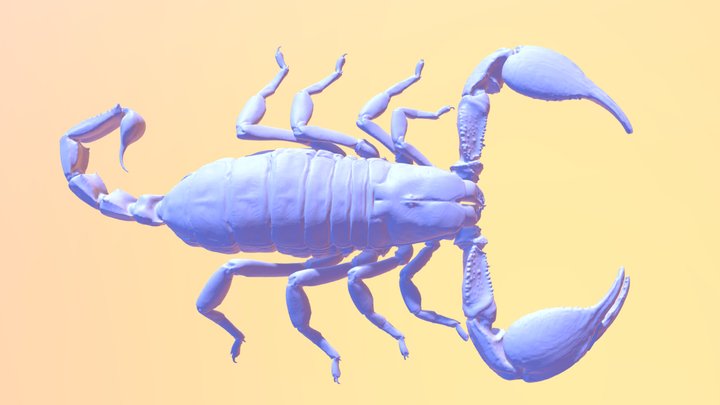
3D model
- Source
- Sketchfab
- Credit
- GigaScience
- Licence
- CC Attribution
- Commercial use
- cannot be read from the licence given — check the record
No picture of Carinatus was found. Wikidata and iDigBio were searched and had none.
Wikipedia has a picture filed under this name, but nothing tied it to Carinatus itself, so it was not used.
Smithsonian Open Access did not answer, so this is what the others held rather than everything there is.
GBIF was asked, and what came back is not recorded: nothing, or a picture this site could not tie to Carinatus, or no answer at all. This entry cannot say which.
Smithsonian Open Access was not reached for this taxon, so this list is what the others held rather than everything there is.
This is what the site found, which is not the same as what exists.
Keep going
What may have been alongside itSymethinae through timeThe world it lived on
Occurrence data from the Paleobiology Database, CC BY 4.0. Nyborg et al. 2017