Asterosoma
Asterosoma is an ichnogenus of trace fossils typically found in marine sedimentary rocks. These trace fossils are recognized by their characteristic radiating burrow systems, which often resemble a star-like pattern, hence the name Asterosoma. These burrows are believed to have been created by organisms living in the sediment, possibly deposit-feeding worms, during the Paleozoic era.
No picture of Asterosoma was found. Wikipedia and Wikidata were searched and had none. iDigBio and GBIF were not searched: the Paleobiology Database does not place Asterosoma firmly enough to tell it from something else bearing the same name, and a search on the name alone returns whichever of them was photographed. Smithsonian Open Access did not answer, so this is what the others held rather than everything there is.
On record
Recorded, not inferred- Sits inside
- IchnofossilsPBDB
Time the record covers
At least 399 million years on record.
The record covers at least 419.62 Mya to 20.45 Mya. No occurrence read is dated outside 443.1 Mya to 15.98 Mya.
3 occurrences of Asterosoma on record. Bar height is expected occurrences, not a count: each fossil is spread across the span it is dated to, so a tall narrow bar means tight dating and a low wide one means loose.
When
3 occurrences- Silurian33%
- Late Cretaceous33%
- Miocene33%
These are dates about fossils, not the animal: the record can only begin after it arose and end before it died out, so either end may reach further. Shares are expected occurrences: a fossil dated to a span is counted partly in each period it straddles. More on what this infers.
Found in
2 formations
Loading coastlines…
The named rock units Asterosoma has been recovered from, largest first. Drawn where the rock is now, not where it formed. 1 occurrence has no formation on record, which is common for older literature.
Found in the same rock
39 taxa- Nereites2 sites
- Ameghinomya volckmanni1 site
- Arthrophycus1 site
- Arthrophycus brongniartii1 site
- Aturia cubaensis1 site
- Austrosipho subreflexa1 site
- Bulla1 site
- Cancellaria medinae1 site
- Chione1 site
- Chondrites1 site
- Columbarium1 site
- Conichnus1 site
- Cruziana1 site
- Cucullaea chilensis1 site
- Dentalium1 site
- Fusus1 site
- Hoploparia uzbekensis1 site
- Lamprodomina dimidiata1 site
- Linuparus dzheirantuiensis1 site
- Mactra1 site
- Miomelon1 site
- Neverita1 site
- Ophiomorpha1 site
- Petalichnus1 site
The Paleobiology Database records 3 sites for Asterosoma, and this reads all of them. The number is how many of those sites it was catalogued from too. The 24 sharing the most are listed.
This is not a list of everything alive at the time. It is only what has come out of the same ground as this animal and been written down.
Entered from
3 references- The genus Struthiochenopus (Gastropoda, Aporrhaidae): neu Miocene records from southern Chile1
- New Late Cretaceous lobsters from the Kyzylkum Desert of Uzbekistan1
- Arthrophycus in the Silurian of Alabama (USA) and the problem of compound trace fossils1
Each of the 3 occurrences read was entered from one of these publications, ordered by how many each accounts for. This is not a search for papers mentioning the name. Each entry links to doi.org. Relayed as the Paleobiology Database holds them, not checked against what they resolve to.
Media and terms
Media content1
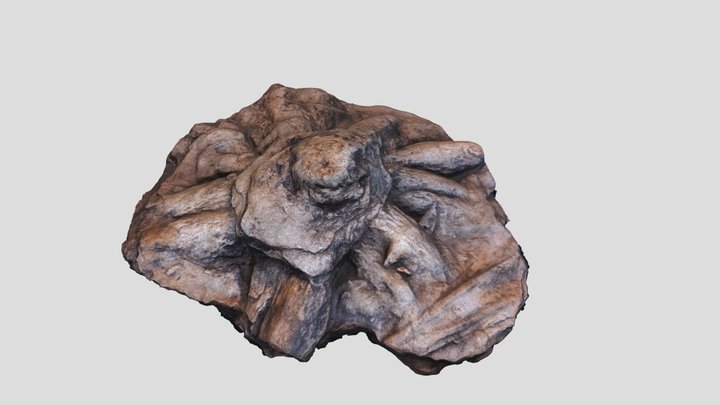
3D model
- Source
- Sketchfab
- Credit
- trilopodfossils
- Licence
- CC Attribution
- Commercial use
- cannot be read from the licence given — check the record
No picture of Asterosoma was found. Wikipedia and Wikidata were searched and had none.
iDigBio and GBIF were not searched: the Paleobiology Database does not place Asterosoma firmly enough to tell it from something else bearing the same name, and a search on the name alone returns whichever of them was photographed.
Smithsonian Open Access did not answer, so this is what the others held rather than everything there is.
Smithsonian Open Access was not reached for this taxon, so this list is what the others held rather than everything there is.
The description on this site
- Source
- Wikipedia, “Asterosoma”
- Licence
- CC BY-SA 4.0
This is what the site found, which is not the same as what exists.
Keep going
What may have been alongside itIchnofossils through timeThe world it lived on
Occurrence data from the Paleobiology Database, CC BY 4.0. von Otto 1854