Archaeplastida
Archaeplastida or archaeplastids, sometimes also regarded as the kingdom Plantae sensu lato, are a large group of eukaryotes comprising the major clades Viridiplantae and Rhodophyta, as well as the minor basal division Glaucophyta. While the vast majority of archaeplastids are photosynthetic autotrophs, the group also includes heterotrophic lineages such as the predatorial (eukaryotrophic) flagellates Rhodelphidia, and probably also the microscopic picoplankton Picozoa, both may be sister to Rhodophyta and altogether forming the larger solid clade Rhodaria.

Gary Halvorson, Oregon State Archives · Attribution · via Wikipedia/Commons. May be a photograph of a specimen, or an artist’s reconstruction — an interpretation of a skeleton, since colour and soft tissue are almost never preserved.
On record
Recorded, not inferred- Sits inside
- EukaryotaPBDB
Time the record covers
At least 1597 million years on record.
The record covers at least 1600 Mya to 2.58 Mya. No occurrence read is dated outside 1800 Mya to 11.7 ka.
262 occurrences of Archaeplastida on record, most of them in the Miocene. The Paleobiology Database records this as a living group. Bar height is expected occurrences, not a count: each fossil is spread across the span it is dated to, so a tall narrow bar means tight dating and a low wide one means loose.
When
262 occurrences- Cambrian7%
- Ordovicianunder 1%
- Silurianunder 1%
- Devonian6%
- Carboniferousunder 1%
- Permian2%
- Early Triassic3%
- Middle Triassicunder 1%
- Late Triassicunder 1%
- Early Jurassicunder 1%
- Middle Jurassicunder 1%
- Early Cretaceous3%
- Late Cretaceous15%
- Paleocene9%
- Eocene6%
- Oligocene7%
- Miocene23%
- Pliocene8%
- Pleistocene6%
These are dates about fossils, not the animal: the record can only begin after it arose and end before it died out, so either end may reach further. Shares are expected occurrences: a fossil dated to a span is counted partly in each period it straddles. More on what this infers.
Found in
29 formations
- Jagüel Formation · Malargüe Group26
- Hidden Lake Formation · Gustav Group17
- Tokammane Formation11
- Monte León Formation9
- Hongjingshao Formation4
- Springhill Formation3
Loading coastlines…
The named rock units Archaeplastida has been recovered from, largest first. Drawn where the rock is now, not where it formed. 5 further formations hold fewer occurrences each and are not listed. 160 occurrences have no formation on record, which is common for older literature.
Archaeplastida and its relatives
MioceneWhere Archaeplastida and its relatives were recorded in the Miocene.
Found in the same rock
944 taxa- Dinoflagellata133 sites
- <Sporomorphs>123 sites
- Acritarcha123 sites
- Foraminifera123 sites
- Prasinophytae123 sites
- <Amorphous organic matter>88 sites
- <Black phytoclasts>88 sites
- <Brown phytoclasts>88 sites
- <Fungal spores>88 sites
- <Other pollen>88 sites
- <Pollen/spores reworked>88 sites
- <Saccate pollen>88 sites
- <Spores>88 sites
- Nothofagus88 sites
- Leiosphaeridia54 sites
- Cymatiosphaera48 sites
- Brigantedinium47 sites
- Operculodinium36 sites
- <Black woody phytoclasts>35 sites
- <Brown woody phytoclasts>35 sites
- Pterospermella33 sites
- Lejeunecysta32 sites
- Tasmanites31 sites
- Impagidinium25 sites
The Paleobiology Database records 200 sites for Archaeplastida, and this reads all of them. The number is how many of those sites it was catalogued from too. The 24 sharing the most are listed.
This is not a list of everything alive at the time. It is only what has come out of the same ground as this animal and been written down.
Entered from
47 references- Site U152129
- Site U152221
- Palynology of the Jagüel Formation (Maastrichtian-Danian) in northwestern Río Negro, Neuquén Basin, Argentina: paleobiogeographic inferences20
- Site U150918
- Site U150817
- Site U152417
- Palinología de la Formación Hidden Lake (Coniaciano-Santoniano), Isla James Ross, Antártida17
- Site U152314
- Palinoestratigrafía de depósitos del Oligoceno tardío-Mioceno en el área sur del Golfo San Jorge, provincia de Santa Cruz, Argentina11
- Micropaleontology across the Precambrian-Cambrian boundary in Spitsbergen11
- Palynostratigraphy of the Permian and lowermost Triassic succession, Finnmark Platform, Barents Sea.10
- Stratigraphy of the Maikop Group and Pteropoda Beds in Northern Azerbaijan8
Each of the 262 occurrences read was entered from one of these publications, ordered by how many each accounts for. This is not a search for papers mentioning the name. 35 further references are not listed. Entries link to doi.org where the Paleobiology Database holds an identifier, and to its own record where it does not. Relayed as the Paleobiology Database holds them, not checked against what they resolve to.
Media and terms
Media content1
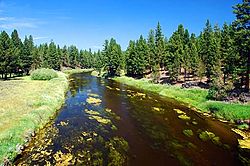
Picture of Archaeplastida
- Source
- Wikipedia/Commons
- Credit
- Gary Halvorson, Oregon State Archives
- Licence
- Attribution
- Commercial use
- cannot be read from the licence given — check the record
No 3D scan of Archaeplastida was found in MorphoSource and Sketchfab.
Smithsonian Open Access was not reached for this taxon, so this list is what the others held rather than everything there is.
The description on this site
- Licence
- CC BY-SA 4.0
This is what the site found, which is not the same as what exists.
Keep going
What may have been alongside itEukaryota through timeFormations of the MioceneThe world it lived on
Occurrence data from the Paleobiology Database, CC BY 4.0.