Araucariaceae
Araucariaceae is a family of conifers with three living genera, Araucaria, Agathis, and Wollemia. While the family's native distribution is now largely confined to the Southern Hemisphere, except for a few species of Agathis in Malesia, it was formerly widespread in the Northern Hemisphere during the Jurassic and Cretaceous periods.

Webysther Nunes · CC BY-SA 4.0 · via Wikipedia/Commons. May be a photograph of a specimen, or an artist’s reconstruction — an interpretation of a skeleton, since colour and soft tissue are almost never preserved.
On record
Recorded, not inferred- Sits inside
- PinidaePBDB
- Diet
- "photoautotroph"PBDB, for Streptophyta
Time the record covers
At least 382 million years on record.
The record covers at least 382.31 Mya to 129 ka. No occurrence read is dated outside 393.47 Mya to 0 Mya.
2,461 occurrences of Araucariaceae on record, most of them in the Early Cretaceous. The Paleobiology Database records this as a living group. Bar height is expected occurrences, not a count: each fossil is spread across the span it is dated to, so a tall narrow bar means tight dating and a low wide one means loose.
When
2,461 occurrences- Devonianunder 1%
- Carboniferousunder 1%
- Permian4%
- Early Triassicunder 1%
- Middle Triassicunder 1%
- Late Triassic3%
- Early Jurassic5%
- Middle Jurassic13%
- Late Jurassic15%
- Early Cretaceous25%
- Late Cretaceous17%
- Paleocene3%
- Eocene6%
- Oligocene2%
- Miocene2%
- Plioceneunder 1%
- Pleistocene4%
- Holoceneunder 1%
These are dates about fossils, not the animal: the record can only begin after it arose and end before it died out, so either end may reach further. Shares are expected occurrences: a fossil dated to a span is counted partly in each period it straddles. More on what this infers.
Found in
426 formations
- Riachuelo Formation109
- Dunvegan Formation49
- Bhuj Formation36
- Jabalpur Formation34
- Saltwick Formation · Ravenscar Group31
- Taratu Formation30
Loading coastlines…
The named rock units Araucariaceae has been recovered from, largest first. Drawn where the rock is now, not where it formed. 402 further formations hold fewer occurrences each and are not listed. 714 occurrences have no formation on record, which is common for older literature.
Araucariaceae and its relatives
Early CretaceousWhere Araucariaceae and its relatives were recorded in the Early Cretaceous.
Found in the same rock
1,346 taxa- Brachyphyllum89 sites
- Pagiophyllum67 sites
- Cladophlebis58 sites
- Otozamites52 sites
- Zamites51 sites
- Araucarites47 sites
- Ptilophyllum45 sites
- Nilsonia44 sites
- Sphenopteris44 sites
- Pachypteris36 sites
- Phlebopteris36 sites
- Dadoxylon34 sites
- Equisetites34 sites
- Elatocladus31 sites
- Pseudoctenis28 sites
- Taeniopteris27 sites
- Pterophyllum26 sites
- Brachyphyllum mamillare25 sites
- Elatides25 sites
- Sagenopteris25 sites
- Coniopteris24 sites
- Cycadolepis22 sites
- Laevigatosporites tibuensis22 sites
- Mauritiidites franciscoi franciscoi22 sites
The Paleobiology Database records at least 1,264 sites for Araucariaceae, and this reads 240 of them. The number is how many of those sites it was catalogued from too. The 24 sharing the most are listed.
This is not a list of everything alive at the time. It is only what has come out of the same ground as this animal and been written down.
Entered from
462 references- Paleoenvironmental reconstruction based on palynological and palynofacies analyses of the Aptian-Albian succession in the Sergipe Basin, northeastern Brazil134
- A Catalogue of Fossil Plants from India Part 2: Palaeozoic and Mesozoic Megafossils116
- A Catalogue of Indian Fossil Plants88
- La paleoflore Jurassique du Jura Francais: Etude systematique, aspects stratigraphiques et paleoecologiques85
- Cenomanian microfloras of the Peace River area, northwestern Alberta78
- Early Pleistocene vegetation change in upland south-eastern Australia69
- The Yorkshire Jurassic Flora V. Coniferales57
- Jurassic-Cretaceous (Bathonian to Cenomanian) palynology and stratigraphy of the West Tiba-1 borehole, northern Western Desert, Egypt47
- Palynozonation of the Cretaceous to Lower Paleogene Strata of the Muglad Basin, Sudan42
- Kerogen and palynomorph analyses of the mid-Cretaceous Bahariya Formation and Abu Roash “G” Member, North Western Desert, Egypt31
- Upper Mesozoic microfloras from South-Eastern31
- A new terrestrial Cretaceous-Paleogene site in New Zealand turnover in macroflora confirmed by palynology30
Each of the 2,461 occurrences read was entered from one of these publications, ordered by how many each accounts for. This is not a search for papers mentioning the name. 450 further references are not listed. Entries link to doi.org where the Paleobiology Database holds an identifier, and to its own record where it does not. Relayed as the Paleobiology Database holds them, not checked against what they resolve to.
Media and terms
Media content2

Picture of Araucariaceae
- Source
- Wikipedia/Commons
- Credit
- Webysther Nunes
- Licence
- CC BY-SA 4.0
- Commercial use
- the licence allows it
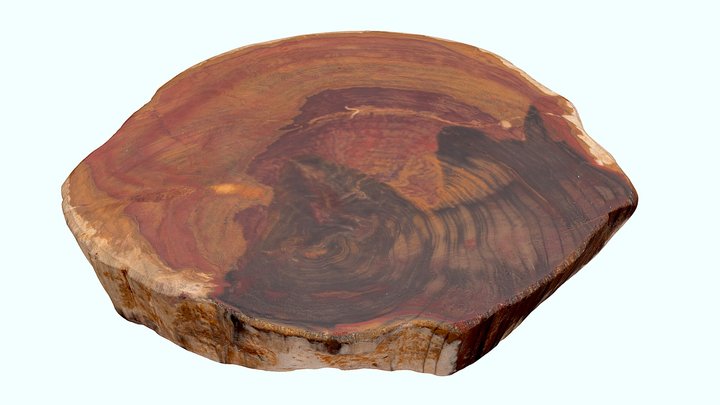
3D model
- Source
- Sketchfab
- Licence
- CC Attribution-NonCommercial-ShareAlike
- Commercial use
- the licence does not allow it
Smithsonian Open Access and MorphoSource were not reached for this taxon, so this list is what the others held rather than everything there is.
The description on this site
- Licence
- CC BY-SA 4.0
This is what the site found, which is not the same as what exists.
Keep going
What may have been alongside itPinidae through timeFormations of the Early CretaceousThe world it lived on
Occurrence data from the Paleobiology Database, CC BY 4.0. Henckel and Hochstetter 1865