Anglonautilus
via iDigBio · CC BY · via iDigBio. May be a photograph of a specimen, or an artist’s reconstruction — an interpretation of a skeleton, since colour and soft tissue are almost never preserved.
On record
Recorded, not inferred- Sits inside
- NautilidaePBDB
- Diet
- carnivorePBDB, for Nautilidae
- Life habit
- nektonicPBDB, for Nautilidae
- Motility
- actively mobilePBDB, for Nautilidae
- Vision
- well-developedPBDB, for Cephalopoda
- Environment
- marinePBDB, for Cephalopoda
Time the record covers
At least 53 million years on record.
The record covers at least 125.77 Mya to 72.2 Mya. No occurrence read is dated outside 132.6 Mya to 66 Mya.
35 occurrences of Anglonautilus on record, most of them in the Late Cretaceous. Bar height is expected occurrences, not a count: each fossil is spread across the span it is dated to, so a tall narrow bar means tight dating and a low wide one means loose.
When
35 occurrencesThese are dates about fossils, not the animal: the record can only begin after it arose and end before it died out, so either end may reach further. Shares are expected occurrences: a fossil dated to a span is counted partly in each period it straddles. More on what this infers.
Found in
10 formations
- Rosario Formation7
- Sandgate Formation · Lower Greensand Group4
- Dakhla Formation4
- Mikasa Formation3
- Williams Formation1
- Altamira Formation1
Loading coastlines…
The named rock units Anglonautilus has been recovered from, largest first. Drawn where the rock is now, not where it formed. 11 occurrences have no formation on record, which is common for older literature.
Anglonautilus and its relatives
Late CretaceousWhere Anglonautilus and its relatives were recorded in the Late Cretaceous.
Found in the same rock
151 taxa- Baculites ovatus4 sites
- Parahoplites4 sites
- Parahoplites nutfieldiensis4 sites
- Arenaciarcula fittoni3 sites
- Calva (Calva) peninsularis3 sites
- Ornithella3 sites
- Pleurotomaria3 sites
- Trifidarcula trifida3 sites
- Tropaeum subarcticum3 sites
- Anapachydiscus peninsularis2 sites
- Biplica obliqua2 sites
- Cidaris2 sites
- Cyrtothyris cantabridgiensis2 sites
- Entolium orbiculare2 sites
- Gemmarcula2 sites
- Neohibolites2 sites
- Pachydiscus (Pachydiscus) neubergicus2 sites
- Panopea2 sites
- Praelongithyris praelongiforma2 sites
- Rhynchonella2 sites
- Sphenodiscus lobatus2 sites
- Toxaster fittoni2 sites
- Acila (Truncacila) demessa1 site
- Actinostromaria faringdonensis1 site
The Paleobiology Database records 35 sites for Anglonautilus, and this reads all of them. The number is how many of those sites it was catalogued from too. The 24 sharing the most are listed.
This is not a list of everything alive at the time. It is only what has come out of the same ground as this animal and been written down.
Entered from
12 references- Two Cretaceous nautiloids from Baja California, Mexico, and southern California9
- Melovye Nautiloidei8
- Taxonomy and paleobiogeography of the Maastrichtian cephalopods from the Abu Monqar-west Dakhla stretch, Western Desert, Egypt4
- The stratigraphical palaeontology of the Lower Greensand4
- Origin and evolutionary history of Anglonautilus (Nautilida, Cymatoceratidae) and a new species from the lower Aptian of Spain2
- Cretaceous nautiloids from Hokkaido - IV. Part 4. An interesting nautiloid species from the Cenomanian of Hokkaido2
- Cephalopoden aus unterkreidezeitlichen Geschieben der Region um Wolgast-Hohendorf, Vorpommern1
- Late Cretaceous nautilids from northern Cantabria, Spain1
- Cretaceous Nautiloids from Hokkaido-III Part 3. Some Nautiloids from the Campanian of Soya, Northern Hokkaido1
- A new nautiloid species from the Cretaceous of Hokkaido1
- Biostratigraphie des lentilles à pérégrinelles (brachiopodes) de l'Hauterivien de Rottier (Drôme, France) [Biostratigraphy of the Hauterivian Peregrinella beds (brachiopods) from Rottier (Drôme, France)]1
- On the age of the fossiliferous sands and gravels of Farringdon and its neighbourhood1
Each of the 35 occurrences read was entered from one of these publications, ordered by how many each accounts for. This is not a search for papers mentioning the name. Entries link to doi.org where the Paleobiology Database holds an identifier, and to its own record where it does not. Relayed as the Paleobiology Database holds them, not checked against what they resolve to.
Media and terms
Media content3
Picture of Anglonautilus
- Source
- iDigBio
- Credit
- via iDigBio
- Licence
- CC BY
- Commercial use
- the licence allows it
Laser scan
- Source
- MorphoSource
- Licence
- In Copyright
- Commercial use
- cannot be read from the licence given — check the record
- Specimen
- Anglonautilus catarinae · LACM:IP:LACMIP 23268.14
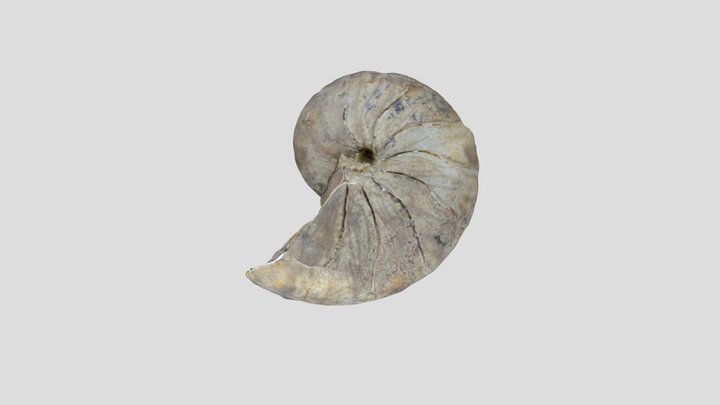
3D model
- Source
- Sketchfab
- Licence
- CC Attribution-NonCommercial
- Commercial use
- the licence does not allow it
Smithsonian Open Access was not reached for this taxon, so this list is what the others held rather than everything there is.
This is what the site found, which is not the same as what exists.
Keep going
What may have been alongside itNautilidae through timeFormations of the Late CretaceousThe world it lived on
Occurrence data from the Paleobiology Database, CC BY 4.0. Spath 1927