Amphicoelias
Amphicoelias is a genus of herbivorous sauropod dinosaur that lived approximately 150 million years ago during the Tithonian of what is now Colorado, United States. Amphicoelias was moderately sized at about 18 metres (59 ft) in length and 15 metric tons in body mass, shorter than its close relative Diplodocus. Its hindlimbs were very long and thin, and its forelimbs were proportionally longer than in relatives.

Philip D. Mannion, Emanuel Tschopp and John A. Whitlock · CC BY 4.0 · via Wikipedia/Commons. May be a photograph of a specimen, or an artist’s reconstruction — an interpretation of a skeleton, since colour and soft tissue are almost never preserved.
On record
Recorded, not inferred- Sits inside
- DiplodocoideaPBDB
- Diet
- herbivorePBDB, for Sauropoda
- Life habit
- ground dwelling, gregariousPBDB, for Sauropoda
- Motility
- actively mobilePBDB, for Sauropoda
- Environment
- terrestrialPBDB, for Sauropoda
Time the record covers
At least 3 million years on record.
The record covers at least 152.21 Mya to 149.2 Mya. No occurrence read is dated outside 157.9 Mya to 143.1 Mya.
3 occurrences of Amphicoelias on record, most of them in the Late Jurassic. Bar height is expected occurrences, not a count: each fossil is spread across the span it is dated to, so a tall narrow bar means tight dating and a low wide one means loose.
When
3 occurrences- Late Jurassic100%
These are dates about fossils, not the animal: the record can only begin after it arose and end before it died out, so either end may reach further. Shares are expected occurrences: a fossil dated to a span is counted partly in each period it straddles. More on what this infers.
Found in
2 formations
Loading coastlines…
The named rock units Amphicoelias has been recovered from, largest first. Drawn where the rock is now, not where it formed.
Amphicoelias and its relatives
Late JurassicWhere Amphicoelias and its relatives were recorded in the Late Jurassic.
Found in the same rock
29 taxa- Camarasaurus3 sites
- Allosauridae1 site
- Allosaurus jimmadseni1 site
- Amplovalvata scabrida1 site
- Apatosaurus1 site
- Barosaurus1 site
- Brachiosaurus1 site
- Camptosaurus1 site
- Ceratosaurus1 site
- Coelurus1 site
- Coniferophyta1 site
- Cycadophyta1 site
- Dinosauria1 site
- Diplodocidae1 site
- Diplodocoidea1 site
- Diplodocus1 site
- Equisetales1 site
- Eusauropoda1 site
- Hesperosaurus mjosi1 site
- Nanosaurus agilis1 site
- Ornitholestes1 site
- Pteridophyta1 site
- Sauropoda1 site
- Stegosauridae1 site
The Paleobiology Database records 3 sites for Amphicoelias, and this reads all of them. The number is how many of those sites it was catalogued from too. The 24 sharing the most are listed.
This is not a list of everything alive at the time. It is only what has come out of the same ground as this animal and been written down.
Entered from
3 references- A New Basal Diplodocoid Species, Amphicoelias brontodiplodocus from the Morrison Formation, Big Horn Basin, Wyoming, with Taxonomic Reevaluation of Diplodocus, Apatosaurus, Barosaurus and Other Genera1
- A new dinosaur fossil locality in the Kadsi River area of the Zambesi Valley1
- On Amphicoelias, a genus of Saurians from the Dakota epoch of Colorado1
Each of the 3 occurrences read was entered from one of these publications, ordered by how many each accounts for. This is not a search for papers mentioning the name. Each entry links to the Paleobiology Database's own record for the work.
Media and terms
Media content3

Picture of Amphicoelias
- Source
- Wikipedia/Commons
- Credit
- Philip D. Mannion, Emanuel Tschopp and John A. Whitlock
- Licence
- CC BY 4.0
- Commercial use
- the licence allows it
Structured light scan
- Source
- MorphoSource
- Licence
- In Copyright
- Commercial use
- cannot be read from the licence given — check the record
- Specimen
- Amphicoelias altus · amnh:farb:5764
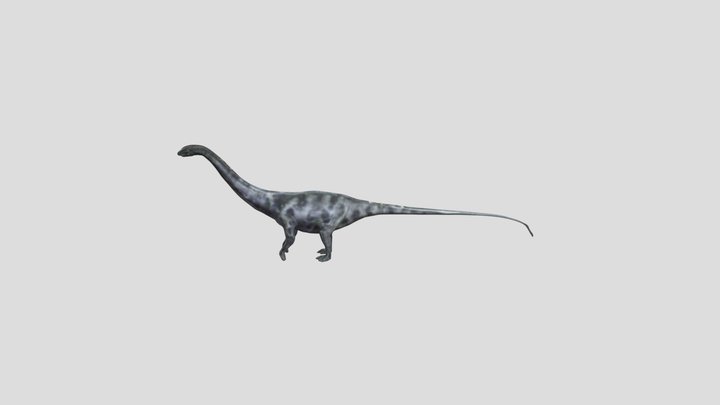
3D model
- Source
- Sketchfab
- Credit
- Rainbow Yoshi Gun
- Licence
- CC Attribution
- Commercial use
- cannot be read from the licence given — check the record
The description on this site
- Licence
- CC BY-SA 4.0
This is what the site found, which is not the same as what exists.
Keep going
What may have been alongside itDiplodocoidea through timeFormations of the Late JurassicThe world it lived on
Occurrence data from the Paleobiology Database, CC BY 4.0. Cope 1877