Pteridophyta
A pteridophyte is a vascular plant with xylem and phloem that reproduces by means of spores. Because pteridophytes produce neither flowers nor seeds, they are sometimes referred to as "cryptogams", meaning that their means of reproduction is hidden.

Uncredited · via Wikipedia/Commons. May be a photograph of a specimen, or an artist’s reconstruction — an interpretation of a skeleton, since colour and soft tissue are almost never preserved.
On record
Recorded, not inferred- Also called
- fernPBDB
- Sits inside
- TracheophytaPBDB
- Diet
- "photoautotroph"PBDB, for Streptophyta
Time the record covers
At least 417 million years on record.
The record covers at least 419.62 Mya to 1.8 Mya. No occurrence read is dated outside 443.1 Mya to 0 Mya.
12,000+ occurrences of Pteridophyta on record. The Paleobiology Database records this as a living group. Bar height is expected occurrences, not a count: each fossil is spread across the span it is dated to, so a tall narrow bar means tight dating and a low wide one means loose.
When
12,000 occurrences read- Silurianunder 1%
- Devonian2%
- Carboniferous19%
- Permian16%
- Early Triassic2%
- Middle Triassic2%
- Late Triassic14%
- Early Jurassic14%
- Middle Jurassic15%
- Late Jurassic8%
- Early Cretaceous2%
- Late Cretaceousunder 1%
- Paleoceneunder 1%
- Eocene4%
- Oligoceneunder 1%
- Miocene1%
- Plioceneunder 1%
- Pleistoceneunder 1%
- Holoceneunder 1%
These are dates about fossils, not the animal: the record can only begin after it arose and end before it died out, so either end may reach further. Shares are expected occurrences: a fossil dated to a span is counted partly in each period it straddles. The read hit its cap, so every figure above is a floor and the shares are of the occurrences read. More on what this infers.
Found in
at least 829 formations
- Carbondale Formation · Kewanee Group261
- Lost Branch Formation207
- Pottsville Formation157
- Cape Stewart Formation147
- Saltwick Formation · Ravenscar Group120
- Molteno Formation · Stormberg Group110
Loading coastlines…
The named rock units Pteridophyta has been recovered from, largest first. Drawn where the rock is now, not where it formed. The read hit its cap, so each count is a floor. 805 further formations hold fewer occurrences each and are not listed. 3,782 occurrences have no formation on record, which is common for older literature.
Found in the same rock
568 taxa- Laevigatosporites61 sites
- Punctatisporites61 sites
- Lycospora55 sites
- Punctatosporites51 sites
- Calamospora50 sites
- Florinites50 sites
- Glyptostrobus europaeus44 sites
- Neuropteris43 sites
- Pecopteris40 sites
- Sphenophyllum38 sites
- Granulatisporites37 sites
- Alnus35 sites
- Triquitrites35 sites
- Thymospora34 sites
- Granasporites medius31 sites
- Potonieisporites30 sites
- Deltoidospora29 sites
- Spinosporites29 sites
- Apiculatasporites28 sites
- Wilsonites vesicatus28 sites
- Averrhoites affinis27 sites
- Cyclogranisporites27 sites
- Equisetum27 sites
- Laevigatosporites vulgaris27 sites
The Paleobiology Database records at least 543 sites for Pteridophyta, and this reads 240 of them. The number is how many of those sites it was catalogued from too. The 24 sharing the most are listed.
This is not a list of everything alive at the time. It is only what has come out of the same ground as this animal and been written down.
Entered from
at least 562 references- A drowned lycopsid forest above the Mahoning Coal (Conemaugh Group, Upper Pennsylvanian) in eastern Ohio, U.S.A391
- Correlation and Palynology of Coals in the Carbondale and Spoon Formations (Pennsylvanian) of the Northeastern Part of the Illinois Basin309
- Palynology of the Lost Branch Formation of Kansas--new insights on the major floral transition at the Middle-Upper Pennsylvanian boundary260
- Triassic Floras of Eurasia238
- The Stratigraphic Tables of Xinjiang225
- Triassic Floras of Eurasia212
- The Stratigraphic Tables of Sichuan205
- The Stratigraphic Tables of Heilongjiang199
- Early Jurassic land flora of the Getic Nappe186
- Middle Paleogene palynology of Central Colombia, South America: A study of pollen and spores from tropical latitudes175
- Stratigraphic relations of the plant beds147
- Stratigraphische Grundlagen des Stefan C und Rotliegenden im Thuringer Wald143
Each of the 12,000 occurrences read was entered from one of these publications, ordered by how many each accounts for. This is not a search for papers mentioning the name. That read hit its cap, so each count is a floor. 550 further references are not listed. Entries link to doi.org where the Paleobiology Database holds an identifier, and to its own record where it does not. Relayed as the Paleobiology Database holds them, not checked against what they resolve to.
Media and terms
Media content2

Picture of Pteridophyta
- Source
- Wikipedia/Commons
- Credit
- nobody named on the record
- Licence
- not stated by the source
- Commercial use
- cannot be read from the licence given — check the record
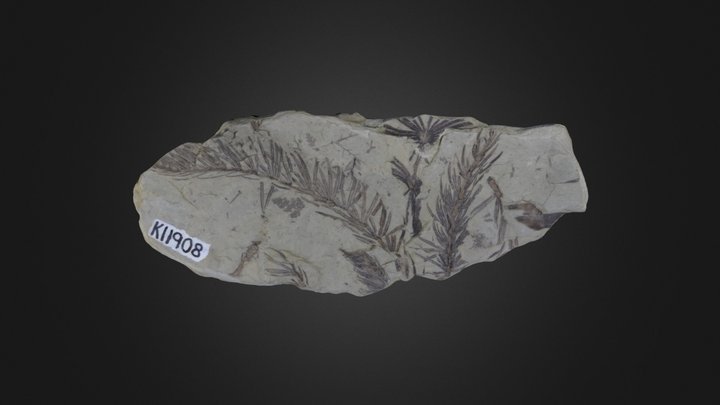
3D model
- Source
- Sketchfab
- Licence
- CC0 Public Domain
- Commercial use
- the licence allows it
Smithsonian Open Access and MorphoSource were not reached for this taxon, so this list is what the others held rather than everything there is.
The description on this site
- Licence
- CC BY-SA 4.0
This is what the site found, which is not the same as what exists.
Keep going
What may have been alongside itTracheophyta through timeThe world it lived on
Occurrence data from the Paleobiology Database, CC BY 4.0. Haeckel 1875