Brachiosaurus
Brachiosaurus is a genus of sauropod dinosaur that lived in North America during the Late Jurassic, about 155.6 to 145.5 million years ago. It was first described by American paleontologist Elmer S. Riggs in 1903 from fossils found in the Colorado River valley in western Colorado, United States. Riggs named the dinosaur Brachiosaurus altithorax; the generic name is Greek for "arm lizard", in reference to its proportionately long arms, and the specific name means "deep chest". Brachiosaurus is estimated to have been between 18 and 22 meters long; body mass estimates of the subadult holotype specimen range from 28.3 to 46.9 metric tons. It had a disproportionately long neck, small skull, and large overall size, all of which are typical for sauropods. Atypically, Brachiosaurus had longer forelimbs than hindlimbs, which resulted in a steeply inclined trunk, and a proportionally shorter tail.

Matt Wedel · CC BY 3.0 · via Wikipedia/Commons. May be a photograph of a specimen, or an artist’s reconstruction — an interpretation of a skeleton, since colour and soft tissue are almost never preserved.
On record
Recorded, not inferred- Sits inside
- BrachiosauridaePBDB
- Diet
- herbivorePBDB, for Sauropoda
- Life habit
- ground dwelling, gregariousPBDB, for Sauropoda
- Motility
- actively mobilePBDB, for Sauropoda
- Environment
- terrestrialPBDB, for Sauropoda
- Length
- 30 mWikidata
- Mass
- 58 tonneWikidata
Time the record covers
At least 3 million years on record.
The record covers at least 152.21 Mya to 149.2 Mya. No occurrence read is dated outside 157.9 Mya to 143.1 Mya.
20 occurrences of Brachiosaurus on record, most of them in the Late Jurassic. Bar height is expected occurrences, not a count: each fossil is spread across the span it is dated to, so a tall narrow bar means tight dating and a low wide one means loose.
When
20 occurrences- Late Jurassic100%
These are dates about fossils, not the animal: the record can only begin after it arose and end before it died out, so either end may reach further. Shares are expected occurrences: a fossil dated to a span is counted partly in each period it straddles. More on what this infers.
Found in
4 formations
Loading coastlines…
The named rock units Brachiosaurus has been recovered from, largest first. Drawn where the rock is now, not where it formed.
Brachiosaurus and its relatives
Late JurassicWhere Brachiosaurus and its relatives were recorded in the Late Jurassic.
Found in the same rock
137 taxa- Camarasaurus12 sites
- Apatosaurus9 sites
- Diplodocus9 sites
- Sauropoda8 sites
- Stegosaurus8 sites
- Allosaurus6 sites
- Barosaurus5 sites
- Camptosaurus5 sites
- Theropoda5 sites
- Camptosaurus dispar4 sites
- Diplodocidae4 sites
- Glyptops4 sites
- Ornithopoda4 sites
- Stegosaurus stenops4 sites
- Allosaurus fragilis3 sites
- Allosaurus jimmadseni3 sites
- Ceratosaurus3 sites
- Diplodocinae3 sites
- Dryosaurus altus3 sites
- Goniopholis3 sites
- Mammalia3 sites
- Nanosaurus agilis3 sites
- Plantae3 sites
- Ceratosauria2 sites
The Paleobiology Database records 19 sites for Brachiosaurus, and this reads all of them. The number is how many of those sites it was catalogued from too. The 24 sharing the most are listed.
This is not a list of everything alive at the time. It is only what has come out of the same ground as this animal and been written down.
Entered from
18 references- New juvenile sauropod material from western Colorado, and the record of juvenile sauropods from the Upper Jurassic Morrison Formation2
- Biostratigraphy of dinosaurs in the Upper Jurassic Morrison Formation of the Western Interior, U.S.A.2
- Census of currently known specimens of the Late Jurassic sauropod Haplocanthosaurus from the Morrison Formation, USA1
- New material of Haplocanthosaurus (Hatcher 1903) from the Dry Mesa Dinosaur Quarry and a comment on sauropod diversity1
- New information on a juvenile sauropod specimen from the Morrison Formation and the reassessment of its systematic position1
- Taphonomy of Sheridan College Quarry 1, Buffalo, Wyoming: implications for reconstructing historic dinosaur localities including Utterback's 1902–1910 Morrison dinosaur expeditions1
- A New Basal Diplodocoid Species, Amphicoelias brontodiplodocus from the Morrison Formation, Big Horn Basin, Wyoming, with Taxonomic Reevaluation of Diplodocus, Apatosaurus, Barosaurus and Other Genera1
- The Hanksville-Burpee Quarry: new insights into a sauropod dominated bonebed in the Morrison Formation of eastern Utah1
- A second Gondwanan diplodocid dinosaur from the Upper Jurassic Tendaguru Beds of Tanzania, East Africa1
- Paleoecological analysis of the vertebrate fauna of the Morrison Formation (Upper Jurassic), Rocky Mountain region, U.S.A.1
- Two previously unreported sauropod dinosaurs from the Upper Jurassic Morrison Formation of Oklahoma1
- Dinosaur sites in the Upper Jurassic of northern Germany1
Each of the 20 occurrences read was entered from one of these publications, ordered by how many each accounts for. This is not a search for papers mentioning the name. 6 further references are not listed. Entries link to doi.org where the Paleobiology Database holds an identifier, and to its own record where it does not. Relayed as the Paleobiology Database holds them, not checked against what they resolve to.
Media and terms
Media content3
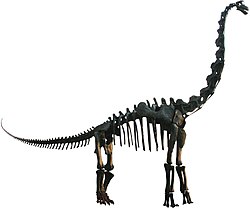
Picture of Brachiosaurus
- Source
- Wikipedia/Commons
- Credit
- Matt Wedel
- Licence
- CC BY 3.0
- Commercial use
- the licence allows it
Photogrammetry
- Source
- MorphoSource
- Licence
- In Copyright
- Commercial use
- cannot be read from the licence given — check the record
- Specimen
- Brachiosaurus brancai · zmb:MB R:MB.R.3736.25
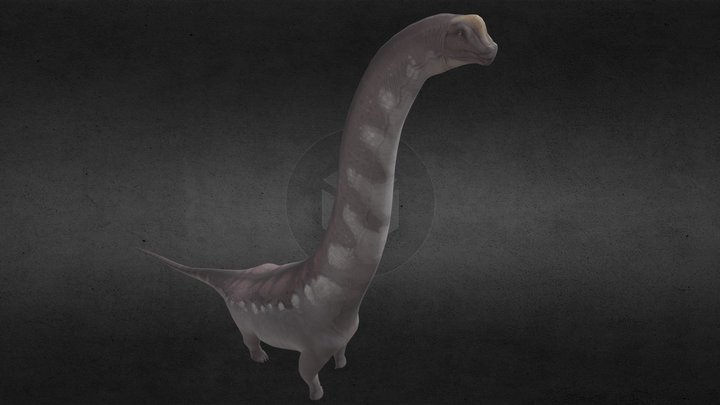
3D model
- Source
- Sketchfab
- Credit
- paleo.parallax
- Licence
- CC Attribution
- Commercial use
- cannot be read from the licence given — check the record
This entry was cached before the site began recording what Smithsonian Open Access did, so a search that failed cannot be told from one that found nothing.
The description on this site
- Licence
- CC BY-SA 4.0
This is what the site found, which is not the same as what exists.
Keep going
What may have been alongside itBrachiosauridae through timeFormations of the Late JurassicThe world it lived on
Occurrence data from the Paleobiology Database, CC BY 4.0. Riggs 1903