Aenictus
Aenictus is a large army ant genus distributed in the Old World tropics and subtropics. It contains about 181 species, making it one of the larger ant genera of the world.

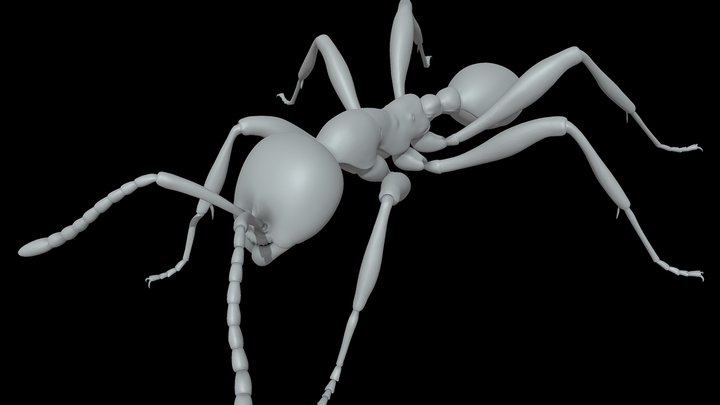
Uncredited · CC BY 4.0 · via Wikipedia/Commons. May be a photograph of a specimen, or an artist’s reconstruction — an interpretation of a skeleton, since colour and soft tissue are almost never preserved.
On record
Recorded, not inferred- Sits inside
- DorylinaePBDB
- Motility
- actively mobilePBDB, for Arthropoda
- Environment
- terrestrialPBDB, for Insecta
Time the record covers
At most 2.2 million years on record.
The one occurrence read is dated to somewhere between 15.98 Mya and 13.82 Mya, which is a dating window rather than a span.
1 occurrence of Aenictus on record, most of them in the Miocene. The Paleobiology Database records this as a living group, and the chart stops with its fossils rather than at the present. Bar height is expected occurrences, not a count: each fossil is spread across the span it is dated to, so a tall narrow bar means tight dating and a low wide one means loose.
When
1 occurrences- Miocene100%
These are dates about fossils, not the animal: the record can only begin after it arose and end before it died out, so either end may reach further. Shares are expected occurrences: a fossil dated to a span is counted partly in each period it straddles. More on what this infers.
Aenictus and its relatives
MioceneWhere Aenictus and its relatives were recorded in the Miocene.
Found in the same rock
89 taxa- Acrocyrtus1 site
- Amphinemura himberii1 site
- Anochetus1 site
- Anomodon1 site
- Aphaenogaster1 site
- Archipsocus palaeosinicus1 site
- Atoposega rosai1 site
- Austroplebeia (Anteplebeina) fujianica1 site
- Belaphotroctes grimaldii1 site
- Brachyponera1 site
- Callyntrura1 site
- Camponotus1 site
- Cardiocondyla1 site
- Carebara1 site
- Cataulacus1 site
- Cerapachys1 site
- Circulifolium1 site
- Colobopsis1 site
- Cololejeunea1 site
- Coniopteryx1 site
- Crematogaster1 site
- Cyclophoridae1 site
- Desoria1 site
- Diapus resinae1 site
The Paleobiology Database records 1 site for Aenictus, and this reads all of them. The number is how many of those sites it was catalogued from too. The 24 sharing the most are listed.
This is not a list of everything alive at the time. It is only what has come out of the same ground as this animal and been written down.
Entered from
1 referenceEach of the 1 occurrence read was entered from one of these publications, ordered by how many each accounts for. This is not a search for papers mentioning the name. Each entry links to doi.org. Relayed as the Paleobiology Database holds them, not checked against what they resolve to.
Media and terms
Media content2

Picture of Aenictus
- Source
- Wikipedia/Commons
- Credit
- nobody named on the record
- Licence
- CC BY 4.0
- Commercial use
- the licence allows it
The description on this site
- Source
- Wikipedia, “Aenictus”
- Licence
- CC BY-SA 4.0
This is what the site found, which is not the same as what exists.
Keep going
What may have been alongside itDorylinae through timeFormations of the MioceneThe world it lived on
Occurrence data from the Paleobiology Database, CC BY 4.0. Shuckard 1840