Acrocephalites
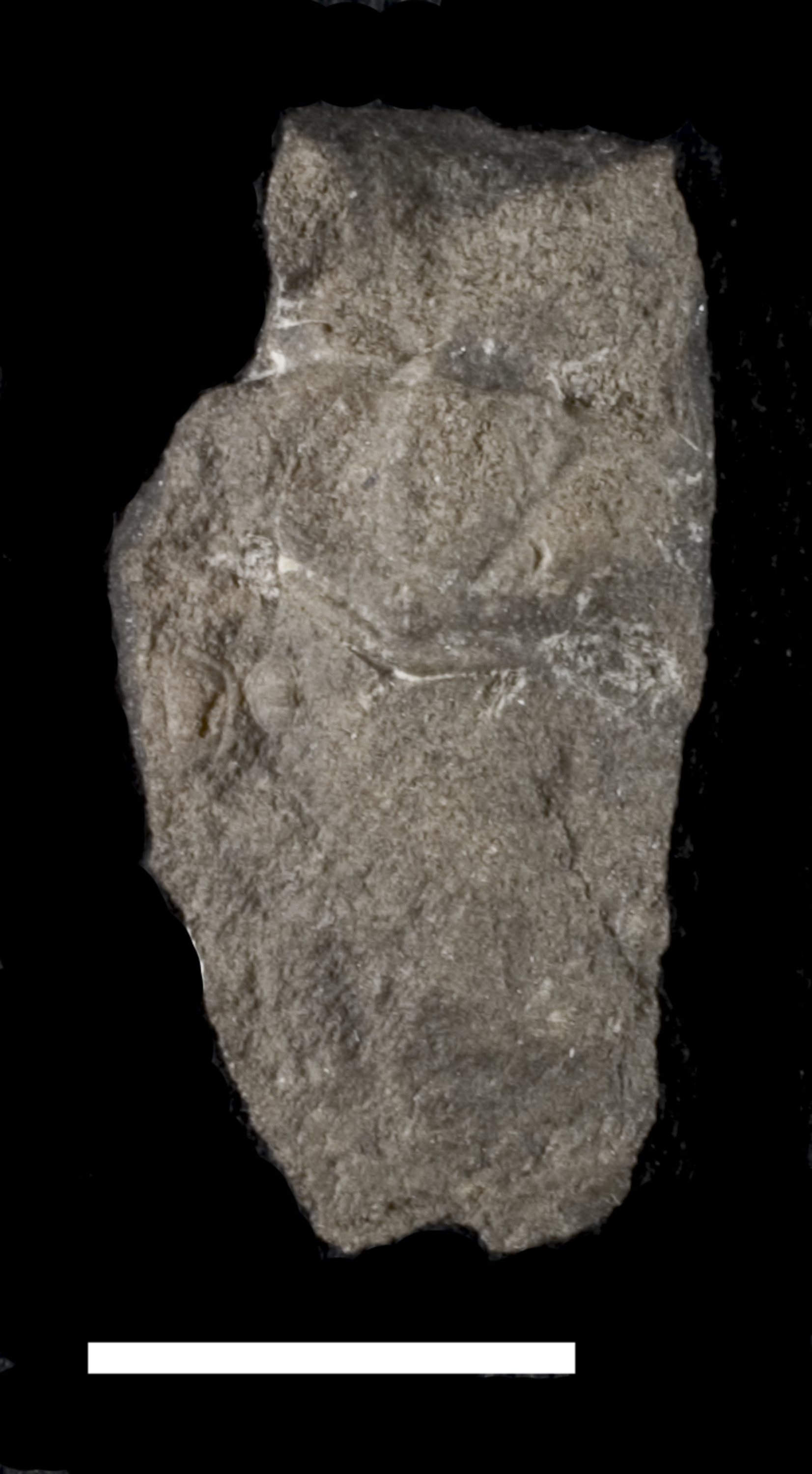
via iDigBio · via iDigBio. May be a photograph of a specimen, or an artist’s reconstruction — an interpretation of a skeleton, since colour and soft tissue are almost never preserved.
On record
Recorded, not inferred- Sits inside
- AcrocephalitidaePBDB
- Diet
- carnivorePBDB, for Trilobita
- Life habit
- low-level epifaunalPBDB, for Trilobita
- Motility
- fast-movingPBDB, for Trilobita
- Environment
- marinePBDB, for Trilobita
Time the record covers
At least 10 million years on record.
The record covers at least 505.3 Mya to 495.2 Mya. No occurrence read is dated outside 509.7 Mya to 486.85 Mya.
12 occurrences of Acrocephalites on record, most of them in the Cambrian. Bar height is expected occurrences, not a count: each fossil is spread across the span it is dated to, so a tall narrow bar means tight dating and a low wide one means loose.
When
12 occurrences- Cambrian100%
These are dates about fossils, not the animal: the record can only begin after it arose and end before it died out, so either end may reach further. Shares are expected occurrences: a fossil dated to a span is counted partly in each period it straddles. More on what this infers.
Found in
7 formations
- Labaz Formation3
- Ogon'or Formation3
- Chopko Formation2
- Perekhod Formation1
- Alum Formation1
- Kulyumbe Formation1
Loading coastlines…
The named rock units Acrocephalites has been recovered from, largest first. Drawn where the rock is now, not where it formed.
Acrocephalites and its relatives
CambrianWhere Acrocephalites and its relatives were recorded in the Cambrian.
Found in the same rock
42 taxa- Maladioidella2 sites
- Protopeltura2 sites
- Pseudagnostus2 sites
- Acmarhachis typicalis1 site
- Acrotretida1 site
- Agnostus1 site
- Ajrikina1 site
- Amorphella modesta1 site
- Anabarochilina1 site
- Anoria lodensis1 site
- Aplexura1 site
- Bathyuriscus belesis1 site
- Buttsia1 site
- Connagnostus1 site
- Corynexochus1 site
- Corynexochus terminalis n. sp.1 site
- Eoacidaspis1 site
- Eurudagnostus minor1 site
- Gapparodus bisulcatus1 site
- Glossopleura mohavensis1 site
- Hesslandonida indet.1 site
- Homagnostus1 site
- Kazelia1 site
- Koldinia1 site
The Paleobiology Database records 5 sites for Acrocephalites, and this reads all of them. The number is how many of those sites it was catalogued from too. The 24 sharing the most are listed.
This is not a list of everything alive at the time. It is only what has come out of the same ground as this animal and been written down.
Entered from
7 references- The Khos-Nelege section of the Ogon'or Formation: a potential candidate for the GSSP of stage 10, Cambrian System3
- Rozova, 19643
- The Upper Cambrian of the Chopko River section, Norilsk region, northwestern Siberian Platform: stratigraphy and trilobites2
- A review of the Andrarum Limestone and the Upper Alum Shale (Middle Cambrian) of Bornholm, Denmark1
- Middle and Late Cambrian trilobites of the Altay1
- Biostratigrafiya i trilobity verkhnego Kembriya i nizhnego Ordovika severo-zapada Sibirskoy Platformy [Biostratigraphy and trilobites of the Upper Cambrian and Lower Ordovician of the northwestern Siberian platform]1
- Notes on the Cambrian rocks of the eastern Mohave Desert, California1
Each of the 12 occurrences read was entered from one of these publications, ordered by how many each accounts for. This is not a search for papers mentioning the name. Entries link to doi.org where the Paleobiology Database holds an identifier, and to its own record where it does not. Relayed as the Paleobiology Database holds them, not checked against what they resolve to.
Media and terms
Media content1
Picture of Acrocephalites
- Source
- iDigBio
- Credit
- via iDigBio
- Licence
- not stated by the source
- Commercial use
- cannot be read from the licence given — check the record
No 3D scan of Acrocephalites was found in MorphoSource and Sketchfab.
Smithsonian Open Access was not reached for this taxon, so this list is what the others held rather than everything there is.
This is what the site found, which is not the same as what exists.
Keep going
What may have been alongside itAcrocephalitidae through timeFormations of the CambrianThe world it lived on
Occurrence data from the Paleobiology Database, CC BY 4.0. Wallerius 1895