Aconeceras
Aconeceras is an early Cretaceous ammonite included in the oppeliid subfamily Aconeceratidae, characterized by an involute, high-whorled, flat-sided shell that bears a finely serrate keel along the venter. Sutures have narrower and deeper elements than in Protaconeceras. Aconeceras has been found in western Europe, South Africa, and eastern Australia. Its stratigraphic range is from the Upper Barramian to the Lower Albian.

Petruss · CC BY-SA 4.0 · via Wikipedia/Commons. May be a photograph of a specimen, or an artist’s reconstruction — an interpretation of a skeleton, since colour and soft tissue are almost never preserved.
On record
Recorded, not inferred- Sits inside
- AconeceratinaePBDB
- Diet
- carnivorePBDB, for Ammonoidea
- Life habit
- nektonicPBDB, for Ammonoidea
- Motility
- fast-movingPBDB, for Ammonoidea
- Vision
- well-developedPBDB, for Cephalopoda
- Environment
- marinePBDB, for Cephalopoda
Time the record covers
At least 15 million years on record.
The record covers at least 121.4 Mya to 106.3 Mya. No occurrence read is dated outside 125.77 Mya to 100.5 Mya.
82 occurrences of Aconeceras on record, most of them in the Early Cretaceous. Bar height is expected occurrences, not a count: each fossil is spread across the span it is dated to, so a tall narrow bar means tight dating and a low wide one means loose.
When
82 occurrences- Early Cretaceous100%
These are dates about fossils, not the animal: the record can only begin after it arose and end before it died out, so either end may reach further. Shares are expected occurrences: a fossil dated to a span is counted partly in each period it straddles. More on what this infers.
Found in
18 formations
- Sanganeh Formation26
- Les Graous Formation13
- Fossil Bluff Formation5
- Atherfield Clay Formation · Lower Greensand Group4
- Ferruginous Sands Formation · Lower Greensand Group3
- Sarcheshmah Formation3
Loading coastlines…
The named rock units Aconeceras has been recovered from, largest first. Drawn where the rock is now, not where it formed. 12 occurrences have no formation on record, which is common for older literature.
Aconeceras and its relatives
Early CretaceousWhere Aconeceras and its relatives were recorded in the Early Cretaceous.
Found in the same rock
428 taxa- Deshayesites11 sites
- Deshayesites deshayesi11 sites
- Cheloniceras10 sites
- Toxoceratoides rochi10 sites
- Cheloniceras crassum8 sites
- Dufrenoyia furcata8 sites
- Lytoceras7 sites
- Melchiorites melchioris7 sites
- Pseudohaploceras liptoviensis7 sites
- Tropaeum7 sites
- Hypophylloceras6 sites
- Macroscaphites striatisulcatus6 sites
- Ammonitoceras lahuseni5 sites
- Colombiceras crassicostatum4 sites
- Ptychoceras emericianum4 sites
- Resatrix4 sites
- Thetironia minor4 sites
- Ammonitoceras3 sites
- Cretiscalpellum3 sites
- Crioceratites3 sites
- Epicheloniceras tschernyschewi3 sites
- Leymeriella (Neoleymeriella) regularis3 sites
- Sanmartinoceras3 sites
- Tessarolax3 sites
The Paleobiology Database records 78 sites for Aconeceras, and this reads all of them. The number is how many of those sites it was catalogued from too. The 24 sharing the most are listed.
This is not a list of everything alive at the time. It is only what has come out of the same ground as this animal and been written down.
Entered from
22 references- Ammonite families Phylloceratidae, Gaudryceratidae, Oppeliidae and Desmoceratidae from Kopet Dagh Basin NE of Iran; palaeobiogeographical and palaeoecological application29
- The lower Aptian ammonites of the Les Ferres Aptian Basin (Lower Cretaceous, Southeast of France). Part I: Introduction and biostratigraphy13
- The stratigraphical palaeontology of the Lower Greensand10
- The Cretaceous Dimitobelidae (Belemnitida) of the Antarctic Peninsula region4
- Aptian-early Cenomanian ammonites from north Sinai, Egypt: systematic paleontology and biostratigraphy2
- The stratigraphy of the Atherfield Clay Formation (Lower Aptian, Lower Cretaceous) at the type and other localities in southern England2
- Renz, 19822
- Die geologische Entwicklung von Süd-Mozambique seit der Unterkreide und die Ammoniten-Fauna von Unterkreide und Cenoman2
- Macrofossil zones of the marine Cretaceous of the Western Interior of Canada and their correlation with the zones and stages of Europe and the Western Interior of the United States2
- Atlas des fossiles caractéristiques de Madagascar (Ammonites). Fascicule IX (Aptien)2
- New Aconeceratinae (Ammonoidea) from the Albian and Aptian of Australia2
- The Cretaceous Ammonoidea of southern Nigeria and the southern Cameroons2
Each of the 82 occurrences read was entered from one of these publications, ordered by how many each accounts for. This is not a search for papers mentioning the name. 10 further references are not listed. Entries link to doi.org where the Paleobiology Database holds an identifier, and to its own record where it does not. Relayed as the Paleobiology Database holds them, not checked against what they resolve to.
Media and terms
Media content2

Picture of Aconeceras
- Source
- Wikipedia/Commons
- Credit
- Petruss
- Licence
- CC BY-SA 4.0
- Commercial use
- the licence allows it
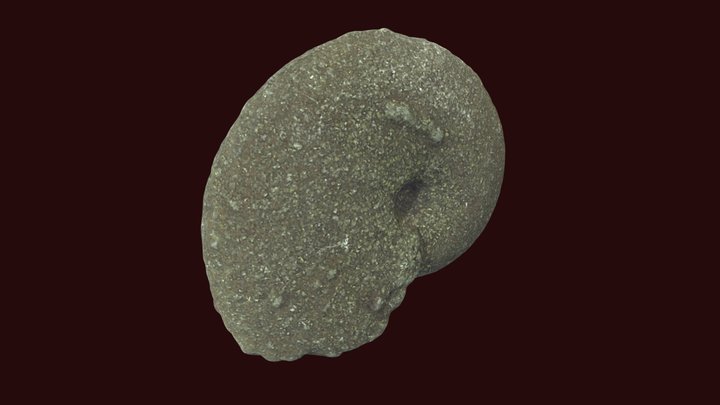
3D model
- Source
- Sketchfab
- Credit
- Shellie Luallin
- Licence
- CC Attribution
- Commercial use
- cannot be read from the licence given — check the record
The description on this site
- Source
- Wikipedia, “Aconeceras”
- Licence
- CC BY-SA 4.0
This is what the site found, which is not the same as what exists.
Keep going
What may have been alongside itAconeceratinae through timeFormations of the Early CretaceousThe world it lived on
Occurrence data from the Paleobiology Database, CC BY 4.0. Hyatt 1903