Tropaeum
Tropaeum is an extinct genus of ammonites found throughout the oceans of the world during the Early Cretaceous. As with many other members of the family Ancyloceratidae, there was a trend among species within this genus to uncoil somewhat, in a very similar manner to the genus Lytoceras. The largest species, T. imperator of Australia, had a shell a little over one meter in diameter.

Apokryltaros at English Wikipedia · CC BY 3.0 · via Wikipedia/Commons. May be a photograph of a specimen, or an artist’s reconstruction — an interpretation of a skeleton, since colour and soft tissue are almost never preserved.
On record
Recorded, not inferred- Sits inside
- AncyloceratinaePBDB
- Diet
- carnivorePBDB, for Ammonoidea
- Life habit
- nektonicPBDB, for Ammonoidea
- Motility
- fast-movingPBDB, for Ammonoidea
- Vision
- well-developedPBDB, for Cephalopoda
- Environment
- marinePBDB, for Cephalopoda
Time the record covers
At least 15 million years on record.
The record covers at least 121.4 Mya to 106.3 Mya. No occurrence read is dated outside 137.05 Mya to 100.5 Mya.
116 occurrences of Tropaeum on record, most of them in the Early Cretaceous. Bar height is expected occurrences, not a count: each fossil is spread across the span it is dated to, so a tall narrow bar means tight dating and a low wide one means loose.
When
116 occurrences- Early Cretaceous100%
These are dates about fossils, not the animal: the record can only begin after it arose and end before it died out, so either end may reach further. Shares are expected occurrences: a fossil dated to a span is counted partly in each period it straddles. More on what this infers.
Found in
18 formations
- Hythe Formation · Lower Greensand Group18
- Wallumbilla Formation · Rolling Downs Group17
- Ferruginous Sands Formation · Lower Greensand Group15
- Rio Mayer Formation · Pueyrredon Group9
- Makatini Formation6
- Sandgate Formation · Lower Greensand Group5
Loading coastlines…
The named rock units Tropaeum has been recovered from, largest first. Drawn where the rock is now, not where it formed. 26 occurrences have no formation on record, which is common for older literature.
Tropaeum and its relatives
Early CretaceousWhere Tropaeum and its relatives were recorded in the Early Cretaceous.
Found in the same rock
270 taxa- Cheloniceras17 sites
- Cheloniceras cornuelianum11 sites
- Cheloniceras crassum11 sites
- Dufrenoyia9 sites
- Neohibolites9 sites
- Deshayesites8 sites
- Panopea7 sites
- Ammonitoceras6 sites
- Exogyra6 sites
- Deshayesites deshayesi5 sites
- Deshayesites multicostatus5 sites
- Epicheloniceras5 sites
- Eurotrigonia mantelli5 sites
- Linotrigonia5 sites
- Sellithyris sella5 sites
- Tonohamites5 sites
- Acanthohoplites4 sites
- Aconeceras nisoides4 sites
- Cucullaea4 sites
- Cymatoceras pseudoelegans4 sites
- Epicheloniceras tschernyschewi4 sites
- Hypophylloceras4 sites
- Ornithella4 sites
- Parahoplites4 sites
The Paleobiology Database records 81 sites for Tropaeum, and this reads all of them. The number is how many of those sites it was catalogued from too. The 24 sharing the most are listed.
This is not a list of everything alive at the time. It is only what has come out of the same ground as this animal and been written down.
Entered from
27 references- The stratigraphical palaeontology of the Lower Greensand38
- The Cretaceous Ammonoidea of Eastern Australia18
- The Ammonoidea of the Lower Greensand, part IX7
- Desmoceratidae, Silesitidae and Kossmaticeratidae (Ammonitida) from the Upper Aptian-Albian of Patagonia (Argentina)6
- Cretaceous faunas from Zululand and Natal, South Africa. Introduction, Stratigraphy6
- Die geologische Entwicklung von Süd-Mozambique seit der Unterkreide und die Ammoniten-Fauna von Unterkreide und Cenoman4
- The Cretaceous decapod Crustacea of Argentina and the Antarctic Pensinsula3
- The Cretaceous Dimitobelidae (Belemnitida) of the Antarctic Peninsula region3
- Einige Cephalopoden aus dem Apt des westlichen Norddeutschland3
- Lower Cretaceous stratigraphic units of Northern California3
- Ammonite families Phylloceratidae, Gaudryceratidae, Oppeliidae and Desmoceratidae from Kopet Dagh Basin NE of Iran; palaeobiogeographical and palaeoecological application2
- The lower Aptian ammonites of the Les Ferres Aptian Basin (Lower Cretaceous, Southeast of France). Part I: Introduction and biostratigraphy2
Each of the 116 occurrences read was entered from one of these publications, ordered by how many each accounts for. This is not a search for papers mentioning the name. 15 further references are not listed. Entries link to doi.org where the Paleobiology Database holds an identifier, and to its own record where it does not. Relayed as the Paleobiology Database holds them, not checked against what they resolve to.
Media and terms
Media content2

Picture of Tropaeum
- Source
- Wikipedia/Commons
- Credit
- Apokryltaros at English Wikipedia
- Licence
- CC BY 3.0
- Commercial use
- the licence allows it
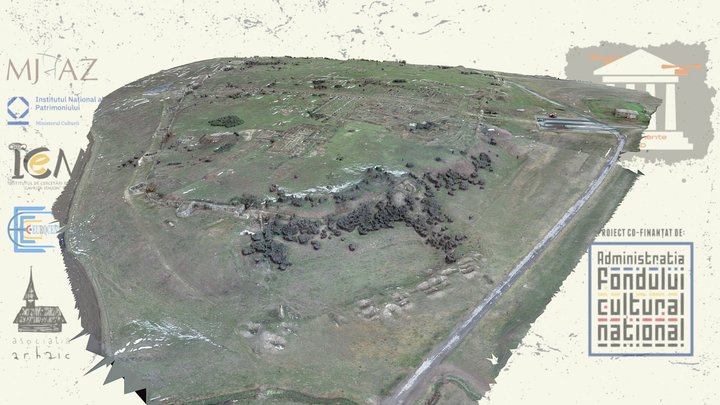
3D model
- Source
- Sketchfab
- Licence
- CC Attribution
- Commercial use
- cannot be read from the licence given — check the record
The description on this site
- Source
- Wikipedia, “Tropaeum”
- Licence
- CC BY-SA 4.0
This is what the site found, which is not the same as what exists.
Keep going
What may have been alongside itAncyloceratinae through timeFormations of the Early CretaceousThe world it lived on
Occurrence data from the Paleobiology Database, CC BY 4.0. Sowerby 1837