Yangchuanosaurus
Yangchuanosaurus is an extinct genus of metriacanthosaurid theropod dinosaur that lived in China from the Middle Jurassic to Late Jurassic periods, and was similar in size and appearance to its North American and European relative, Allosaurus. Yangchuanosaurus hails from the Upper Shaximiao Formation and was the largest predator in a landscape that included the sauropods Mamenchisaurus and Omeisaurus and the stegosaurs Chialingosaurus, Tuojiangosaurus and Chungkingosaurus. This theropod was named after the area in which was discovered, Yongchuan, in China.

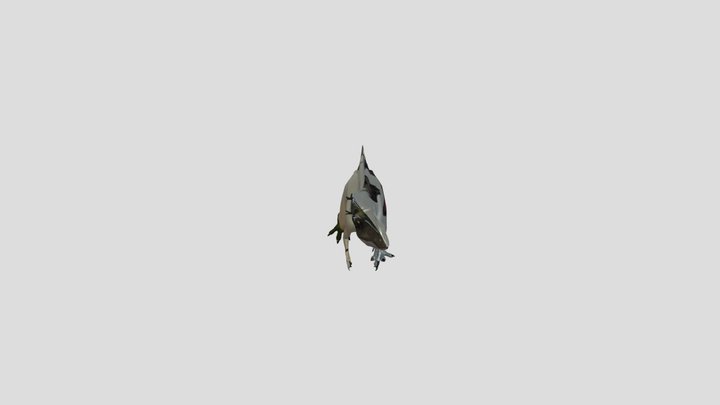
Laikayiu · CC BY-SA 3.0 · via Wikipedia/Commons. May be a photograph of a specimen, or an artist’s reconstruction — an interpretation of a skeleton, since colour and soft tissue are almost never preserved.
On record
Recorded, not inferred- Sits inside
- MetriacanthosauridaePBDB
- Diet
- carnivorePBDB, for Theropoda
- Life habit
- ground dwelling, solitaryPBDB, for Theropoda
- Motility
- actively mobilePBDB, for Theropoda
- Environment
- terrestrialPBDB, for Theropoda
- Length
- 10 mWikidata
Time the record covers
At least 41 million years on record.
The record covers at least 161.5 Mya to 119.57 Mya. No occurrence read is dated outside 170.9 Mya to 113.2 Mya.
4 occurrences of Yangchuanosaurus on record. Bar height is expected occurrences, not a count: each fossil is spread across the span it is dated to, so a tall narrow bar means tight dating and a low wide one means loose.
When
4 occurrencesThese are dates about fossils, not the animal: the record can only begin after it arose and end before it died out, so either end may reach further. Shares are expected occurrences: a fossil dated to a span is counted partly in each period it straddles. More on what this infers.
Found in
2 formations
- Shaximiao Formation · Chongqing Group3
- Suining Formation1
Loading coastlines…
The named rock units Yangchuanosaurus has been recovered from, largest first. Drawn where the rock is now, not where it formed.
Found in the same rock
39 taxa- Abrosaurus dongpoensis1 site
- Agilisaurus louderbacki1 site
- Angustinaripterus longicephalus1 site
- Bashuchelys1 site
- Bashuchelys youngi1 site
- Bienotheroides zigongensis1 site
- Bishanopliosaurus youngi1 site
- Ceratodus1 site
- Chengyuchelys zigongensis1 site
- Chuandongocoelurus primitivus1 site
- Chuannanchelys dashanpuensis1 site
- Dashanpusaurus dongi1 site
- Datousaurus bashanensis1 site
- Gasosaurus constructus1 site
- Hexinlusaurus multidens1 site
- Hsisosuchus dashanpuensis1 site
- Huayangosaurus taibaii1 site
- Hybodus1 site
- Hybodus huangnidanensis1 site
- Hybodus zigongensis1 site
- Lepidotes dashanpuensis1 site
- Mamenchisauridae1 site
- Mamenchisaurus anyuensis1 site
- Omeisaurus jiaoi1 site
The Paleobiology Database records 4 sites for Yangchuanosaurus, and this reads all of them. The number is how many of those sites it was catalogued from too. The 24 sharing the most are listed.
This is not a list of everything alive at the time. It is only what has come out of the same ground as this animal and been written down.
Entered from
4 references- [A new species of sauropod, Mamenchisaurus anyuensis sp. nov.]1
- [A new species of Szechuanosaurus from the Middle Jurassic of Dashanpu, Zigong, Sichuan]1
- [Dinosaurs from the Jurassic of Sichuan]1
- [A new carnosaur from Yongchuan County, Sichuan Province]1
Each of the 4 occurrences read was entered from one of these publications, ordered by how many each accounts for. This is not a search for papers mentioning the name. Each entry links to the Paleobiology Database's own record for the work.
Media and terms
Media content2

Picture of Yangchuanosaurus
- Source
- Wikipedia/Commons
- Credit
- Laikayiu
- Licence
- CC BY-SA 3.0
- Commercial use
- the licence allows it
Smithsonian Open Access and MorphoSource were not reached for this taxon, so this list is what the others held rather than everything there is.
The description on this site
- Licence
- CC BY-SA 4.0
This is what the site found, which is not the same as what exists.
Keep going
What may have been alongside itMetriacanthosauridae through timeThe world it lived on
Occurrence data from the Paleobiology Database, CC BY 4.0. Dong et al. 1978