Torrowangea rosei
No picture of Torrowangea rosei was found. Wikipedia and Wikidata were searched and had none. iDigBio and GBIF were not searched: the Paleobiology Database does not place Torrowangea rosei firmly enough to tell it from something else bearing the same name, and a search on the name alone returns whichever of them was photographed. Smithsonian Open Access did not answer, so this is what the others held rather than everything there is.
On record
Recorded, not inferred- Sits inside
- TorrowangeaPBDB
Time the record covers
At least 17 million years on record.
The record covers at least 538.8 Mya to 521 Mya. No occurrence read is dated outside 635 Mya to 516 Mya.
6 occurrences of Torrowangea rosei on record, most of them in the Cambrian. Bar height is expected occurrences, not a count: each fossil is spread across the span it is dated to, so a tall narrow bar means tight dating and a low wide one means loose.
When
6 occurrences- Cambrian17%
These are dates about fossils, not the animal: the record can only begin after it arose and end before it died out, so either end may reach further. Shares are expected occurrences: a fossil dated to a span is counted partly in each period it straddles. More on what this infers.
Found in
4 formations
- Blueflower Formation2
- Pedroche Formation1
- Estenilla Formation · Domo Extremeno Group1
- Cíjara Formation1
Loading coastlines…
The named rock units Torrowangea rosei has been recovered from, largest first. Drawn where the rock is now, not where it formed. 1 occurrence has no formation on record, which is common for older literature.
Torrowangea rosei and its relatives
CambrianWhere Torrowangea rosei and its relatives were recorded in the Cambrian.
Found in the same rock
22 taxa- Helminthopsis3 sites
- Planolites montanus3 sites
- Bergaueria2 sites
- Gordia2 sites
- Helminthoidichnites tenuis2 sites
- Neonereites uniserialis2 sites
- Planolites2 sites
- Treptichnus pedum2 sites
- Archaeonassa fossulata1 site
- Bigotina bivallata1 site
- Bigotinella1 site
- Charniodiscus1 site
- Cochlichnus anguineus1 site
- Eoredlichia1 site
- Lemdadella1 site
- Nimbia occlusa1 site
- Palaeopascichnus1 site
- Palaeophycus1 site
- Psammichnites1 site
- Sekwia excentrica1 site
- Tiernavia tiernae1 site
- Treptichnus bifurcus1 site
The Paleobiology Database records 6 sites for Torrowangea rosei, and this reads all of them. The number is how many of those sites it was catalogued from too.
This is not a list of everything alive at the time. It is only what has come out of the same ground as this animal and been written down.
Entered from
4 references- New finds of skeletal fossils in the terminal Neoproterozoic of the Siberian Platform and Spain2
- Ediacaran fossils from the Sekwi Brock Area, Mackenzie Mountains, Northwestern Canada2
- When life got smart: The evolution of behavioral complexity through the Ediacaran and early Cambrian of NW Canada1
- Trace and soft body fossils from the Pedroche Formation (Ovetian, Lower Cambrian of the Sierra de Córdoba, S Spain) and their relation to the Pedroche event1
Each of the 6 occurrences read was entered from one of these publications, ordered by how many each accounts for. This is not a search for papers mentioning the name. Entries link to doi.org where the Paleobiology Database holds an identifier, and to its own record where it does not. Relayed as the Paleobiology Database holds them, not checked against what they resolve to.
Media and terms
Media content1
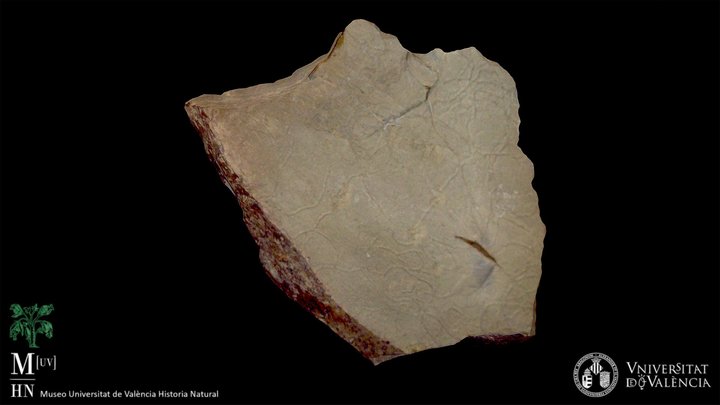
3D model
- Source
- Sketchfab
- Licence
- CC Attribution
- Commercial use
- cannot be read from the licence given — check the record
No picture of Torrowangea rosei was found. Wikipedia and Wikidata were searched and had none.
iDigBio and GBIF were not searched: the Paleobiology Database does not place Torrowangea rosei firmly enough to tell it from something else bearing the same name, and a search on the name alone returns whichever of them was photographed.
Smithsonian Open Access did not answer, so this is what the others held rather than everything there is.
Smithsonian Open Access was not reached for this taxon, so this list is what the others held rather than everything there is.
This is what the site found, which is not the same as what exists.
Keep going
What may have been alongside itTorrowangea through timeFormations of the CambrianThe world it lived on
Occurrence data from the Paleobiology Database, CC BY 4.0. Webby 1970