Tornoceras
Tornoceras is a strongly involute, subdiscoidal Middle and Upper Devonian goniatite with a suture that forms six to ten lobes. Tornoceras is an extinct genus of cephalopods that shares similarities with the modern pearly nautilus. This genus first appeared during the Devonian Period, which spanned from 416 million to 359 million years ago. The shell is circular and relatively flat, with the final whorl enveloping the previous ones. The sutures between the successive chambers of the shell exhibit a gently rippled pattern.

James St. John · CC BY 2.0 · via Wikipedia/Commons. May be a photograph of a specimen, or an artist’s reconstruction — an interpretation of a skeleton, since colour and soft tissue are almost never preserved.
On record
Recorded, not inferred- Sits inside
- TornoceratinaePBDB
- Diet
- carnivorePBDB, for Ammonoidea
- Life habit
- nektonicPBDB, for Goniatitida
- Motility
- fast-movingPBDB, for Ammonoidea
- Vision
- well-developedPBDB, for Cephalopoda
- Environment
- marinePBDB, for Cephalopoda
Time the record covers
At least 19 million years on record.
The record covers at least 387.95 Mya to 368.5 Mya. No occurrence read is dated outside 393.47 Mya to 358.86 Mya.
196 occurrences of Tornoceras on record, most of them in the Devonian. Bar height is expected occurrences, not a count: each fossil is spread across the span it is dated to, so a tall narrow bar means tight dating and a low wide one means loose.
When
196 occurrences- Devonian100%
These are dates about fossils, not the animal: the record can only begin after it arose and end before it died out, so either end may reach further. Shares are expected occurrences: a fossil dated to a span is counted partly in each period it straddles. More on what this infers.
Found in
31 formations
- Virgin Hills Formation31
- Domanik Formation23
- Lyaiol Formation14
- Skaneateles Formation12
- Sand Formation10
- Cashaqua Formation · Sonyea Group9
Loading coastlines…
The named rock units Tornoceras has been recovered from, largest first. Drawn where the rock is now, not where it formed. 7 further formations hold fewer occurrences each and are not listed. 29 occurrences have no formation on record, which is common for older literature.
Tornoceras and its relatives
DevonianWhere Tornoceras and its relatives were recorded in the Devonian.
Found in the same rock
579 taxa- Manticoceras intumescens17 sites
- Eldredgeops rana15 sites
- Manticoceras15 sites
- Greenops boothi14 sites
- Manticoceras cordatum14 sites
- Manticoceras lamed14 sites
- Lobobactrites13 sites
- Mucrospirifer mucronatus13 sites
- Chonetoidea11 sites
- Manticoceras ammon11 sites
- Mediospirifer audaculus11 sites
- Ambocoelia10 sites
- Manticoceras sinuosum10 sites
- Paratornoceras lentiforme10 sites
- Timanites keyserlingi10 sites
- Leiorhynchus9 sites
- Nuculites9 sites
- Rhipidomella9 sites
- Styliolina fissurella9 sites
- Acanthoclymenia genundewa8 sites
- Bembexia8 sites
- Manticoceras carinatum8 sites
- Orthoceras8 sites
- Palaeoneilo8 sites
The Paleobiology Database records 174 sites for Tornoceras, and this reads all of them. The number is how many of those sites it was catalogued from too. The 24 sharing the most are listed.
This is not a list of everything alive at the time. It is only what has come out of the same ground as this animal and been written down.
Entered from
36 references- Revision of ammonoid biostratigraphy in the Frasnian (Upper Devonian) of the Southern Timan (northeast Russian Platform)41
- Late Devonian goniatites (Cephalopoda, Ammonoidea) from New York State29
- Upper Devonian (Famennian) ammonoids from the Canning Basin, Western Australia27
- Devonskie ammonoidei I. Agoniatitidy16
- Upper Frasnian Tornoceratidae (Ammonoidea) from the Sand Formation (Bergisch Gladbach‑Pafrath Syncline, Rhenish Massif)10
- Redefinition, Stratigraphy and Depostional Environments of the Mottville Member (Hamilton Group) in Central and Eastern New York10
- Devonische Goniatiten aus SW-Algerien und ihre stratigraphische Einordnung in die Conodonten-Abfolge6
- The Dynamics of Rapid, Asynchronous Biotic Turnover in the Middle Devonian Appalachian Basin of New York5
- Upper Devonian ammonoids from the Manticoceras zone, Fitzroy Basin, Western Australia5
- Comparative Taphonomy and Paleoecology of Middle Devonian Dark Gray and Black Shale Facies from Western New York4
- Devonian (Frasnian) goniatites from Waterside Cove and Staverton Wood, south Devon3
- Devonian goniatite biostratigraphy and timing of facies movements in the Frasnian of the Canning Basin, Western Australia3
Each of the 196 occurrences read was entered from one of these publications, ordered by how many each accounts for. This is not a search for papers mentioning the name. 24 further references are not listed. Entries link to doi.org where the Paleobiology Database holds an identifier, and to its own record where it does not. Relayed as the Paleobiology Database holds them, not checked against what they resolve to.
Media and terms
Media content2
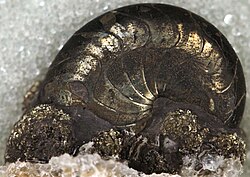
Picture of Tornoceras
- Source
- Wikipedia/Commons
- Credit
- James St. John
- Licence
- CC BY 2.0
- Commercial use
- the licence allows it
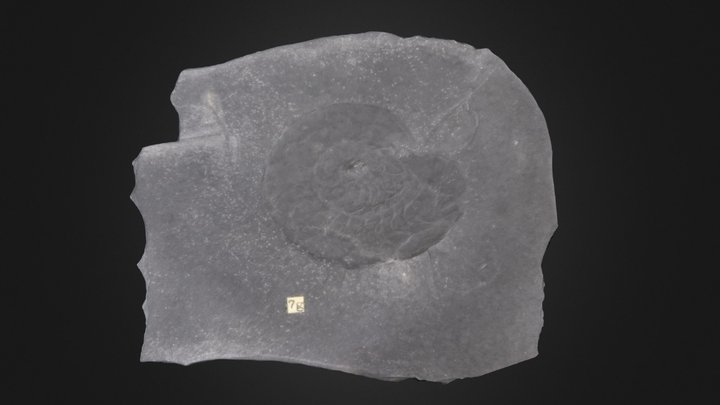
3D model
- Source
- Sketchfab
- Licence
- CC0 Public Domain
- Commercial use
- the licence allows it
The description on this site
- Source
- Wikipedia, “Tornoceras”
- Licence
- CC BY-SA 4.0
This is what the site found, which is not the same as what exists.
Keep going
What may have been alongside itTornoceratinae through timeFormations of the DevonianThe world it lived on
Occurrence data from the Paleobiology Database, CC BY 4.0. (Hyatt 1884)