Thracia (Thracia)
No picture of Thracia (Thracia) was found. Wikidata and iDigBio were searched and had none. Wikipedia and Smithsonian Open Access did not answer, so this is what the others held rather than everything there is. GBIF was asked, and what came back is not recorded: nothing, or a picture this site could not tie to Thracia (Thracia), or no answer at all. This entry cannot say which.
On record
Recorded, not inferred- Sits inside
- ThraciaPBDB
- Diet
- suspension feederPBDB, for Thraciidae
- Life habit
- deep infaunalPBDB, for Thracia
- Motility
- facultatively mobilePBDB, for Thraciidae
- Vision
- blindPBDB, for Bivalvia
Time the record covers
At least 168 million years on record.
The record covers at least 170.9 Mya to 2.58 Mya. No occurrence read is dated outside 174.7 Mya to 1.8 Mya.
52 occurrences of Thracia (Thracia) on record, most of them in the Miocene. The Paleobiology Database records this as a living group, and the chart stops with its fossils rather than at the present. Bar height is expected occurrences, not a count: each fossil is spread across the span it is dated to, so a tall narrow bar means tight dating and a low wide one means loose.
When
52 occurrences- Middle Jurassic6%
- Eocene10%
- Oligocene8%
- Miocene56%
- Pliocene19%
- Pleistocene2%
These are dates about fossils, not the animal: the record can only begin after it arose and end before it died out, so either end may reach further. Shares are expected occurrences: a fossil dated to a span is counted partly in each period it straddles. More on what this infers.
Found in
19 formations
- Berada Formation6
- Lillo Formation5
- Kattendijk Formation3
- Upper Cyrena Formation2
- Montello conglomerate Formation2
- Coralline Crag Formation2
Loading coastlines…
The named rock units Thracia (Thracia) has been recovered from, largest first. Drawn where the rock is now, not where it formed. 18 occurrences have no formation on record, which is common for older literature.
Thracia (Thracia) and its relatives
MioceneWhere Thracia (Thracia) and its relatives were recorded in the Miocene.
Found in the same rock
1,268 taxa- Lucinoma borealis16 sites
- Spaniodontella14 sites
- Yoldia (Yoldia) glaberrima14 sites
- Limopsis13 sites
- Ringicula buccinea13 sites
- Scapharca (Scapharca) diluvii13 sites
- Varicorbula gibba12 sites
- Calyptraea chinensis11 sites
- Ficus conditus11 sites
- Gouldia (Gouldia) minima11 sites
- Hiatella arctica11 sites
- Limopsis (Limopsis) aurita11 sites
- Xenophora deshayesi11 sites
- Yoldiella11 sites
- Asthenotoma10 sites
- Babylonella10 sites
- Chrysallida pygmaea10 sites
- Roxania10 sites
- Saccella westendorpi10 sites
- Venus (Ventricoloidea) multilamella10 sites
- Aequipecten9 sites
- Angulus9 sites
- Astarte (Astarte) radiata9 sites
- Circulus9 sites
The Paleobiology Database records 34 sites for Thracia (Thracia), and this reads all of them. The number is how many of those sites it was catalogued from too. The 24 sharing the most are listed.
This is not a list of everything alive at the time. It is only what has come out of the same ground as this animal and been written down.
Entered from
23 references- The Neogene Bivalvia (Heterodonta and Anomalodesmata) and Scaphopoda from Kallo and Doel (Oost Vlaanderen, Belgium)8
- Die Fauna des marinen Miozäns von Kevelaer (Niederrhein). Band 2 Bivalvia, Scaphopoda, Cephalopoda, Bryozoa, Annelida, Brachiopoda7
- Stratigraphic interpretation of the Neogene marine-continental record in the Maaseik well (49W0220) in the Roer Valley Graben, NE Belgium6
- Molluscan palaeoecology and sedimentological features: an integrated appraoch from the Miocene Meduna section, northern Italy3
- Geologie, Paläontologie und Palökologie der südostbayerischen unter-priabonen (Ober-Eozän) Riffkalkvorkommen bei Hallthurm (Nördliche Kalkalpen) und der Kirchbergs bei Neubeuern (Helvetikum)3
- Mollusc fauna of the Hungarian Upper Oligocene (Egerian)3
- Neogene and Paleogene Molluscan (Bivalvia) Cenozones of the Russian Northeast.2
- The mollusc fauna of the Stemerdink Bed (Miocene, Reinbekian) from outcrops in the Slinge brook at Winterswijk-Brinkheurne (The Netherlands, province of Gelderland)2
- La fauna tortoniana del T. Stirone (limite Parmense-Piacentino)2
- Fauna de moluste a depozitelor Paleogene din nord-vestul Transilvaniei [Molluscan fauna from Paleogene deposits from NW Transilvania]2
- Wood, 18502
- Paleobiology from Museum collections: comparing historical and novel data on Upper Miocene molluscs of the Livorno Hills1
Each of the 52 occurrences read was entered from one of these publications, ordered by how many each accounts for. This is not a search for papers mentioning the name. 11 further references are not listed. Entries link to doi.org where the Paleobiology Database holds an identifier, and to its own record where it does not. Relayed as the Paleobiology Database holds them, not checked against what they resolve to.
Media and terms
Media content1
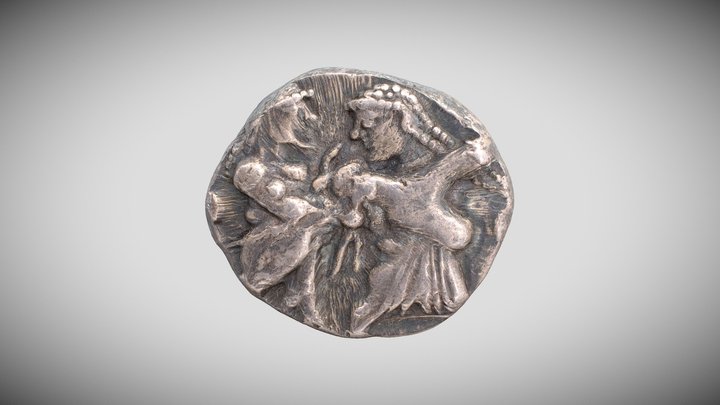
3D model
- Source
- Sketchfab
- Licence
- Free Standard
- Commercial use
- cannot be read from the licence given — check the record
No picture of Thracia (Thracia) was found. Wikidata and iDigBio were searched and had none.
Wikipedia and Smithsonian Open Access did not answer, so this is what the others held rather than everything there is.
GBIF was asked, and what came back is not recorded: nothing, or a picture this site could not tie to Thracia (Thracia), or no answer at all. This entry cannot say which.
Smithsonian Open Access and MorphoSource were not reached for this taxon, so this list is what the others held rather than everything there is.
This is what the site found, which is not the same as what exists.
Keep going
What may have been alongside itThracia through timeFormations of the MioceneThe world it lived on
Occurrence data from the Paleobiology Database, CC BY 4.0. Blainville 1824