Septastrea

Yale Peabody Museum · CC0 · via GBIF. May be a photograph of a specimen, or an artist’s reconstruction — an interpretation of a skeleton, since colour and soft tissue are almost never preserved.
On record
Recorded, not inferred- Sits inside
- RhizangiidaePBDB
- Diet
- suspension feederPBDB, for Rhizangiidae
- Life habit
- colonial, clonalPBDB, for Rhizangiidae
- Motility
- stationary, attachedPBDB, for Rhizangiidae
- Vision
- blindPBDB, for Anthozoa
- Environment
- marinePBDB, for Rhizangiidae
Time the record covers
At least 61 million years on record.
The record covers at least 61.66 Mya to 129 ka. No occurrence read is dated outside 66 Mya to 11.7 ka.
48 occurrences of Septastrea on record, most of them in the Pliocene. Bar height is expected occurrences, not a count: each fossil is spread across the span it is dated to, so a tall narrow bar means tight dating and a low wide one means loose.
When
48 occurrencesThese are dates about fossils, not the animal: the record can only begin after it arose and end before it died out, so either end may reach further. Shares are expected occurrences: a fossil dated to a span is counted partly in each period it straddles. More on what this infers.
Found in
23 formations
- Tamiami Formation · Okeechobee Group4
- Canepatch Formation3
- James City Formation3
- Molare Formation2
- Waccamaw Formation2
- Caloosahatchee Formation2
Loading coastlines…
The named rock units Septastrea has been recovered from, largest first. Drawn where the rock is now, not where it formed. 11 occurrences have no formation on record, which is common for older literature.
Septastrea and its relatives
PlioceneWhere Septastrea and its relatives were recorded in the Pliocene.
Found in the same rock
796 taxa- Conradostrea sculpturata10 sites
- Nucula (Nucula) proxima9 sites
- Balanus8 sites
- Crepidula fornicata8 sites
- Busycon7 sites
- Crepidula plana7 sites
- Mulinia lateralis7 sites
- Nuculana acuta7 sites
- Abra aequalis6 sites
- Cliona6 sites
- Epitonium6 sites
- Noetia6 sites
- Parvilucina multistriata6 sites
- Spisula (Hemimactra) solidissima6 sites
- Astyris lunata5 sites
- Neverita duplicatus5 sites
- Prunum5 sites
- Seila adamsii5 sites
- Anadara (Larkinia) transversa4 sites
- Angulus texanus4 sites
- Anomia simplex4 sites
- Boonea seminuda4 sites
- Carolinapecten eboreus4 sites
- Crassinella4 sites
The Paleobiology Database records 25 sites for Septastrea, and this reads all of them. The number is how many of those sites it was catalogued from too. The 24 sharing the most are listed.
This is not a list of everything alive at the time. It is only what has come out of the same ground as this animal and been written down.
Entered from
28 references- Neogene Stratigraphy of the lower Coast Plain of the Carolinas5
- Petuch and Roberts, 20073
- Les faunes de coraux (Anthozoaires Scléractiniaires) de la façade atlantique française au Chattien et au Miocène3
- Checklist of megafossils from the James City Formation (Lower Pleistocene) at Johnson Point, Craven County, North Carolina3
- Coral fauna and facies of the Oligocene friniging reef near Cairo Montenotte (Liguria, Northern Italy)3
- Late Cenozoic corals of south Florida3
- Expanded Florida reef development during the mid-Pliocene2
- Molluscan biostratigraphy and paleoenvironmental reconstruction of Oligocene deposits in the Denizli and Kale-Tavas subbasins (SW Turkey)2
- A paleobiotic survey of Caribbean faunas from the Neogene of the Isthmus of Panama2
- Oligocene coral and algal reef and related facies of Valzemola (Savona, NW Italy)2
- The Pliocene Reefs of Miami: Their Geomorphological Significance in the Evolution of the Atlantic Coastal Ridge, Southeastern Florida, U.S.A.2
- Recherches sur les Madreporaires et les formations recifales Miocenes de la Mediterranee occidentale [Miocene corals and reefs from the western Mediterranean]2
Each of the 48 occurrences read was entered from one of these publications, ordered by how many each accounts for. This is not a search for papers mentioning the name. 16 further references are not listed. Entries link to doi.org where the Paleobiology Database holds an identifier, and to its own record where it does not. Relayed as the Paleobiology Database holds them, not checked against what they resolve to.
Media and terms
Media content3
Picture of Septastrea
- Source
- GBIF
- Credit
- Yale Peabody Museum
- Licence
- CC0
- Commercial use
- the licence allows it
Photogrammetry
- Source
- MorphoSource
- Licence
- not stated by the source
- Commercial use
- cannot be read from the licence given — check the record
- Specimen
- SEPTASTREA MARYLANDICA · UF:IP:173886
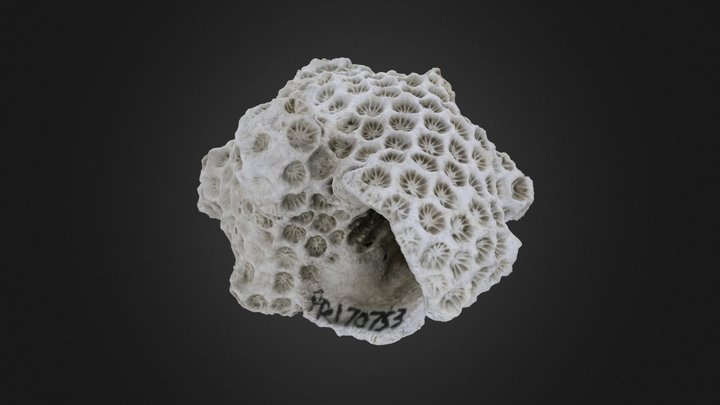
3D model
- Source
- Sketchfab
- Licence
- CC0 Public Domain
- Commercial use
- the licence allows it
Smithsonian Open Access was not reached for this taxon, so this list is what the others held rather than everything there is.
This is what the site found, which is not the same as what exists.
Keep going
What may have been alongside itRhizangiidae through timeFormations of the PlioceneThe world it lived on
Occurrence data from the Paleobiology Database, CC BY 4.0. d'Orbigny 1849