Epitonium
Epitonium is a genus of small predatory sea snails, marine gastropod mollusks. Epitonium is the type genus of the family Epitoniidae, the wentletraps.

Steve Jurvetson · CC BY 2.0 · via Wikipedia/Commons. May be a photograph of a specimen, or an artist’s reconstruction — an interpretation of a skeleton, since colour and soft tissue are almost never preserved.
On record
Recorded, not inferred- Sits inside
- EpitoniidaePBDB
- Diet
- carnivorePBDB, for Epitoniidae
- Life habit
- semi-infaunalPBDB
- Motility
- slow-movingPBDB, for Epitoniidae
- Vision
- limitedPBDB, for Gastropoda
Time the record covers
At least 100 million years on record.
The record covers at least 100.5 Mya to 11.7 ka. No occurrence read is dated outside 113.2 Mya to 0 Mya.
871 occurrences of Epitonium on record, most of them in the Pleistocene. The Paleobiology Database records this as a living group. Bar height is expected occurrences, not a count: each fossil is spread across the span it is dated to, so a tall narrow bar means tight dating and a low wide one means loose.
When
871 occurrences- Early Cretaceousunder 1%
- Late Cretaceous2%
- Paleocene7%
- Eocene14%
- Oligocene1%
- Miocene18%
- Pliocene19%
- Pleistocene35%
- Holocene3%
These are dates about fossils, not the animal: the record can only begin after it arose and end before it died out, so either end may reach further. Shares are expected occurrences: a fossil dated to a span is counted partly in each period it straddles. More on what this infers.
Found in
183 formations
- Palos Verdes Sand Formation69
- Timms Point Silt Formation21
- Mare Formation · Cabo Blanco Group18
- Lellinge Greensand Formation17
- Entrerriense Formation15
- Gatun Formation15
Loading coastlines…
The named rock units Epitonium has been recovered from, largest first. Drawn where the rock is now, not where it formed. 159 further formations hold fewer occurrences each and are not listed. 165 occurrences have no formation on record, which is common for older literature.
Epitonium and its relatives
PleistoceneWhere Epitonium and its relatives were recorded in the Pleistocene.
Found in the same rock
3,388 taxa- Turritella45 sites
- Nassarius31 sites
- Naticidae31 sites
- Babylonella29 sites
- Limopsis28 sites
- Dentalina konincki26 sites
- Elphidium26 sites
- Odostomia26 sites
- Spiroplectammina carinata26 sites
- Varicorbula gibba26 sites
- Lentigodentalium25 sites
- Limopsis (Limopsis) aurita25 sites
- Aporrhais (Aporrhais)24 sites
- Cibicides lobatulus24 sites
- Globulina gibba24 sites
- Lyrotyphis24 sites
- Reussirella24 sites
- Streptodictyon24 sites
- Textularia gramen24 sites
- Venus (Ventricoloidea) multilamella24 sites
- Astarte (Astarte) radiata23 sites
- Cibicides dutemplei23 sites
- Dentalium (Pseudantilis)23 sites
- Lunulites23 sites
The Paleobiology Database records 399 sites for Epitonium, and this reads 240 of them. Of that, one read hit the database's own return limit, so every count below is a floor rather than a total. The number is how many of those sites it was catalogued from too. The 24 sharing the most are listed.
This is not a list of everything alive at the time. It is only what has come out of the same ground as this animal and been written down.
Entered from
222 references- The family Epitoniidae (Mollusca: Gastropoda) in the northeastern Pacific78
- Catalogue of the Paleocene and Eocene mollusca of the southern and eastern United States. Part 1. Pelecypoda, Amphineura, Pteropoda, Scaphopoda and Cephalopoda32
- Die Fauna des marinen Miozäns von Kevelaer (Niederrhein)29
- Studies on the marine Pleistocene: Part II. The marine Pleistocene mollusks of eastern North America25
- Miocene and Pliocene mollusks from Trinidad23
- The Paleontology and Stratigraphy of the Marine Pliocene and Pleistocene of San Pedro, California21
- A paleobiotic survey of Caribbean faunas from the Neogene of the Isthmus of Panama19
- Resilience of marine invertebrate communities during the early Cenozoic hyperthermals18
- The Selandian (Paleocene) mollusc fauna from Copenhagen, Denmark: the Poul Harder 1920 collection17
- Unpublished notes on Caribbean collection of Jack and Winifred Gibson-Smith, Naturhistorisches Museum Basel16
- New Species of Mollusca from the Entrerriense Formation (Upper Miocene) of Chubut Province, Argentina and species not previously reported from this formation. Part 1 - Gastropoda and Scaphopoda15
- Late Pleistocene invertebrates of the Newport Bay area, California14
Each of the 871 occurrences read was entered from one of these publications, ordered by how many each accounts for. This is not a search for papers mentioning the name. 210 further references are not listed. Entries link to doi.org where the Paleobiology Database holds an identifier, and to its own record where it does not. Relayed as the Paleobiology Database holds them, not checked against what they resolve to.
Media and terms
Media content3
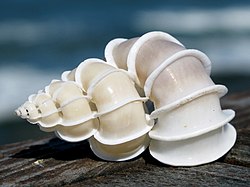
Picture of Epitonium
- Source
- Wikipedia/Commons
- Credit
- Steve Jurvetson
- Licence
- CC BY 2.0
- Commercial use
- the licence allows it
Photogrammetry
- Source
- MorphoSource
- Licence
- not stated by the source
- Commercial use
- cannot be read from the licence given — check the record
- Specimen
- Epitonium scalare · UF:Invertebrate Zoology:169159-Mollusca
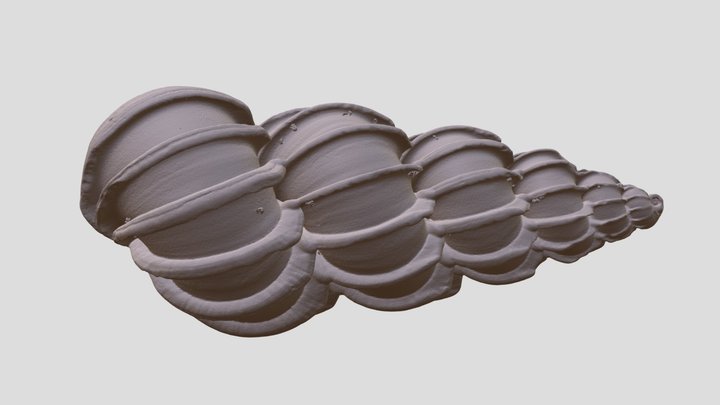
3D model
- Source
- Sketchfab
- Credit
- Biodiversity
- Licence
- CC Attribution
- Commercial use
- cannot be read from the licence given — check the record
Smithsonian Open Access was not reached for this taxon, so this list is what the others held rather than everything there is.
The description on this site
- Source
- Wikipedia, “Epitonium”
- Licence
- CC BY-SA 4.0
This is what the site found, which is not the same as what exists.
Keep going
What may have been alongside itEpitoniidae through timeFormations of the PleistoceneThe world it lived on
Occurrence data from the Paleobiology Database, CC BY 4.0. Bolten 1798