Romaniceras
via iDigBio · CC BY · via iDigBio. May be a photograph of a specimen, or an artist’s reconstruction — an interpretation of a skeleton, since colour and soft tissue are almost never preserved.
On record
Recorded, not inferred- Sits inside
- EuomphaloceratinaePBDB
- Diet
- carnivorePBDB, for Ammonoidea
- Life habit
- nektonicPBDB, for Ammonoidea
- Motility
- fast-movingPBDB, for Ammonoidea
- Vision
- well-developedPBDB, for Cephalopoda
- Environment
- marinePBDB, for Cephalopoda
Time the record covers
At least 4.1 million years on record.
The record covers at least 93.9 Mya to 89.8 Mya. No occurrence read is dated outside 100.5 Mya to 83.6 Mya.
84 occurrences of Romaniceras on record, most of them in the Late Cretaceous. Bar height is expected occurrences, not a count: each fossil is spread across the span it is dated to, so a tall narrow bar means tight dating and a low wide one means loose.
When
84 occurrences- Late Cretaceous100%
These are dates about fossils, not the animal: the record can only begin after it arose and end before it died out, so either end may reach further. Shares are expected occurrences: a fossil dated to a span is counted partly in each period it straddles. More on what this infers.
Found in
24 formations
- Mancos Shale Formation20
- Indidura Formation8
- Redding Formation6
- Boquillas Formation4
- Carlile Shale Formation · Colorado Group4
- Saku Formation · Yezo Group3
Loading coastlines…
The named rock units Romaniceras has been recovered from, largest first. Drawn where the rock is now, not where it formed. 13 occurrences have no formation on record, which is common for older literature.
Romaniceras and its relatives
Late CretaceousWhere Romaniceras and its relatives were recorded in the Late Cretaceous.
Found in the same rock
146 taxa- Spathites puercoensis14 sites
- Coilopoceras springeri8 sites
- Hoplitoides sandovalensis8 sites
- Prionocyclus hyatti7 sites
- Inoceramus hobetsensis5 sites
- Mesopuzosia5 sites
- Gaudryceras (Gaudryceras) denseplicatum4 sites
- Mytiloides4 sites
- Scalarites4 sites
- Tetragonites glabrus4 sites
- Yezoites puerculus4 sites
- Coilopoceras3 sites
- Collignoniceras woollgari3 sites
- Eubostrychoceras3 sites
- Inoceramus3 sites
- Inoceramus teshioensis3 sites
- Neoptychites cephalotus3 sites
- Anagaudryceras2 sites
- Collignoniceras2 sites
- Fagesia2 sites
- Gaudryceras tenuiliratum2 sites
- Herrickiceras costatum2 sites
- Hoplitoides2 sites
- Inoceramus (Inoceramus)2 sites
The Paleobiology Database records 67 sites for Romaniceras, and this reads all of them. The number is how many of those sites it was catalogued from too. The 24 sharing the most are listed.
This is not a list of everything alive at the time. It is only what has come out of the same ground as this animal and been written down.
Entered from
33 references- The Late Cretaceous ammonite Romaniceras Spath, 1923, in New Mexico22
- Mid-Turonian ammonite faunas from northern Mexico9
- Geology of Sierra de la Peña and paleontology of the Indidura formation Coahuila, Mexico7
- Upper Cretaceous ammonites of California. Part III4
- Upper Cretaceous of the Pacific Coast4
- Part V. Upper Cretaceous ammonites from the Monobe area, Shikoku3
- Mid-Cretaceous stratigraphy of the Oyubari area, central Hokkaido3
- A North American ammonite fauna from the late Middle Turonian of Vaucluse and Gard, southern France: the Romaniceras mexicanum, Prionocyclus hyatti and Coilopoceras cf. springeri association2
- Upper Cretaceous (Turonian) ammonites from the Carlile Member and reference area of the Juana Lopez Member of the Mancos Shale, eastern side of the San Juan Basin, La Ventana, Sandoval County, New Mexico2
- The Cenomanian/Turonian boundary in Sakhalin, Far East Russia: ammonites, inoceramids, foraminifera, and radiolarians2
- Coniacian-Maastrichtian of the Tremp Area (South Central Pyrenees)2
- Stratigraphy of the Shimanto Supergroup in the Chikanaga area, west Shikoku, with special reference to the Miyakoan and Gyliakian Series.2
Each of the 84 occurrences read was entered from one of these publications, ordered by how many each accounts for. This is not a search for papers mentioning the name. 21 further references are not listed. Entries link to doi.org where the Paleobiology Database holds an identifier, and to its own record where it does not. Relayed as the Paleobiology Database holds them, not checked against what they resolve to.
Media and terms
Media content3
Picture of Romaniceras
- Source
- iDigBio
- Credit
- via iDigBio
- Licence
- CC BY
- Commercial use
- the licence allows it
Laser scan
- Source
- MorphoSource
- Licence
- In Copyright
- Commercial use
- cannot be read from the licence given — check the record
- Specimen
- Romaniceras deverioides · LACM:IP:LACMIP 10741.3
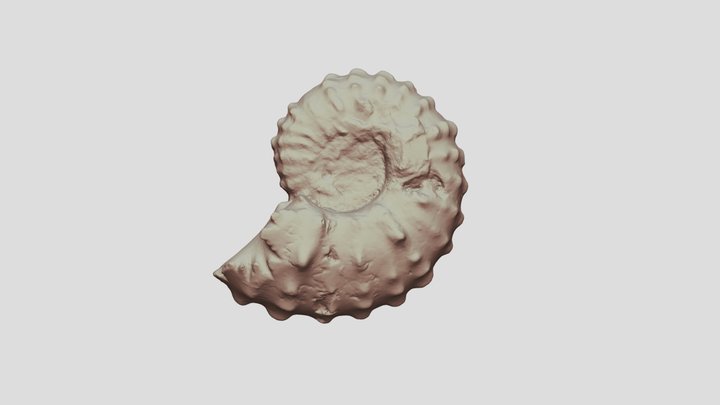
3D model
- Source
- Sketchfab
- Licence
- CC Attribution-NonCommercial
- Commercial use
- the licence does not allow it
Smithsonian Open Access was not reached for this taxon, so this list is what the others held rather than everything there is.
This is what the site found, which is not the same as what exists.
Keep going
What may have been alongside itEuomphaloceratinae through timeFormations of the Late CretaceousThe world it lived on
Occurrence data from the Paleobiology Database, CC BY 4.0. (Spath 1923)