Rhynchotherium
Rhynchotherium is an extinct genus of gomphothere endemic to the southern USA and Mexico from the Miocene to the Early Pleistocene. This temporal range also corresponds from the late Hemphillian faunal stage (Hh4) to the Late Blancan faunal stage, with Rhynchotherium being considered by some researchers as a taxon emblematic of the Blancan faunal stage. Rhynchotherium had two tusks and likely evolved from Gomphotherium.

Margret Flinsch · Public Domain · via Wikipedia/Commons. May be a photograph of a specimen, or an artist’s reconstruction — an interpretation of a skeleton, since colour and soft tissue are almost never preserved.
On record
Recorded, not inferred- Sits inside
- GomphotheriidaePBDB
- Diet
- browser, grazerPBDB
- Life habit
- ground dwellingPBDB
- Motility
- actively mobilePBDB, for Osteichthyes
- Environment
- terrestrialPBDB, for Eutheria
Time the record covers
At least 2.7 million years on record.
The record covers at least 5.333 Mya to 2.58 Mya. No occurrence read is dated outside 23.04 Mya to 210 ka.
38 occurrences of Rhynchotherium on record. Bar height is expected occurrences, not a count: each fossil is spread across the span it is dated to, so a tall narrow bar means tight dating and a low wide one means loose.
When
38 occurrences- Miocene57%
- Pliocene29%
- Pleistocene14%
These are dates about fossils, not the animal: the record can only begin after it arose and end before it died out, so either end may reach further. Shares are expected occurrences: a fossil dated to a span is counted partly in each period it straddles. More on what this infers.
Found in
14 formations
- Rancho Viejo Beds Formation5
- Gracias Formation5
- Coal Valley Formation2
- Herreria Formation1
- Starlight Formation1
- Horned Toad Formation1
Loading coastlines…
The named rock units Rhynchotherium has been recovered from, largest first. Drawn where the rock is now, not where it formed. 15 occurrences have no formation on record, which is common for older literature.
Found in the same rock
228 taxa- Dinohippus mexicanus11 sites
- Neohipparion eurystyle11 sites
- Borophagus secundus10 sites
- Pleiolama vera9 sites
- Astrohippus stockii8 sites
- Megatylopus matthewi8 sites
- Agriotherium schneideri7 sites
- Desmathyus brachydontus7 sites
- Megalonyx7 sites
- Teleoceras fossiger7 sites
- Alforjas6 sites
- Nannippus peninsulatus6 sites
- Platygonus6 sites
- Plesippus simplicidens6 sites
- Camelops5 sites
- Eucyon ferox5 sites
- Hemiauchenia5 sites
- Hexobelomeryx fricki5 sites
- Nannippus aztecus5 sites
- Calippus hondurensis4 sites
- Camelidae4 sites
- Pseudaelurus intrepidus4 sites
- Amphimachairodus coloradensis3 sites
- Antilocapridae3 sites
The Paleobiology Database records 37 sites for Rhynchotherium, and this reads all of them. The number is how many of those sites it was catalogued from too. The 24 sharing the most are listed.
This is not a list of everything alive at the time. It is only what has come out of the same ground as this animal and been written down.
Entered from
27 references- The Early-Late Hemphillian (Hh2) Faunal Assemblage From Juchipila Basin, State of Zacatecas, Mexico, and Its Biochronologic Correlation with Other Hemphillian Faunas in Central Mexico4
- Synonymies and reidentifications of North American fossil mammals4
- Stop 16: Late Hemphillian faunas of the Texas and Oklahoma panhandles3
- Increased xenarthran diversity of the Great American Biotic Interchange: a new genus and species of ground sloth (Mammalia, Xenarthra, Megalonychidae) from the Hemphillian (late Miocene) of Jalisco, Mexico2
- Geochronology of Hemphillian-Blancan aged strata, Guanajuato, Mexico, and implications for the timing of the Great American Biotic Interchange2
- Late Cenozoic Vertebrates from Honduras and El Salvador2
- A transitional skunk, Buisnictis metabatos sp nov (Mephitidae, Carnivora), from Baja California Sur and the role of southern refugia in skunk evolution1
- Two new records of Gomphotheriidae (Mammalia: Proboscidea) in southern México and some biogeographic implications1
- Paleontology and stratigraphy of the Tecolotlan Basin, Jalisco, Mexico1
- Lucas and Morgan, 19961
- El proboscideo Rhynchotherium blicki (Mioceno tardio) del oriente de Guatemala. Title translated: The proboscidean Rhynchotherium blicki (upper Miocene) from eastern Guatemala1
- Una nueva localidad del henfiliano tardio en la mesa central de Mexico1
Each of the 38 occurrences read was entered from one of these publications, ordered by how many each accounts for. This is not a search for papers mentioning the name. 15 further references are not listed. Entries link to doi.org where the Paleobiology Database holds an identifier, and to its own record where it does not. Relayed as the Paleobiology Database holds them, not checked against what they resolve to.
Media and terms
Media content2
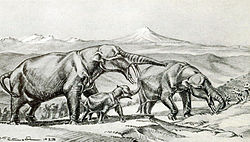
Picture of Rhynchotherium
- Source
- Wikipedia/Commons
- Credit
- Margret Flinsch
- Licence
- Public Domain
- Commercial use
- the licence allows it
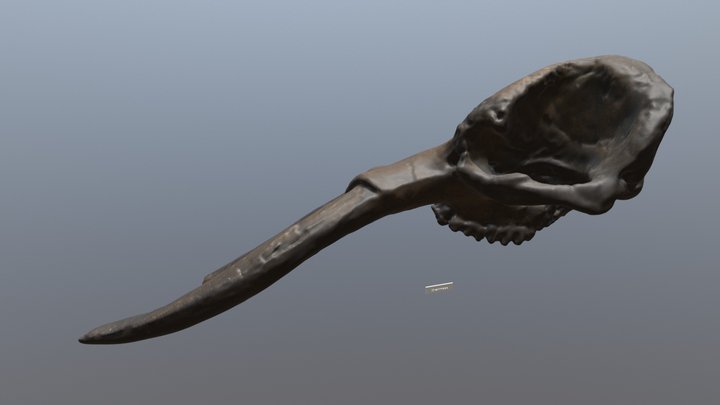
3D model
- Source
- Sketchfab
- Credit
- Virtual Curation Lab
- Licence
- CC Attribution-NonCommercial-NoDerivs
- Commercial use
- the licence does not allow it
Smithsonian Open Access and MorphoSource were not reached for this taxon, so this list is what the others held rather than everything there is.
The description on this site
- Licence
- CC BY-SA 4.0
This is what the site found, which is not the same as what exists.
Keep going
What may have been alongside itGomphotheriidae through timeThe world it lived on
Occurrence data from the Paleobiology Database, CC BY 4.0. Falconer 1868