Rhynchosauroides

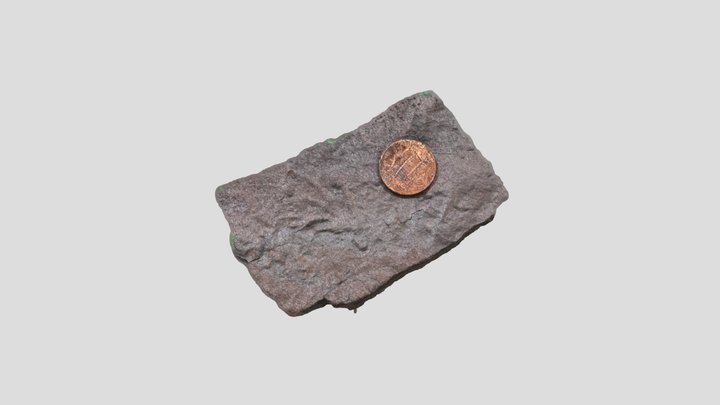
Yale Peabody Museum · CC0 · via GBIF. May be a photograph of a specimen, or an artist’s reconstruction — an interpretation of a skeleton, since colour and soft tissue are almost never preserved.
On record
Recorded, not inferred- Sits inside
- LacertoideaPBDB
- Motility
- actively mobilePBDB, for Osteichthyes
- Environment
- terrestrialPBDB, for Amniota
Time the record covers
At least 158 million years on record.
The record covers at least 251.902 Mya to 93.9 Mya. No occurrence read is dated outside 259.857 Mya to 89.8 Mya.
131 occurrences of Rhynchosauroides on record, most of them in the Late Triassic. Bar height is expected occurrences, not a count: each fossil is spread across the span it is dated to, so a tall narrow bar means tight dating and a low wide one means loose.
When
131 occurrencesThese are dates about fossils, not the animal: the record can only begin after it arose and end before it died out, so either end may reach further. Shares are expected occurrences: a fossil dated to a span is counted partly in each period it straddles. More on what this infers.
Found in
44 formations
- Passaic Formation · Chatham Group14
- Timezgadiouine Formation · Argana Group11
- Grès d'Antully Formation9
- Chinle Formation8
- Grès Inférieurs du Lyonnais Formation7
- Moenkopi Formation7
Loading coastlines…
The named rock units Rhynchosauroides has been recovered from, largest first. Drawn where the rock is now, not where it formed. 20 further formations hold fewer occurrences each and are not listed. 13 occurrences have no formation on record, which is common for older literature.
Rhynchosauroides and its relatives
Late TriassicWhere Rhynchosauroides and its relatives were recorded in the Late Triassic.
Found in the same rock
234 taxa- Brachychirotherium22 sites
- Grallator22 sites
- Chirotherium barthii18 sites
- Chirotherium16 sites
- Chirotheriidae14 sites
- Synaptichnium12 sites
- Grallator tuberosus10 sites
- Rotodactylus9 sites
- Anchisauripus bibractensis7 sites
- Apatopus7 sites
- Chirotherium ferox7 sites
- Scoyenia7 sites
- Coelurosaurichnus6 sites
- Gwyneddichnium6 sites
- Brachychirotherium pachydactylum5 sites
- Brachychirotherium parvum5 sites
- Pseudotetrasauropus5 sites
- Rotodactylus lucasi5 sites
- Apatopus lineatus4 sites
- Brachychirotherium circaparvum4 sites
- Brachychirotherium eyermani4 sites
- Coelurosaurichnus perriauxi4 sites
- Dicynodontipus4 sites
- Isochirotherium coureli4 sites
The Paleobiology Database records 107 sites for Rhynchosauroides, and this reads all of them. The number is how many of those sites it was catalogued from too. The 24 sharing the most are listed.
This is not a list of everything alive at the time. It is only what has come out of the same ground as this animal and been written down.
Entered from
69 references- The Tracks of Triassic Vertebrates: Fossil Evidence from North-West England10
- Biostratigraphy of vertebrate footprints in the Late Triassic section of the Newark Basin, Pennsylvania: reassessment of stratigraphic ranges10
- Lacertoid Footprints of the Upper Permian Arenaria di Val Gardena Formation (Northern Italy)5
- Empreintes de Pas de Vertébrés du Trias de la Bordure Nord-Est du Massif Central (Vertebrate Footprints from the Triassic of the Northeast Border of the Massif Central]5
- Empreintes de pas de Vertébrés et stratigraphie du Trias [Vertebrate footprints and Triassic stratigraphy]5
- Paleoenvironments and paleoecology of a Lower Triassic invertebrate and vertebrate ichnoassemblage from the Red Peak Formation (Chugwater Group), central Wyoming4
- First occurrence of a Middle Triassic tetrapod ichnofauna from the Argana Basin (Western High Atlas, Morocco)4
- Review of the tetrapod ichnofauna of the Moenkopi Formation/Group (Early-Middle Triassic) of the American Southwest4
- Early Triassic archosaur-dominated footprint assemblage from the Argana Basin (western High Atlas, Morocco)3
- Late Triassic tetrapod tracks of western North America3
- Triassic vertebrate footprints from the Sherwood Sandstone Group, Hilbre, Wirral, northwest England3
- The ichnogenus Atreipus and its significance for Triassic biostratigraphy3
Each of the 131 occurrences read was entered from one of these publications, ordered by how many each accounts for. This is not a search for papers mentioning the name. 57 further references are not listed. Entries link to doi.org where the Paleobiology Database holds an identifier, and to its own record where it does not. Relayed as the Paleobiology Database holds them, not checked against what they resolve to.
Media and terms
Media content2
Picture of Rhynchosauroides
- Source
- GBIF
- Credit
- Yale Peabody Museum
- Licence
- CC0
- Commercial use
- the licence allows it
Smithsonian Open Access was not reached for this taxon, so this list is what the others held rather than everything there is.
This is what the site found, which is not the same as what exists.
Keep going
What may have been alongside itLacertoidea through timeFormations of the Late TriassicThe world it lived on
Occurrence data from the Paleobiology Database, CC BY 4.0. Maidwell 1911