Rastellum carinatum
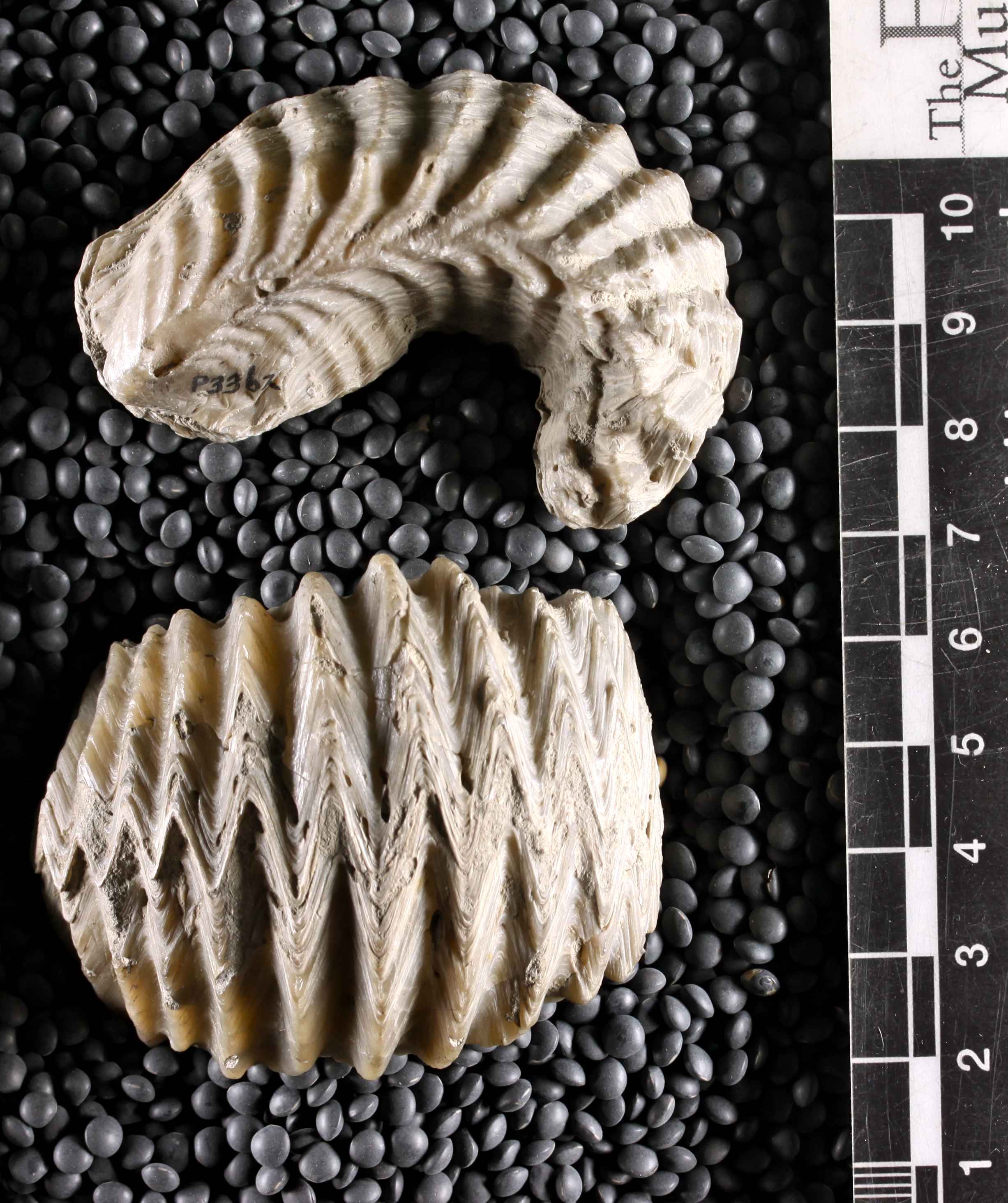
via iDigBio · via iDigBio. May be a photograph of a specimen, or an artist’s reconstruction — an interpretation of a skeleton, since colour and soft tissue are almost never preserved.
On record
Recorded, not inferred- Sits inside
- RastellumPBDB
- Diet
- suspension feederPBDB, for Ostreida
- Life habit
- epifaunalPBDB, for Ostreida
- Motility
- stationary, attachedPBDB, for Ostreida
- Vision
- blindPBDB, for Bivalvia
- Environment
- marine,brackishPBDB, for Ostreida
Time the record covers
At least 25 million years on record.
The record covers at least 125.77 Mya to 100.5 Mya. No occurrence read is dated outside 143.1 Mya to 93.9 Mya.
43 occurrences of Rastellum carinatum on record, most of them in the Early Cretaceous. Bar height is expected occurrences, not a count: each fossil is spread across the span it is dated to, so a tall narrow bar means tight dating and a low wide one means loose.
When
43 occurrencesThese are dates about fossils, not the animal: the record can only begin after it arose and end before it died out, so either end may reach further. Shares are expected occurrences: a fossil dated to a span is counted partly in each period it straddles. More on what this infers.
Found in
17 formations
- Denton Formation · Washita Group16
- Grès verts helvétiques Formation3
- Galala Formation3
- Choshi Formation2
- Ishido Formation2
- Hiraiga Formation · Miyako Group2
Loading coastlines…
The named rock units Rastellum carinatum has been recovered from, largest first. Drawn where the rock is now, not where it formed. 4 occurrences have no formation on record, which is common for older literature.
Rastellum carinatum and its relatives
Early CretaceousWhere Rastellum carinatum and its relatives were recorded in the Early Cretaceous.
Found in the same rock
320 taxa- Gryphaea15 sites
- Camptonectes virgatus13 sites
- Leiocidaris hemigranosus11 sites
- Peilinia quadriplicata11 sites
- Plicatula11 sites
- Cythereis9 sites
- Cytherella8 sites
- Lenticulina8 sites
- Gaudryina (Gaudryina)6 sites
- Ceriopora5 sites
- Gervillia (Gervillia)5 sites
- Grammatodon (Nanonavis)5 sites
- Laterocavea5 sites
- Amphidonte (Amphidonte)4 sites
- Aplousina4 sites
- Caletaster romani4 sites
- Citharina4 sites
- Echinogalerus4 sites
- Haplostiche4 sites
- Limatula4 sites
- Meliceritites4 sites
- Nucleatina biplicata4 sites
- Pterotrigonia (Pterotrigonia)4 sites
- Rhynchostreon suborbiculatum4 sites
The Paleobiology Database records 37 sites for Rastellum carinatum, and this reads all of them. The number is how many of those sites it was catalogued from too. The 24 sharing the most are listed.
This is not a list of everything alive at the time. It is only what has come out of the same ground as this animal and been written down.
Entered from
16 references- A Paleoecologic Study of the Upper Denton Formation, Tarrant, Denton, and Cooke Counties, Texas16
- A systematic survey of the Mesozoic Bivalvia from Japan7
- Les grès verts helvétiques (Aptien moyen-Albien supérieur) de Haute-Savoie, Valais et Vaud (Alpes occidentales franco-suisses)3
- Systematic of Albian - Cenomanian Gastropods and Bivalves from the Kazhdumi Formation, Zagros Basin2
- An ‘Elvis’ echinoid, Nucleopygus (Jolyclypus) jolyi, from the Cenomanian of France: phylogenetic analysis, sexual dimorphism and neotype designation2
- Un faciès de type falun dans le Cénomanien basal de Charente-Maritime (France)2
- Kase, 19842
- Cenomanian (Upper Cretaceous) bivalves from the Hameimat Massifs, north of Tebessa, Algeria: Systematics, biostratigraphy, palaeoecological and taphonomical remarks1
- Taxonomy and palaeobiogeography of the early and middle Albian (Early Cretaceous) bivalves and brachiopods from central Serbia (Topola, Oplenac Hill)1
- Chemostratigraphy of the Cenomanian-Turonian shallow-water carbonate: new correlation for the rudist levels from north Sinai, Egypt1
- Palaeoecology and environmental significance of benthic associations from the Cenomanian-Turonian of eastern Sinai, Egypt1
- Taxonomy and palaeoecology of the Cenomanian-Turonian macroinvertebrates from eastern Sinai, Egypt (part A)1
Each of the 43 occurrences read was entered from one of these publications, ordered by how many each accounts for. This is not a search for papers mentioning the name. 4 further references are not listed. Entries link to doi.org where the Paleobiology Database holds an identifier, and to its own record where it does not. Relayed as the Paleobiology Database holds them, not checked against what they resolve to.
Media and terms
Media content2
Picture of Rastellum carinatum
- Source
- iDigBio
- Credit
- via iDigBio
- Licence
- not stated by the source
- Commercial use
- cannot be read from the licence given — check the record
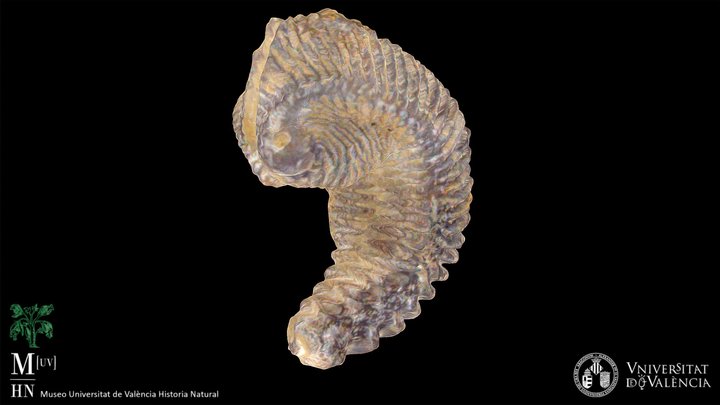
3D model
- Source
- Sketchfab
- Licence
- CC Attribution
- Commercial use
- cannot be read from the licence given — check the record
Smithsonian Open Access and MorphoSource were not reached for this taxon, so this list is what the others held rather than everything there is.
This is what the site found, which is not the same as what exists.
Keep going
What may have been alongside itRastellum through timeFormations of the Early CretaceousThe world it lived on
Occurrence data from the Paleobiology Database, CC BY 4.0. (Lamarck 1806)