Rasenia
Rasenia is an extinct ammonoid cephalopod genus belonging to the superfamily Perisphinctoidea. These fast-moving nektonic carnivores lived during the Upper Jurassic period, in the Kimmeridgian and Tithonian ages.

Hectonichus · CC BY-SA 3.0 · via Wikipedia/Commons. May be a photograph of a specimen, or an artist’s reconstruction — an interpretation of a skeleton, since colour and soft tissue are almost never preserved.
On record
Recorded, not inferred- Sits inside
- AulacostephaninaePBDB
- Diet
- carnivorePBDB, for Ammonoidea
- Life habit
- nektonicPBDB, for Ammonoidea
- Motility
- fast-movingPBDB, for Ammonoidea
- Vision
- well-developedPBDB, for Cephalopoda
- Environment
- marinePBDB, for Cephalopoda
Time the record covers
At most 13 million years on record.
Every occurrence read is dated to somewhere between 161.5 Mya and 149.2 Mya, and nothing in the dating separates them, so that window is what the record shows rather than a span.
61 occurrences of Rasenia on record, most of them in the Late Jurassic. Bar height is expected occurrences, not a count: each fossil is spread across the span it is dated to, so a tall narrow bar means tight dating and a low wide one means loose.
When
61 occurrences- Late Jurassic100%
These are dates about fossils, not the animal: the record can only begin after it arose and end before it died out, so either end may reach further. Shares are expected occurrences: a fossil dated to a span is counted partly in each period it straddles. More on what this infers.
Found in
3 formations
Loading coastlines…
The named rock units Rasenia has been recovered from, largest first. Drawn where the rock is now, not where it formed. 54 occurrences have no formation on record, which is common for older literature.
Rasenia and its relatives
Late JurassicWhere Rasenia and its relatives were recorded in the Late Jurassic.
Found in the same rock
82 taxa- Pachyteuthis4 sites
- Amoeboceras3 sites
- Amoeboceras (Amoebites) kitchini3 sites
- Amoeboceras (Amoebites) spathi3 sites
- Cosmetodon3 sites
- Pinna3 sites
- Prorasenia bowerbanki3 sites
- Prorasenia hardyi3 sites
- Protocardia3 sites
- Zonovia (Zonovia) ilovaiskii3 sites
- Zonovia (Zonovia) uralensis3 sites
- Aguilerella2 sites
- Amoeboceras (Amoebites) pulchrum2 sites
- Amoeboceras (Amoebites) salfeldi2 sites
- Aspidoceras (Physodoceras) circumspinosum2 sites
- Astarte2 sites
- Astarte (Astarte)2 sites
- Dicranodonta2 sites
- Glochiceras (Glochiceras) nimbatum2 sites
- Glochiceras (Lingulaticeras) lingulatum2 sites
- Isognomon2 sites
- Lima (Limatula) consobrina2 sites
- Liostrea2 sites
- Lithacosphinctes2 sites
The Paleobiology Database records 25 sites for Rasenia, and this reads all of them. The number is how many of those sites it was catalogued from too. The 24 sharing the most are listed.
This is not a list of everything alive at the time. It is only what has come out of the same ground as this animal and been written down.
Entered from
10 references- Mesezhnikov, 198434
- Isotopic and faunal record of high paleotemperatures in the Kimmeridgian of Subpolar Urals9
- The Upper Jurassic of the Volga basin: ammonites biostratigraphy and correlations with standard European zonations5
- Kondensierte Ammonitenbänke im Beckenbereich des basalen Kimmeridge der Nördlichen Frankenalb (Alter Steinbruch Ludwag, Ofr.)4
- Ammonite assemblages in the Lower to Upper Kimmeridgian boundary interval (Cymodoce to Mutabilis zones) of Tatarstan (central European Russia) and their correlation importance2
- Revision of the Bivalvia from the Upper Jurassic Reuchenette Formation, Northwest Switzerland—Ostreoidea2
- On Lower Kimmeridgian ammonites from Iłża (NE margin of the Holy Cross Mts)2
- Jurassic deposits of the southern part of the Moscow syneclyse and their fauna1
- Jurassic-Lower Cretaceous succession at Agardhbukta, East Spitsbergen1
- Biostratigraphie du Jurassique superieur nord-aquitain1
Each of the 61 occurrences read was entered from one of these publications, ordered by how many each accounts for. This is not a search for papers mentioning the name. Entries link to doi.org where the Paleobiology Database holds an identifier, and to its own record where it does not. Relayed as the Paleobiology Database holds them, not checked against what they resolve to.
Media and terms
Media content2
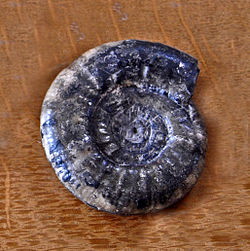
Picture of Rasenia
- Source
- Wikipedia/Commons
- Credit
- Hectonichus
- Licence
- CC BY-SA 3.0
- Commercial use
- the licence allows it
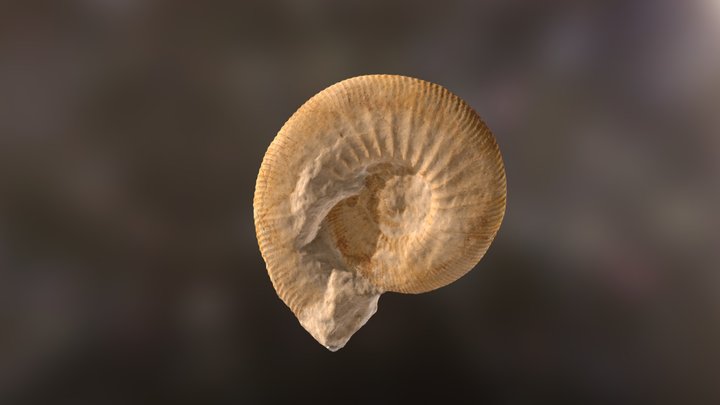
3D model
- Source
- Sketchfab
- Credit
- Shellie Luallin
- Licence
- CC Attribution
- Commercial use
- cannot be read from the licence given — check the record
Smithsonian Open Access and MorphoSource were not reached for this taxon, so this list is what the others held rather than everything there is.
The description on this site
- Source
- Wikipedia, “Rasenia”
- Licence
- CC BY-SA 4.0
This is what the site found, which is not the same as what exists.
Keep going
What may have been alongside itAulacostephaninae through timeFormations of the Late JurassicThe world it lived on
Occurrence data from the Paleobiology Database, CC BY 4.0. Salfeld 1913