Psaronius
Psaronius is an extinct genus marattialean tree fern which grew to 10m in height, and is associated with leaves of the organ genus Pecopteris and other extinct tree ferns. Originally, Psaronius was a name for the petrified stems, but today the genus is used for the entire tree fern. Psaronius tree fern fossils are found from the Carboniferous through the Permian.

Verisimilus · CC BY 3.0 · via Wikipedia/Commons. May be a photograph of a specimen, or an artist’s reconstruction — an interpretation of a skeleton, since colour and soft tissue are almost never preserved.
On record
Recorded, not inferred- Sits inside
- MarattiaceaePBDB
- Diet
- "photoautotroph"PBDB, for Streptophyta
Time the record covers
At least 52 million years on record.
The record covers at least 316.9 Mya to 264.28 Mya. No occurrence read is dated outside 330.3 Mya to 254.14 Mya.
16 occurrences of Psaronius on record, most of them in the Carboniferous. Bar height is expected occurrences, not a count: each fossil is spread across the span it is dated to, so a tall narrow bar means tight dating and a low wide one means loose.
When
16 occurrences- Carboniferous81%
- Permian19%
These are dates about fossils, not the animal: the record can only begin after it arose and end before it died out, so either end may reach further. Shares are expected occurrences: a fossil dated to a span is counted partly in each period it straddles. More on what this infers.
Found in
3 formations
- Carbondale Formation10
- Taiyuan Formation1
- Nocona Formation · Wichita Group1
Loading coastlines…
The named rock units Psaronius has been recovered from, largest first. Drawn where the rock is now, not where it formed. 4 occurrences have no formation on record, which is common for older literature.
Psaronius and its relatives
CarboniferousWhere Psaronius and its relatives were recorded in the Carboniferous.
Found in the same rock
119 taxa- Sphenophyllum15 sites
- Lepidophloios12 sites
- Medullosa11 sites
- Arthropitys9 sites
- Anachoropteris8 sites
- Heterangium8 sites
- Lepidodendraceae8 sites
- Paralycopodites8 sites
- Calamodendron7 sites
- Synchysidendron resinosum6 sites
- Lepidodendron5 sites
- Ankyropteris4 sites
- Botryopteris4 sites
- Cordaites4 sites
- Amyelon radicans3 sites
- Astromyelon3 sites
- Corynepteris3 sites
- Etapteris3 sites
- Hizemodendron serratum3 sites
- Lepidocarpon3 sites
- Microspermopteris3 sites
- Myeloxylon3 sites
- Pachytesta3 sites
- Psalixochlaena cylindrica3 sites
The Paleobiology Database records 16 sites for Psaronius, and this reads all of them. The number is how many of those sites it was catalogued from too. The 24 sharing the most are listed.
This is not a list of everything alive at the time. It is only what has come out of the same ground as this animal and been written down.
Entered from
5 references- A Transect through a Clastic-swamp to Peat-swamp Ecotene in the Springfield Coal, Middle Pennsylvanian Age of Indiana, USA10
- Coal-ball floras of the Namurian-Westphalian of Europe3
- An Early Permian plant assemblage from the Taiyuan Formation of northern China with compression/impression and permineralized preservation1
- A brief review of the Permian macrofloras in southeast Asia and their phytogeographical delimitation1
- Taphonomy of the Lower Permian Geraldine Bonebed in Archer County, Texas1
Each of the 16 occurrences read was entered from one of these publications, ordered by how many each accounts for. This is not a search for papers mentioning the name. Entries link to doi.org where the Paleobiology Database holds an identifier, and to its own record where it does not. Relayed as the Paleobiology Database holds them, not checked against what they resolve to.
Media and terms
Media content2

Picture of Psaronius
- Source
- Wikipedia/Commons
- Credit
- Verisimilus
- Licence
- CC BY 3.0
- Commercial use
- the licence allows it
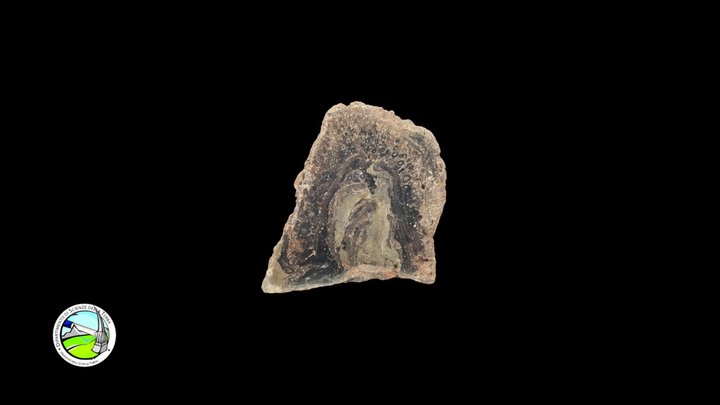
3D model
- Source
- Sketchfab
- Licence
- CC Attribution
- Commercial use
- cannot be read from the licence given — check the record
Smithsonian Open Access was not reached for this taxon, so this list is what the others held rather than everything there is.
The description on this site
- Source
- Wikipedia, “Psaronius”
- Licence
- CC BY-SA 4.0
This is what the site found, which is not the same as what exists.
Keep going
What may have been alongside itMarattiaceae through timeFormations of the CarboniferousThe world it lived on
Occurrence data from the Paleobiology Database, CC BY 4.0. Cotta 1832