Cordaites

via iDigBio · CC0 · via iDigBio. May be a photograph of a specimen, or an artist’s reconstruction — an interpretation of a skeleton, since colour and soft tissue are almost never preserved.
On record
Recorded, not inferred- Sits inside
- CordaitanthalesPBDB
- Diet
- "photoautotroph"PBDB, for Streptophyta
Time the record covers
At least 187 million years on record.
The record covers at least 358.86 Mya to 170.9 Mya. No occurrence read is dated outside 382.31 Mya to 168.2 Mya.
620 occurrences of Cordaites on record, most of them in the Permian. Bar height is expected occurrences, not a count: each fossil is spread across the span it is dated to, so a tall narrow bar means tight dating and a low wide one means loose.
When
620 occurrences- Devonianunder 1%
- Carboniferous16%
- Permian82%
- Early Triassicunder 1%
- Middle Triassicunder 1%
- Late Triassicunder 1%
- Early Jurassicunder 1%
- Middle Jurassicunder 1%
These are dates about fossils, not the animal: the record can only begin after it arose and end before it died out, so either end may reach further. Shares are expected occurrences: a fossil dated to a span is counted partly in each period it straddles. More on what this infers.
Found in
170 formations
- Shanxi Formation24
- Taragaiskaya Suite Formation21
- Taiyuan Formation15
- Khariyasskaya Suite Formation15
- Karharbari Formation10
- Noyansomonskaya Suite Formation10
Loading coastlines…
The named rock units Cordaites has been recovered from, largest first. Drawn where the rock is now, not where it formed. 146 further formations hold fewer occurrences each and are not listed. 219 occurrences have no formation on record, which is common for older literature.
Cordaites and its relatives
PermianWhere Cordaites and its relatives were recorded in the Permian.
Found in the same rock
670 taxa- Pecopteris125 sites
- Sphenophyllum99 sites
- Annularia93 sites
- Calamites77 sites
- Taeniopteris77 sites
- Neuropteris76 sites
- Sphenopteris74 sites
- Lepidodendron59 sites
- Pecopteris (Alethopteris)50 sites
- Odontopteris47 sites
- Samaropsis46 sites
- Lobatannularia38 sites
- Rufloria36 sites
- Paracalamites35 sites
- Asterophyllites33 sites
- Callipteridium31 sites
- Phyllotheca31 sites
- Callipteris30 sites
- Tingia30 sites
- Stigmaria26 sites
- Walchia26 sites
- Gigantopteris24 sites
- Glossopteris24 sites
- Gangamopteris23 sites
The Paleobiology Database records 384 sites for Cordaites, and this reads 240 of them. The number is how many of those sites it was catalogued from too. The 24 sharing the most are listed.
This is not a list of everything alive at the time. It is only what has come out of the same ground as this animal and been written down.
Entered from
146 references- The Carboniferous and Permian Stratigraphy of Mongolia on the Basis of Palaeobotanical Data92
- A Catalogue of Fossil Plants from India Part 2: Palaeozoic and Mesozoic Megafossils29
- Permskii otlozheniia Vilyviskoi sineklizi (Permian deposits of the Vilvi Syncline)26
- A Catalogue of Indian Fossil Plants21
- Provincialism in Gondwana floras16
- Fitostratigrafiya verkhnepaleozoiskikh otlozhenii Gorlovskogo Basseina [Phytostratigraphy of the Upper Paleozoic deposits of Gorlovskii Basin]16
- Stratigrafiya Verkhnepaleozoiskikh otlozhenii vilyuiskoi sineklizi15
- Litologo-paleofloristicheskaya kharakteristika permskikh otlozhenii Yuzhnogo Primor'ya15
- Coal-ball floras of the Namurian-Westphalian of Europe14
- Le Permien des Prealpes Lombardes Orientales12
- Fossil Flora of the Michigan Coal Basin12
- Ustritskii, 198111
Each of the 620 occurrences read was entered from one of these publications, ordered by how many each accounts for. This is not a search for papers mentioning the name. 134 further references are not listed. Entries link to doi.org where the Paleobiology Database holds an identifier, and to its own record where it does not. Relayed as the Paleobiology Database holds them, not checked against what they resolve to.
Media and terms
Media content2
Picture of Cordaites
- Source
- iDigBio
- Credit
- via iDigBio
- Licence
- CC0
- Commercial use
- the licence allows it
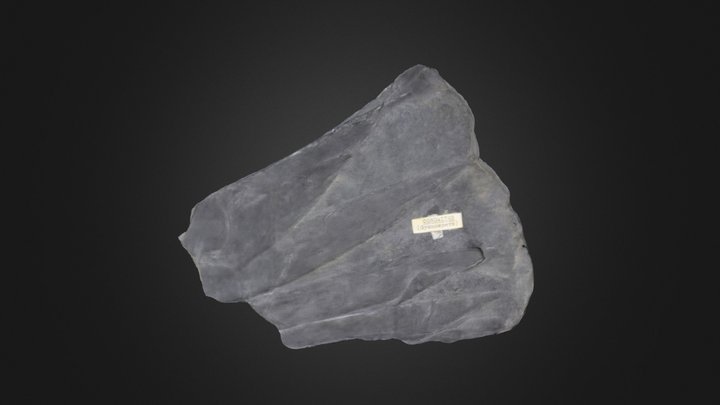
3D model
- Source
- Sketchfab
- Licence
- CC0 Public Domain
- Commercial use
- the licence allows it
Smithsonian Open Access was not reached for this taxon, so this list is what the others held rather than everything there is.
This is what the site found, which is not the same as what exists.
Keep going
What may have been alongside itCordaitanthales through timeFormations of the PermianThe world it lived on
Occurrence data from the Paleobiology Database, CC BY 4.0. Unger 1850