Protexanites
No picture of Protexanites was found. Wikipedia, Wikidata and iDigBio were searched and had none. Smithsonian Open Access did not answer, so this is what the others held rather than everything there is. GBIF was asked, and what came back is not recorded: nothing, or a picture this site could not tie to Protexanites, or no answer at all. This entry cannot say which.
On record
Recorded, not inferred- Sits inside
- TexanitinaePBDB
- Diet
- carnivorePBDB, for Ammonoidea
- Life habit
- nektonicPBDB, for Ammonoidea
- Motility
- fast-movingPBDB, for Ammonoidea
- Vision
- well-developedPBDB, for Cephalopoda
- Environment
- marinePBDB, for Cephalopoda
Time the record covers
At least 4.1 million years on record.
The record covers at least 89.8 Mya to 85.7 Mya. No occurrence read is dated outside 93.9 Mya to 83.6 Mya.
52 occurrences of Protexanites on record, most of them in the Late Cretaceous. Bar height is expected occurrences, not a count: each fossil is spread across the span it is dated to, so a tall narrow bar means tight dating and a low wide one means loose.
When
52 occurrences- Late Cretaceous100%
These are dates about fossils, not the animal: the record can only begin after it arose and end before it died out, so either end may reach further. Shares are expected occurrences: a fossil dated to a span is counted partly in each period it straddles. More on what this infers.
Found in
19 formations
- Craie de Villedieu Formation10
- Niobrara Formation5
- Marno-Calcaires à Gauthiericeras Formation5
- Hinoshima Formation · Himenoura Group4
- Texanitid Marls Formation3
- Carregador de Carreu Formation2
Loading coastlines…
The named rock units Protexanites has been recovered from, largest first. Drawn where the rock is now, not where it formed. 9 occurrences have no formation on record, which is common for older literature.
Protexanites and its relatives
Late CretaceousWhere Protexanites and its relatives were recorded in the Late Cretaceous.
Found in the same rock
127 taxa- Inoceramus6 sites
- Baculites codyensis5 sites
- Baculites asper4 sites
- Gauthiericeras margae4 sites
- Magadiceramus subquadratus4 sites
- Cardiaster3 sites
- Echinocorys vulgaris3 sites
- Hemiaster3 sites
- Micraster3 sites
- Paratexanites serratomarginatus3 sites
- Porosoma3 sites
- Scaphitidae3 sites
- Tissotioides haplophyllus3 sites
- Baculites2 sites
- Cladoceramus undulatoplicatus2 sites
- Clioscaphites vermiformis2 sites
- Cordiceramus cordiformis2 sites
- Cyathocidaris2 sites
- Damesites2 sites
- Damesites sugata2 sites
- Eupachydiscus2 sites
- Eupachydiscus isculensis2 sites
- Hemitissotia cazini2 sites
- Hemitissotia turzoi2 sites
The Paleobiology Database records 41 sites for Protexanites, and this reads all of them. The number is how many of those sites it was catalogued from too. The 24 sharing the most are listed.
This is not a list of everything alive at the time. It is only what has come out of the same ground as this animal and been written down.
Entered from
16 references- Systematic palaeontology and stratigraphic distribution of the ammonite faunas of the French Coniacian17
- Coniacian-Maastrichtian of the Tremp Area (South Central Pyrenees)9
- Ammonite faunas, biostratigraphy, and sequence stratigraphy of the Coniacian-Santonian of the Corbières (NE Pyrénées)7
- Stratigraphy of the Upper Cretaceous Niobrara Formation in the Raton basin, New Mexico5
- Paleoecology of Inoceramus amakusensis Nagao et Matsumoto, 1940 (Bivalvia) in a Late Cretaceous shallow clastic sea: The Himenoura Group, Kyushu, Japan3
- Features and paleoecological significance of the shark fauna from the Upper Cretaceous Hinoshima Formation, Himenoura Group, southwest Japan1
- An integrated study (inoceramid bivalves, ammonites, calcareous nannofossils, planktonic foraminifera, stable carbon isotopes) of the Ten Mile Creek section, Lancaster, Dallas County, north Texas, a candidate Global Boundary Stratotype Section and point for the base of the Santonian Stage1
- Paleontology and stratigraphy of upper Coniacian–middle Santonian ammonite zones and application to erosion surfaces and marine transgressive strata in Montana and Alberta1
- Stratigraphy and palaeontology of the Upper Cretaceous (Santonian) Baba Formation at São Nicolau, Angola1
- Facies Succession, Biostratigraphy and Rudist Faunas of Coniacian to Santonian Platform Deposits in the Sant Cornelli Anticline (Southern Central Pyrenees)1
- Coniacian and Santonian ammonites from Bornholm, Denmark1
- Les ammonites néocrétacées des chaînes subalpines méridionales1
Each of the 52 occurrences read was entered from one of these publications, ordered by how many each accounts for. This is not a search for papers mentioning the name. 4 further references are not listed. Entries link to doi.org where the Paleobiology Database holds an identifier, and to its own record where it does not. Relayed as the Paleobiology Database holds them, not checked against what they resolve to.
Media and terms
Media content1
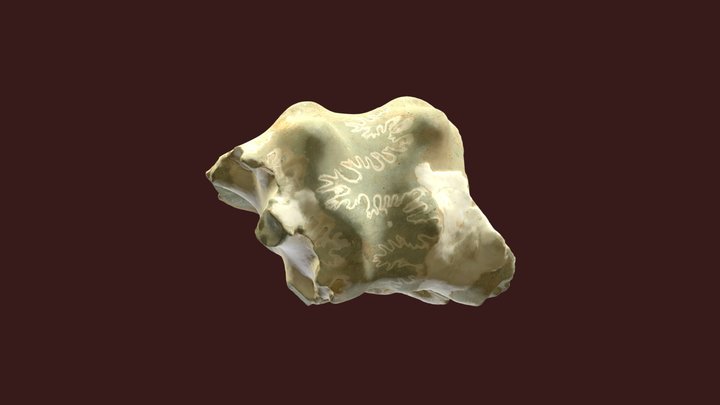
3D model
- Source
- Sketchfab
- Credit
- Shellie Luallin
- Licence
- CC Attribution
- Commercial use
- cannot be read from the licence given — check the record
No picture of Protexanites was found. Wikipedia, Wikidata and iDigBio were searched and had none.
Smithsonian Open Access did not answer, so this is what the others held rather than everything there is.
GBIF was asked, and what came back is not recorded: nothing, or a picture this site could not tie to Protexanites, or no answer at all. This entry cannot say which.
Smithsonian Open Access and MorphoSource were not reached for this taxon, so this list is what the others held rather than everything there is.
This is what the site found, which is not the same as what exists.
Keep going
What may have been alongside itTexanitinae through timeFormations of the Late CretaceousThe world it lived on
Occurrence data from the Paleobiology Database, CC BY 4.0. Matsumoto 1955