Proganochelys
Proganochelys is a genus of extinct, primitive stem-turtle. Proganochelys was named by Georg Baur in 1887 as the oldest turtle in existence at the time. The name Proganochelys comes from the Greek word ganos meaning 'brightness', combined with prefix pro, 'before', and Greek base chelys meaning 'turtle'. Proganochelys is believed to have been around 1 meter in size and herbivorous in nature. Proganochelys had been known as the most primitive stem-turtle for over a century, until the novel discovery of Odontochelys in 2008. Odontochelys and Proganochelys share unique primitive features that are not found in Casichelydia, such as tooth-like structures on the pterygoid and vomer and a plate-like coracoid.

Jonathan Chen · CC BY-SA 4.0 · via Wikipedia/Commons. May be a photograph of a specimen, or an artist’s reconstruction — an interpretation of a skeleton, since colour and soft tissue are almost never preserved.
On record
Recorded, not inferred- Sits inside
- TestudinataPBDB
- Motility
- actively mobilePBDB, for Osteichthyes
- Environment
- terrestrialPBDB, for Diapsida
Time the record covers
At least 5.4 million years on record.
The record covers at least 211.18 Mya to 205.7 Mya. No occurrence read is dated outside 227.3 Mya to 201.4 Mya.
9 occurrences of Proganochelys on record, most of them in the Late Triassic. Bar height is expected occurrences, not a count: each fossil is spread across the span it is dated to, so a tall narrow bar means tight dating and a low wide one means loose.
When
9 occurrences- Late Triassic100%
These are dates about fossils, not the animal: the record can only begin after it arose and end before it died out, so either end may reach further. Shares are expected occurrences: a fossil dated to a span is counted partly in each period it straddles. More on what this infers.
Found in
6 formations
- Löwenstein Formation · Keuper Group3
- Trossingen Formation · Keuper Group2
- Fleming Fjord Formation1
- Bull Canyon Formation · Dockum Group1
- Klettgau Formation · Keuper Group1
- Chinle Formation1
Loading coastlines…
The named rock units Proganochelys has been recovered from, largest first. Drawn where the rock is now, not where it formed.
Proganochelys and its relatives
Late TriassicWhere Proganochelys and its relatives were recorded in the Late Triassic.
Found in the same rock
55 taxa- Liliensternus2 sites
- Plateosaurus2 sites
- Rauisuchidae2 sites
- Acrodus1 site
- Actinopterygii1 site
- Aetosauria1 site
- Altochara1 site
- Apachesaurus1 site
- Apachesaurus gregorii1 site
- Archosauria1 site
- Carnosauria1 site
- Ceratodontidae1 site
- Ceratosauria1 site
- Coelacanthidae1 site
- Colobodontidae1 site
- Colobodus1 site
- Crocodylomorpha1 site
- Crocodylotarsi1 site
- Cyclotosaurus hemprichi1 site
- Darwinula1 site
- Decapoda1 site
- Elachistosuchus huenei1 site
- Eotephradactylus mcintireae1 site
- Equisetites1 site
The Paleobiology Database records 8 sites for Proganochelys, and this reads all of them. The number is how many of those sites it was catalogued from too. The 24 sharing the most are listed.
This is not a list of everything alive at the time. It is only what has come out of the same ground as this animal and been written down.
Entered from
9 references- Unusual bone bed reveals a vertebrate community with pterosaurs and turtles in equatorial Pangaea before the end-Triassic extinction1
- First evidence of Proganochelys quenstedtii (Testudinata) from the Plateosaurus bonebeds (Norian, Late Triassic) of Frick, Canton Aargau, Switzerland1
- A thin-shelled reptile from the Late Triassic of North America and the origin of the turtle shell1
- Late Triassic continental vertebrates and depositional environments of the Fleming Fjord Formation, Jameson Land, East Greenland1
- Skull morphology of the oldest turtles: a preliminary description of Proganochelys quenstedti1
- Beiträge zur Keuperfauna von Halberstadt [Contributions to the Keuper fauna of Halberstadt]1
- Über die Wirbeltierfunde in der oberen Trias von Halberstadt [On the vertebrate remains in the Upper Triassic of Halberstadt]1
- Proganochelys quenstedtii Baur (Psamochelys keuperina Qu.). Ein neuer Fund aus dem Stubensandstein1
- Eine im Stubensandstein des Keupers gefundene Schildkröte1
Each of the 9 occurrences read was entered from one of these publications, ordered by how many each accounts for. This is not a search for papers mentioning the name. Entries link to doi.org where the Paleobiology Database holds an identifier, and to its own record where it does not. Relayed as the Paleobiology Database holds them, not checked against what they resolve to.
Media and terms
Media content3

Picture of Proganochelys
- Source
- Wikipedia/Commons
- Credit
- Jonathan Chen
- Licence
- CC BY-SA 4.0
- Commercial use
- the licence allows it
Structured light scan
- Source
- MorphoSource
- Licence
- not stated by the source
- Commercial use
- cannot be read from the licence given — check the record
- Specimen
- Proganochelys quenstedtii · smf:09-F2
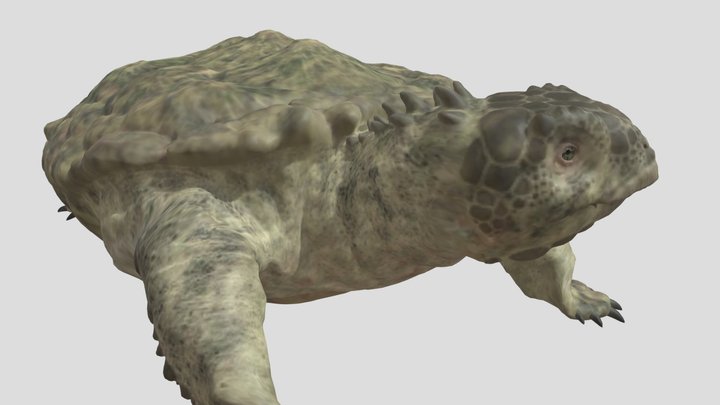
3D model
- Source
- Sketchfab
- Credit
- seth the yutyrannus
- Licence
- CC Attribution
- Commercial use
- cannot be read from the licence given — check the record
Smithsonian Open Access was not reached for this taxon, so this list is what the others held rather than everything there is.
The description on this site
- Licence
- CC BY-SA 4.0
This is what the site found, which is not the same as what exists.
Keep going
What may have been alongside itTestudinata through timeFormations of the Late TriassicThe world it lived on
Occurrence data from the Paleobiology Database, CC BY 4.0. Baur 1887