Pinnipedia
Searched as Pinnipedia indet.. The Paleobiology Database treats Pinnipedia as the accepted name.
Pinnipeds, commonly known as seals, are a widely distributed and diverse clade of carnivorous, fin-footed, semiaquatic, mostly marine mammals. They comprise the extant families Odobenidae, Otariidae, and Phocidae, with 34 extant species and more than 50 extinct species described from fossils. While seals were historically thought to have descended from two ancestral lines, molecular evidence supports them as a monophyletic group. Pinnipeds belong to the suborder Caniformia of the order Carnivora; their closest living relatives are musteloids, having diverged about 50 million years ago.

From a variety of images credited above. · CC0 · via Wikipedia/Commons. May be a photograph of a specimen, or an artist’s reconstruction — an interpretation of a skeleton, since colour and soft tissue are almost never preserved.
On record
Recorded, not inferred- Also called
- pinnipedPBDB
- Sits inside
- PinnipedimorphaPBDB
- Diet
- carnivorePBDB, for Pinnipedimorpha
- Life habit
- amphibiousPBDB
- Motility
- actively mobilePBDB, for Osteichthyes
- Environment
- marinePBDB
Time the record covers
At least 23 million years on record.
The record covers at least 23.04 Mya to 11.7 ka. No occurrence read is dated outside 27.3 Mya to 0 Mya.
33 occurrences of Pinnipedia on record, most of them in the Miocene. The Paleobiology Database records this as a living group. Bar height is expected occurrences, not a count: each fossil is spread across the span it is dated to, so a tall narrow bar means tight dating and a low wide one means loose.
When
33 occurrences- Oligocene3%
- Miocene61%
- Pliocene18%
- Pleistocene15%
- Holocene3%
These are dates about fossils, not the animal: the record can only begin after it arose and end before it died out, so either end may reach further. Shares are expected occurrences: a fossil dated to a span is counted partly in each period it straddles. More on what this infers.
Found in
25 formations
- Vaqueros Formation2
- Varswater Formation2
- Black Rock Sandstone Formation2
- Karaginskaya Formation1
- Jewett Formation1
- Fushina Formation1
Loading coastlines…
The named rock units Pinnipedia has been recovered from, largest first. Drawn where the rock is now, not where it formed. One further formation holds fewer occurrences and is not listed. 5 occurrences have no formation on record, which is common for older literature.
Pinnipedia and its relatives
MioceneWhere Pinnipedia and its relatives were recorded in the Miocene.
Found in the same rock
2,673 taxa- Phocidae66 sites
- Otodus megalodon28 sites
- Balaenopteridae26 sites
- Cetacea24 sites
- Carcharodon hastalis23 sites
- Mysticeti22 sites
- Carcharhinus18 sites
- Delphinidae18 sites
- Myliobatis17 sites
- Odontoceti17 sites
- Physeteridae17 sites
- Isurus15 sites
- Cetotheriidae14 sites
- Aves13 sites
- Equus13 sites
- Ontocetus emmonsi13 sites
- Arctocephalus pusillus12 sites
- Carcharodon carcharias12 sites
- Phoca12 sites
- Balaenidae11 sites
- Imagotaria downsi11 sites
- Testudines11 sites
- Ziphiidae11 sites
- Isurus oxyrinchus10 sites
The Paleobiology Database records 1,256 sites for Pinnipedia, and this reads 240 of them. The number is how many of those sites it was catalogued from too. The 24 sharing the most are listed.
This is not a list of everything alive at the time. It is only what has come out of the same ground as this animal and been written down.
Entered from
28 references- A list of vertebrate fossils from the Shimame Prefecture3
- Colonization of the ancient southern oceans by small-sized Phocidae: new evidence from Australia2
- A catalogue of late Quaternary Vertebrates from California: Part Two, Mammals2
- Quaternary vertebrate fossil sites in the south-western Cape Province2
- Lithostratigraphy and Biostratigraphy of Pliocene and Pleistocene Marine Deposits and Age of the highest Marine Terrace from the Sacaco Basin and its Environs (southern Peru)1
- The upper Miocene Deurne Member of the Diest Formation revisited: unexpected results from the study of a large temporary outcrop near Antwerp International Airport, Belgium1
- The earliest known pinniped from the Southern Hemisphere1
- Stratigraphy of an early-middle Miocene sequence near Antwerp in Northern Belgium (Southern North Sea Basin)1
- Magnetic stratigraphy of the Eocene to Miocene Sespe and Vaqueros formations, Los Angeles and Orange counties, California1
- New marine vertebrates from the Yuha Member of the Deguynos Formation of Anza-Borrego Desert State Park1
- Note on a large baculum from the Aoki Formation of Middle Miocene age, Matusmoto, central Japan1
- Pinniped fossils from Akan-cho, Hokkaido1
Each of the 33 occurrences read was entered from one of these publications, ordered by how many each accounts for. This is not a search for papers mentioning the name. 16 further references are not listed. Entries link to doi.org where the Paleobiology Database holds an identifier, and to its own record where it does not. Relayed as the Paleobiology Database holds them, not checked against what they resolve to.
Media and terms
Media content2

Picture of Pinnipedia
- Source
- Wikipedia/Commons
- Credit
- From a variety of images credited above.
- Licence
- CC0
- Commercial use
- the licence allows it
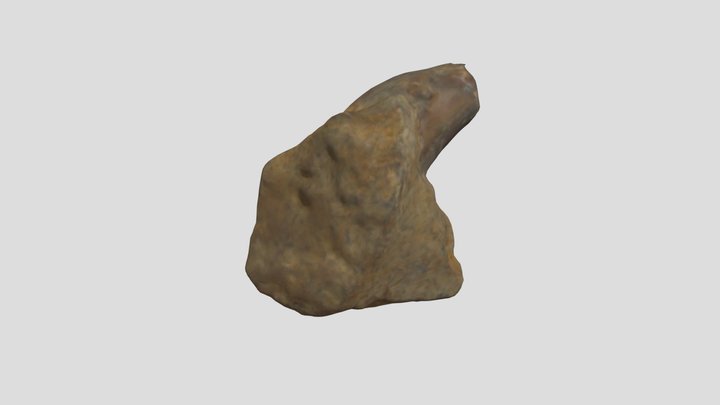
3D model
- Source
- Sketchfab
- Credit
- Cooper_Lab
- Licence
- CC Attribution
- Commercial use
- cannot be read from the licence given — check the record
Smithsonian Open Access and MorphoSource were not reached for this taxon, so this list is what the others held rather than everything there is.
The description on this site
- Source
- Wikipedia, “Pinniped”
- Licence
- CC BY-SA 4.0
This is what the site found, which is not the same as what exists.
Keep going
What may have been alongside itPinnipedimorpha through timeFormations of the MioceneThe world it lived on
Occurrence data from the Paleobiology Database, CC BY 4.0. (Illiger 1811)