Perissodactyla
Perissodactyla, or odd-toed ungulates, is an order of ungulates. The order includes about 17 living species divided into three families: Equidae, Rhinocerotidae (rhinoceroses), and Tapiridae (tapirs). They typically have reduced the weight-bearing toes to three or one of the five original toes, though tapirs retain four toes on their front feet. The nonweight-bearing toes are either present, absent, vestigial, or positioned posteriorly. By contrast, artiodactyls bear most of their weight equally on four or two of the five toes: their third and fourth toes. Another difference between the two is that perissodactyls digest plant cellulose in their intestines, rather than in one or more stomach chambers as artiodactyls, with the exception of Suina, do.

LittleJerry · CC BY-SA 4.0 · via Wikipedia/Commons. May be a photograph of a specimen, or an artist’s reconstruction — an interpretation of a skeleton, since colour and soft tissue are almost never preserved.
On record
Recorded, not inferred- Also called
- odd-toed ungulatePBDB
- Sits inside
- PerissodactylamorphaPBDB
- Diet
- browser, grazerPBDB
- Life habit
- ground dwellingPBDB
- Motility
- actively mobilePBDB, for Osteichthyes
- Environment
- terrestrialPBDB, for Eutheria
Time the record covers
At least 55 million years on record.
The record covers at least 56 Mya to 11.7 ka. No occurrence read is dated outside 59.24 Mya to 0 Mya.
12,000+ occurrences of Perissodactyla on record. The Paleobiology Database records this as a living group. Bar height is expected occurrences, not a count: each fossil is spread across the span it is dated to, so a tall narrow bar means tight dating and a low wide one means loose.
When
12,000 occurrences readThese are dates about fossils, not the animal: the record can only begin after it arose and end before it died out, so either end may reach further. Shares are expected occurrences: a fossil dated to a span is counted partly in each period it straddles. The read hit its cap, so every figure above is a floor and the shares are of the occurrences read. More on what this infers.
Found in
at least 763 formations
- Willwood Formation758
- Ash Hollow Formation · Ogallala Group308
- Valentine Formation · Ogallala Group257
- Shungura Formation · Omo Group206
- Bridger Formation193
- Wasatch Formation184
Loading coastlines…
The named rock units Perissodactyla has been recovered from, largest first. Drawn where the rock is now, not where it formed. The read hit its cap, so each count is a floor. 739 further formations hold fewer occurrences each and are not listed. 4,065 occurrences have no formation on record, which is common for older literature.
Found in the same rock
731 taxa- Hyracotherium116 sites
- Coryphodon76 sites
- Hyopsodus75 sites
- Diacodexis51 sites
- Paramys excavatus47 sites
- Esthonyx bisulcatus42 sites
- Didymictis41 sites
- Paramys copei40 sites
- Phenacodus37 sites
- Sifrhippus grangeri35 sites
- Phenacolemurinae34 sites
- Cantius abditus33 sites
- Haplomylus speirianus33 sites
- Phenacodus vortmani33 sites
- Prototomus30 sites
- Cantius27 sites
- Arenahippus aemulor25 sites
- Cantius frugivorus25 sites
- Hyopsodus powellianus25 sites
- Microsyopidae25 sites
- Tetonius25 sites
- Viverravus25 sites
- Prodiacodon tauricinerei24 sites
- Copecion brachypternus23 sites
The Paleobiology Database records at least 1,052 sites for Perissodactyla, and this reads 240 of them. The number is how many of those sites it was catalogued from too. The 24 sharing the most are listed.
This is not a list of everything alive at the time. It is only what has come out of the same ground as this animal and been written down.
Entered from
at least 2,104 references- Synonymies and reidentifications of North American fossil mammals1,088
- Stratigraphy and mammalian paleontology of the McCullough Peaks, northern Bighorn Basin, Wyoming: Implications for biochronology, basin development, and community reorganization across the Paleocene-Eocene boundary432
- The Evolution of North American Rhinoceroses308
- Systematics and Evolution of Early Eocene Perissodactyla (Mammalia) in the Clarks Fork Basin, Wyoming162
- Early Eocene Mammalian Fauna of the Piceance Creek Basin. Northwestern Colorado153
- Vertebrate biostratigraphy of the Ogallala Group in Nebraska146
- Family Equidae128
- Catalogue of Tertiary Fossil Sites of the Land Mammals in the U.S.S.R.122
- Phylogenetic Interrelationships and Evolution of North American Late Equidae103
- Cormohipparion and Hipparion (Mammalia, Perissodactyla, Equidae) from the Late Neogene of Florida98
- Les Périssodactyles (Mammalia) du gisement Bartonien supérieur de Robiac (Éocène moyen du Gard, Sud de la France)97
- Laetoli: a Pliocene Site in Northern Tanzania89
Each of the 12,000 occurrences read was entered from one of these publications, ordered by how many each accounts for. This is not a search for papers mentioning the name. That read hit its cap, so each count is a floor. 2,092 further references are not listed. Entries link to doi.org where the Paleobiology Database holds an identifier, and to its own record where it does not. Relayed as the Paleobiology Database holds them, not checked against what they resolve to.
Media and terms
Media content2

Picture of Perissodactyla
- Source
- Wikipedia/Commons
- Credit
- LittleJerry
- Licence
- CC BY-SA 4.0
- Commercial use
- the licence allows it
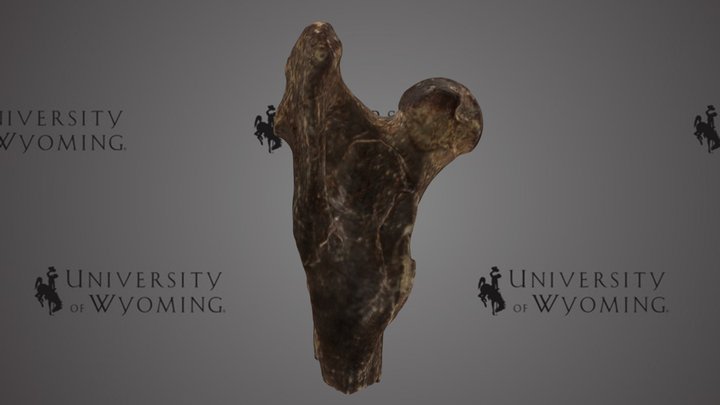
3D model
- Source
- Sketchfab
- Licence
- CC Attribution-NonCommercial
- Commercial use
- the licence does not allow it
Smithsonian Open Access and MorphoSource were not reached for this taxon, so this list is what the others held rather than everything there is.
The description on this site
- Licence
- CC BY-SA 4.0
This is what the site found, which is not the same as what exists.
Keep going
What may have been alongside itPerissodactylamorpha through timeThe world it lived on
Occurrence data from the Paleobiology Database, CC BY 4.0. (Owen 1848)