Phenacodus
Phenacodus is an extinct genus of mammals from the late Paleocene through middle Eocene, about 55 million years ago. It is one of the earliest and most primitive of the ungulates, typifying the family Phenacodontidae and the order Perissodactyla.

Jonathan Chen · CC BY-SA 4.0 · via Wikipedia/Commons. May be a photograph of a specimen, or an artist’s reconstruction — an interpretation of a skeleton, since colour and soft tissue are almost never preserved.
On record
Recorded, not inferred- Sits inside
- PhenacodontidaePBDB
- Diet
- herbivorePBDB, for Phenacodontidae
- Life habit
- ground dwellingPBDB, for Phenacodontidae
- Motility
- actively mobilePBDB, for Osteichthyes
- Environment
- terrestrialPBDB, for Eutheria
Time the record covers
At least 10 million years on record.
The record covers at least 61.66 Mya to 51.1 Mya. No occurrence read is dated outside 66 Mya to 45.9 Mya.
675 occurrences of Phenacodus on record, most of them in the Eocene. Bar height is expected occurrences, not a count: each fossil is spread across the span it is dated to, so a tall narrow bar means tight dating and a low wide one means loose.
When
675 occurrencesThese are dates about fossils, not the animal: the record can only begin after it arose and end before it died out, so either end may reach further. Shares are expected occurrences: a fossil dated to a span is counted partly in each period it straddles. More on what this infers.
Found in
29 formations
- Willwood Formation265
- Fort Union Formation109
- DeBeque Formation54
- Wasatch Formation31
- Wind River Formation26
- Goler Formation13
Loading coastlines…
The named rock units Phenacodus has been recovered from, largest first. Drawn where the rock is now, not where it formed. 5 further formations hold fewer occurrences each and are not listed. 123 occurrences have no formation on record, which is common for older literature.
Phenacodus and its relatives
EoceneWhere Phenacodus and its relatives were recorded in the Eocene.
Found in the same rock
651 taxa- Ectocion osbornianus115 sites
- Coryphodon91 sites
- Hyopsodus64 sites
- Diacodexis42 sites
- Didymictis42 sites
- Paramys excavatus41 sites
- Esthonyx bisulcatus37 sites
- Phenacolemurinae34 sites
- Didymictis protenus33 sites
- Haplomylus simpsoni32 sites
- Sifrhippus grangeri32 sites
- Thryptacodon antiquus31 sites
- Paramys copei30 sites
- Microsyopidae28 sites
- Prototomus28 sites
- Viverravus28 sites
- Cantius26 sites
- Cantius abditus25 sites
- Didymictis proteus25 sites
- Haplomylus speirianus24 sites
- Hyracotherium24 sites
- Prodiacodon tauricinerei24 sites
- Azygonyx grangeri23 sites
- Plesiadapis cookei23 sites
The Paleobiology Database records 536 sites for Phenacodus, and this reads 240 of them. The number is how many of those sites it was catalogued from too. The 24 sharing the most are listed.
This is not a list of everything alive at the time. It is only what has come out of the same ground as this animal and been written down.
Entered from
58 references- Stratigraphy and mammalian paleontology of the McCullough Peaks, northern Bighorn Basin, Wyoming: Implications for biochronology, basin development, and community reorganization across the Paleocene-Eocene boundary183
- Evolution of Paleocene and Eocene Phenacodontidae (Mammalia, Condylarthra)129
- Synonymies and reidentifications of North American fossil mammals99
- The Tiffanian Land-Mammal Age (middle and late Paleocene) in the northern Bighorn Basin, Wyoming80
- Faunal Zonation of the Willwood Formation in the Central Bighorn Basin, Wyoming36
- The Clarkforkian Land-Mammal Age and Mammalian Faunal Composition Across the Paleocene-Eocene Boundary23
- Early Eocene Mammalian Fauna of the Piceance Creek Basin. Northwestern Colorado16
- New Records of Eutherian Mammals from the Goler Formation (Tiffanian, Paleocene) of California and Their Biostratigraphic and Paleobiogeographic Implications13
- Earliest Eocene mammalian fauna from the Paleocene-Eocene Thermal Maximum at Sand Creek Divide, southern Bighorn Basin, Wyoming8
- Fossil Mammalia from the early Wasatchian Four Mile fauna, Eocene of northwest Colorado7
- Distribution and stratigraphic correlation of upper Paleocene and lower Eocene fossil mammal and plant localities of the Fort Union, Willwood, and Tatman formations, southern Bighorn Basin, Wyoming5
- Revision of the Wind River faunas, early Eocene of central Wyoming. Part 5. Geology and biostratigraphy of the upper part of the Wind River Formation, northeastern Wind River Basin5
Each of the 675 occurrences read was entered from one of these publications, ordered by how many each accounts for. This is not a search for papers mentioning the name. 46 further references are not listed. Entries link to doi.org where the Paleobiology Database holds an identifier, and to its own record where it does not. Relayed as the Paleobiology Database holds them, not checked against what they resolve to.
Media and terms
Media content3

Picture of Phenacodus
- Source
- Wikipedia/Commons
- Credit
- Jonathan Chen
- Licence
- CC BY-SA 4.0
- Commercial use
- the licence allows it
Laser scan
- Source
- MorphoSource
- Licence
- In Copyright
- Commercial use
- cannot be read from the licence given — check the record
- Specimen
- Phenacodus primaeveus · AMNH:FM:15262
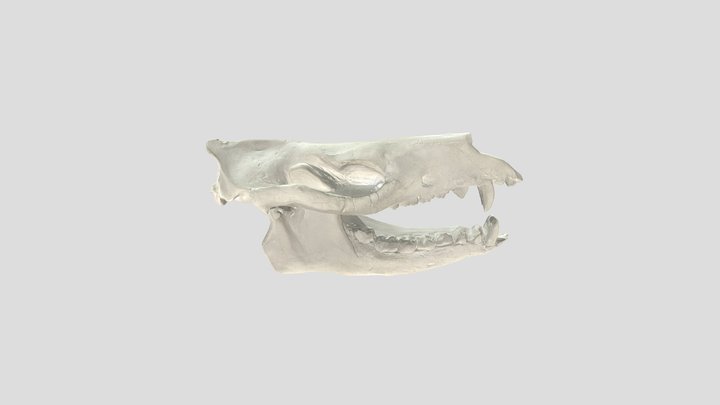
3D model
- Source
- Sketchfab
- Credit
- UIPaleoRepository
- Licence
- CC Attribution
- Commercial use
- cannot be read from the licence given — check the record
The description on this site
- Source
- Wikipedia, “Phenacodus”
- Licence
- CC BY-SA 4.0
This is what the site found, which is not the same as what exists.
Keep going
What may have been alongside itPhenacodontidae through timeFormations of the EoceneThe world it lived on
Occurrence data from the Paleobiology Database, CC BY 4.0. Cope 1873