Palmoxylon
Palmoxylon, also called petrified palmwood, is an extinct genus of palm named from petrified wood found around the world.

Kolossos · CC BY-SA 3.0 · via Wikipedia/Commons. May be a photograph of a specimen, or an artist’s reconstruction — an interpretation of a skeleton, since colour and soft tissue are almost never preserved.
On record
Recorded, not inferred- Sits inside
- ArecaceaePBDB
- Diet
- "photoautotroph"PBDB, for Angiospermae
Time the record covers
At least 66 million years on record.
The record covers at least 72.2 Mya to 5.333 Mya. No occurrence read is dated outside 143.1 Mya to 2.58 Mya.
102 occurrences of Palmoxylon on record, most of them in the Eocene. Bar height is expected occurrences, not a count: each fossil is spread across the span it is dated to, so a tall narrow bar means tight dating and a low wide one means loose.
When
102 occurrences- Early Cretaceousunder 1%
- Late Cretaceous16%
- Paleocene21%
- Eocene32%
- Oligocene15%
- Miocene12%
- Pliocene3%
These are dates about fossils, not the animal: the record can only begin after it arose and end before it died out, so either end may reach further. Shares are expected occurrences: a fossil dated to a span is counted partly in each period it straddles. More on what this infers.
Found in
16 formations
- Deccan Intertrappean Formation60
- Cerro Bororó Formation4
- Puntudo Chico Formation4
- Allen Formation · Malargüe Group3
- Upper Formation · Siwalik Group2
- Lameta Formation2
Loading coastlines…
The named rock units Palmoxylon has been recovered from, largest first. Drawn where the rock is now, not where it formed. 16 occurrences have no formation on record, which is common for older literature.
Palmoxylon and its relatives
EoceneWhere Palmoxylon and its relatives were recorded in the Eocene.
Found in the same rock
557 taxa- Ailanthoxylon indicum4 sites
- Dracontomeloxylon palaeomangiferum3 sites
- Albizinium eolebbekianum2 sites
- Arecaceae2 sites
- Cassioxylon variegatum2 sites
- Cyclanthodendron sahnii2 sites
- Dicotyledoneae2 sites
- Dryoxylon2 sites
- Duabangoxylon indicum2 sites
- Ebenoxylon2 sites
- Euphorioxylon indicum2 sites
- Grewioxylon mahurzariense2 sites
- Heyneoxylon tertiarum2 sites
- Olacaceae2 sites
- Palmocarpon2 sites
- Palmocarpon takliensis2 sites
- Podocarpoxylon mazzonii2 sites
- Sabal2 sites
- Terminalioxylon felixii2 sites
- Terminalioxylon speciosum2 sites
- Viracarpon2 sites
- Viracarpon elongatum2 sites
- Viracarpon hexaspermum2 sites
- Viracarpon sahnii2 sites
The Paleobiology Database records 45 sites for Palmoxylon, and this reads all of them. The number is how many of those sites it was catalogued from too. The 24 sharing the most are listed.
This is not a list of everything alive at the time. It is only what has come out of the same ground as this animal and been written down.
Entered from
18 references- A Catalogue of Indian Fossil Plants37
- A Catalogue of Fossil Plants from India Part 4: Cenozoic (Tertiary) Megafossils36
- Palmoxylon (Magnoliopsida: Arecaceae) richness in the Puntudo Chico Formation (Campanian-lowermost Maastricthian), Chubut Province, Argentina: systematics, palaeoclimatic significance and comments on biogeography of Phytelepheae4
- Die mittelmiozaenen und obermiozaenen Floren aus der Meuroer und Raunoer Folge in der Lausitz. III. Fundstellen und Palaeobiologie4
- Estudio de Maderas Petrificadas del Terciario Inferior del Área Central de Chubut (Cerro Bororó)4
- Palmeras fósiles del Cretácico Tardío de la Patagonia Argentina (Bajo de Santa Rosa, Río Negro)3
- Fossil plants from the intertrappean beds of Mohgaon Kalan, in the Deccan, with a sketch of the geology of the Chhindwara Districts2
- Description of two species of Palmoxylon-one new- from Louisiana2
- Geology and woods of a new fossil forest from the Early Miocene of Gökçeada (Turkey)1
- Integrated Chronology, Flora and Faunas, and Paleoecology of the Alajuela Formation, Late Miocene of Panama1
- Estípite de Palmera en el Campaniano del Grupo Neuquén, Provincia del Neuquén, Argentina1
- Malargüe Group (Maastrichtian–Danian) deposits in the Neuquén Andes, Argentina: Implications for the onset of the first Atlantic transgression related to Western Gondwana break-up1
Each of the 102 occurrences read was entered from one of these publications, ordered by how many each accounts for. This is not a search for papers mentioning the name. 6 further references are not listed. Entries link to doi.org where the Paleobiology Database holds an identifier, and to its own record where it does not. Relayed as the Paleobiology Database holds them, not checked against what they resolve to.
Media and terms
Media content2

Picture of Palmoxylon
- Source
- Wikipedia/Commons
- Credit
- Kolossos
- Licence
- CC BY-SA 3.0
- Commercial use
- the licence allows it
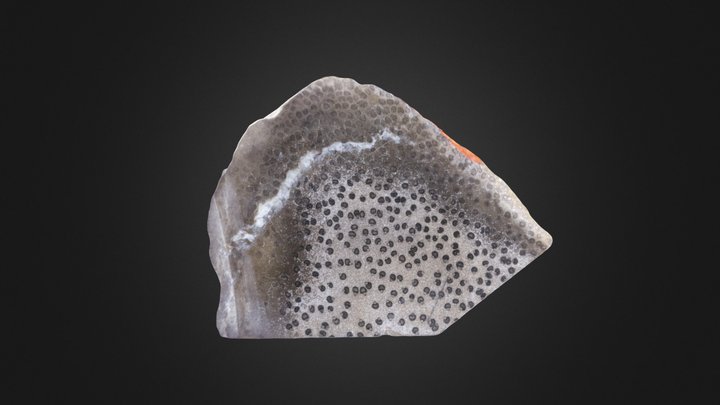
3D model
- Source
- Sketchfab
- Licence
- CC0 Public Domain
- Commercial use
- the licence allows it
Smithsonian Open Access and MorphoSource were not reached for this taxon, so this list is what the others held rather than everything there is.
The description on this site
- Source
- Wikipedia, “Palmoxylon”
- Licence
- CC BY-SA 4.0
This is what the site found, which is not the same as what exists.
Keep going
What may have been alongside itArecaceae through timeFormations of the EoceneThe world it lived on
Occurrence data from the Paleobiology Database, CC BY 4.0. Schenk 1882